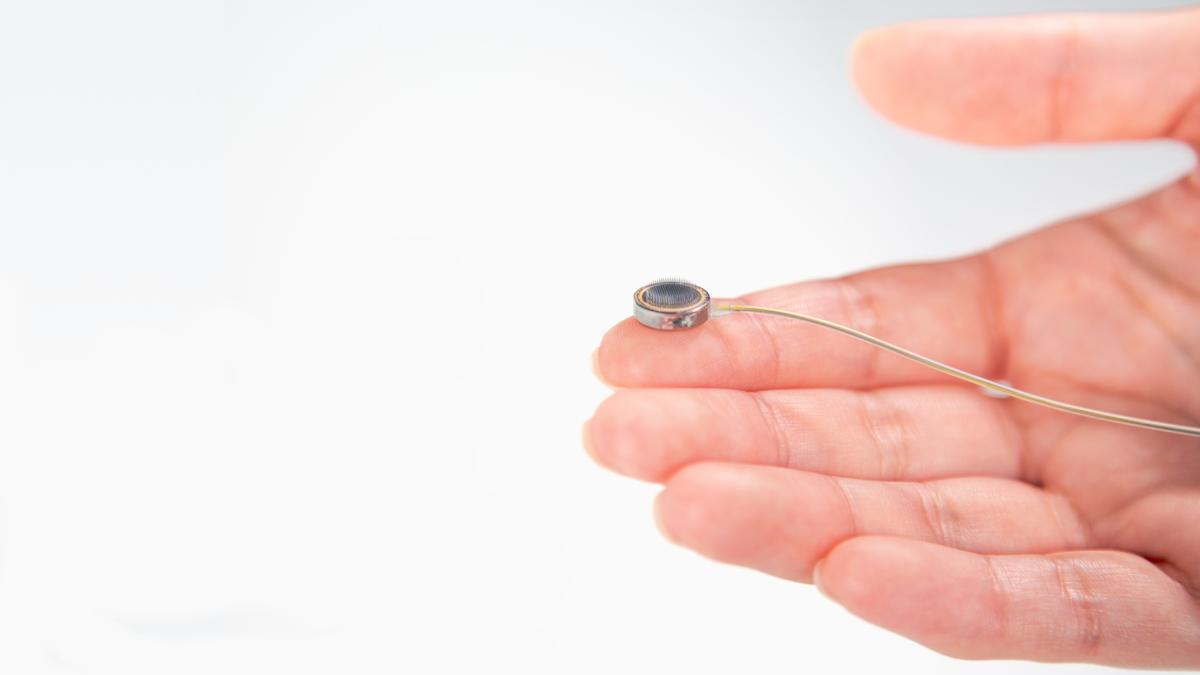
Precision Neuro breaks new ground in BCI technology
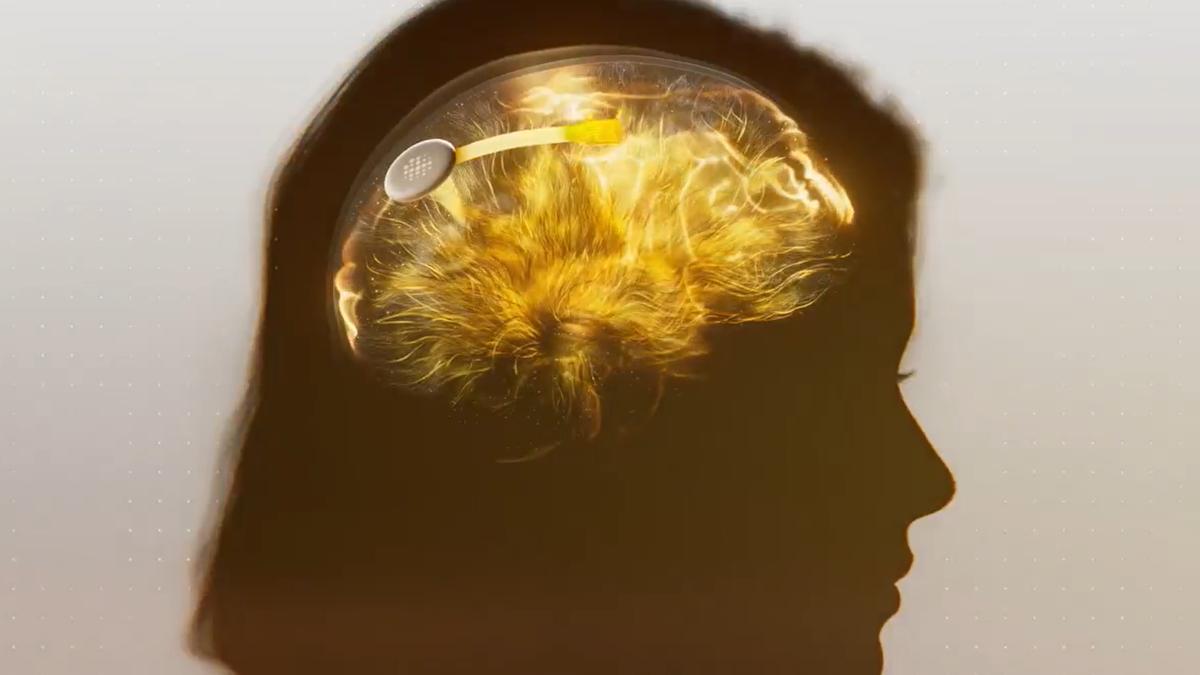
A still from Precision Neuroscience's new video of its Layer 7 brain-computer interface (BCI) device.
Brain-computer interface (BCI) developer Precision Neuroscience has demonstrated that people can control electronic devices with thought alone – without a need for electrodes to be implanted into the brain.
That could be a major differentiator for the New York-based company in the fast-emerging BCI category over rivals like Elon Musk's Neuralink, Paradromics, Synchron, Inbrain Neuroelectronics, and Blackrock Neurotech, which are developing implantable technologies.
All the companies hope that BCIs will one day give people with disabilities, such as paralysis or neurodegenerative conditions, who have lost the ability to use their limbs, a way to control devices. According to some predictions, it may eventually be possible to use BCIs to restore vision or hearing, treat neurological and psychiatric disorders, track the progression of some diseases, and/or combine them with exoskeleton devices to restore mobility.
Precision Neuro published a video yesterday showcasing clinical research carried out using its investigational BCI system, Layer 7, a high-density, ultra-thin cortical electrode array that records activity from the brain's surface rather than penetrating it, and translates brain activity into a usable signal.
So far, the BCI has been put through its paces in almost 100 participants at 18 academic medical centres across the US, allowing them to control a computer, navigate a tablet, answer a video call, and play video games, including Fruit Ninja and Mario Kart, through thought alone.
Testing Layer 7 in that number of subjects has been possible because the BCI doesn't require implantation and surgery, and Precision Neuro has been able to recruit a wider group of people – without paralysis – who were undergoing brain surgery to treat epilepsy or remove a brain tumour.
"I was just using my mind to control what was on the screen," said one study participant. "It was like telekinesis. I felt like I had a superpower."
Crucially, the BCI is the first that is removable, upgradeable if an improved device is developed, and scalable to the whole brain, according to the company. That raises the possibility of a "whole-brain interface" that could treat disorders involving every part of the brain, not just movement.
A recent survey by the foundation set up in honour of paralysed actor Christopher Reeve found a 40-to-one preference for a brain surface BCI rather than an implant, with four out of five respondents also saying that removability was an important consideration.
"As a nurse I have spent my career at the bedsides of people who've lost the ability to move or speak, and I know that loss isn't just physical; it's isolation," said Jayme Strauss, chief clinical officer at Precision Neuro, in a LinkedIn post.
"I saw this firsthand with my father-in-law who had ALS. It ripples outward into every relationship, every routine, every plan for the future," she added.
"So, when I watch someone play a game, send a message, make a call using thought alone, through a device that never penetrates the brain, I don't just see a technical milestone. I see the potential for independence and connection to be handed back to people who have lost it."
Precision Neuro won FDA 510(k) clearance for its Layer 7 BCI last year, clearing the way to broaden its clinical testing programme by allowing temporary deployment for up to 30 days.