Pfizer makes first-line case for Tukysa in breast cancer
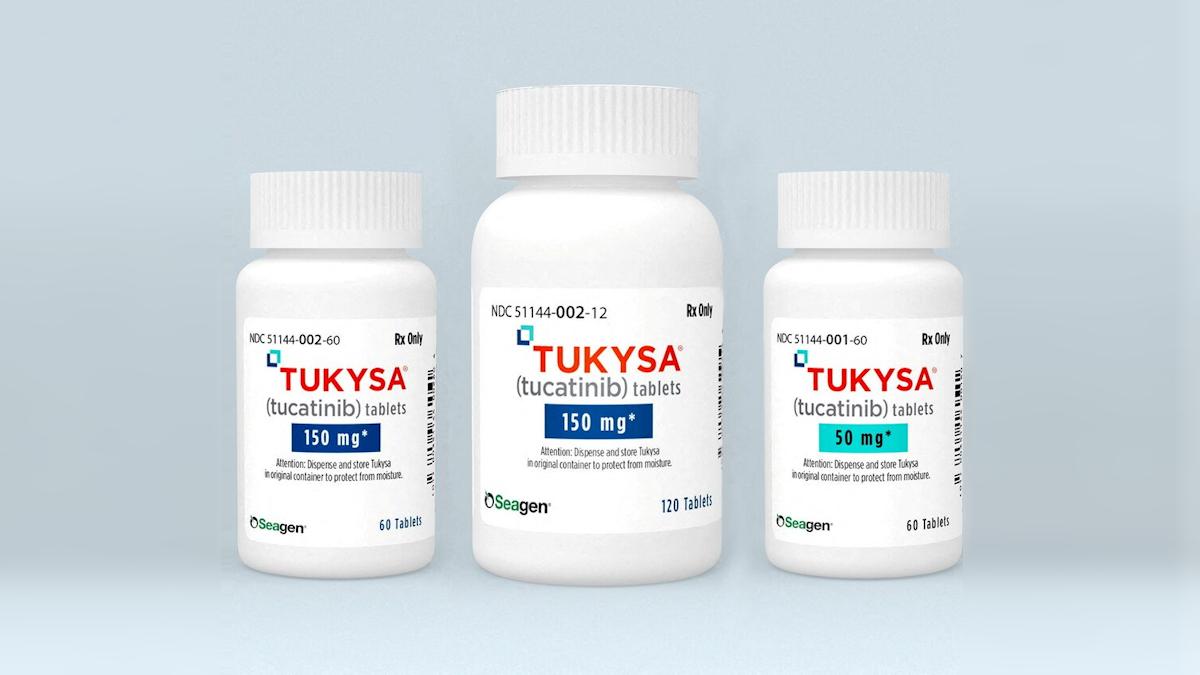
Pfizer's oral HER2 inhibitor Tukysa looks poised to find a new role as first-line maintenance therapy for HER2-positive metastatic breast cancer, based on now-revealed data from the HER2CLIMB-05 study.
The results, presented at the SABCS conference, show that the combination of Tukysa (tucatinib), trastuzumab, and pertuzumab reduced the risk of disease progression or death by 36% compared to trastuzumab and pertuzumab alone when given to patients after initial induction chemotherapy.
Median progression-free survival (PFS) was 24.9 months with Tukysa and 16.3 months in the placebo arm, with a trend pointing to improved overall survival.
Pfizer said the PFS benefits in HER2CLIMB-05 were seen across patient subgroups, including new versus recurrent disease, patients with and without brain metastases at baseline, and regardless of hormone receptor (HR) status. It now plans to discuss the results with regulatory authorities.
If Tukysa's label is extended to include the new data, it could unlock a new phase of growth for the drug, which has been approved for a few years as second-line or later therapy for HER2-positive breast cancer that cannot be treated with surgery, as well as for previously-treated HER2-positive metastatic colorectal cancer.
That could inject new momentum into a drug that has made fairly modest sales since it first reached the market in 2020, with sales slipping 2% to $344 million in the first nine months of 2025.
It would be a rival to Pfizer's $4.4 billion blockbuster Ibrance (palbociclib), a CDK4/6 inhibitor that has become a standard of first-line maintenance in this type of breast cancer, and potentially also to Daiichi Sankyo and AstraZeneca's HER2-directed antibody-drug conjugate Enhertu (trastuzumab deruxtecan), which is also being put forward for a first-line indication that includes dosing until disease progression, on the back of the DESTINY-Breast09 data. A decision from the FDA on Enhertu in this setting is due next year.
"Most patients with HER2-positive metastatic breast cancer face disease progression within two years of starting first-line treatment, often requiring a transition to chemotherapy," commented Erika Hamilton, HER2CLIMB-05's principal investigator, who is director of breast cancer research at the Sarah Cannon Research Institute (SCRI) and presented the results at SABCS.
"These results demonstrate that adding tucatinib to first-line maintenance therapy extends the time patients live without their disease progressing, while maintaining a manageable safety profile, suggesting a promising new potential approach that could advance the current standard of care for HER2-positive disease."
Pfizer acquired Tukysa as part of its takeover of Seagen for $43 billion in 2023. It is also looking at moving Tukysa into earlier-stage breast cancer with an adjuvant study in high-risk, HER2-positive breast cancer, via the CompassHER2 RD study, although, data from that isn't due until 2028.