Lila Sciences' swollen first round, and other biofinancings
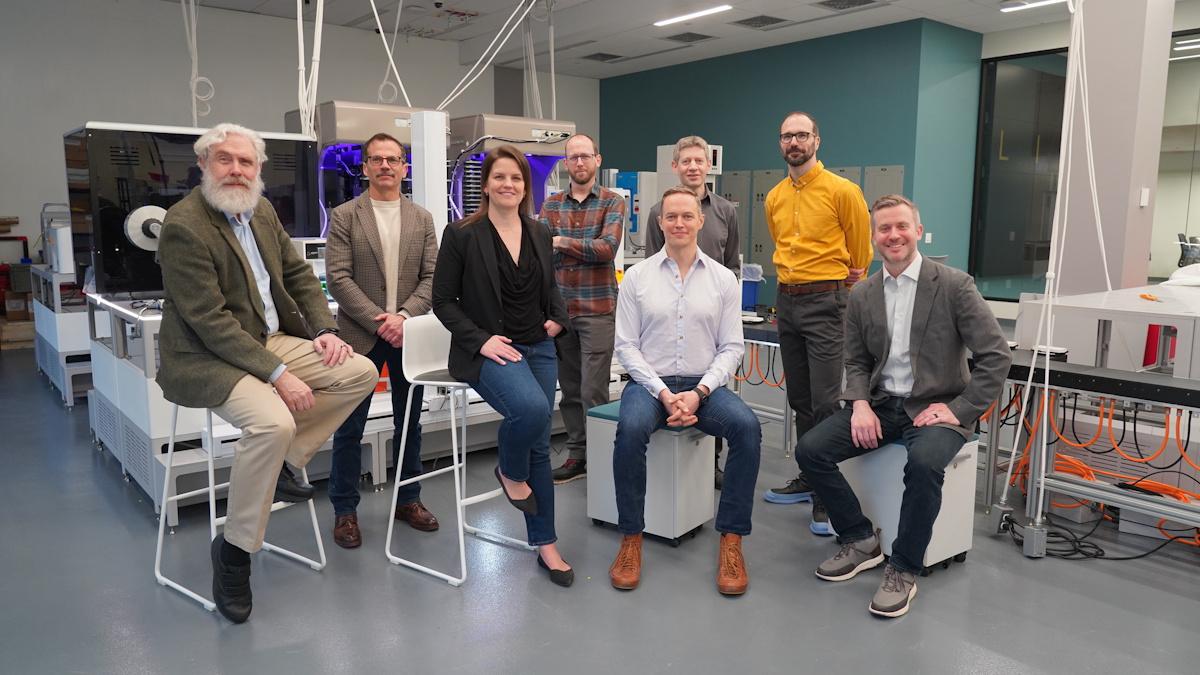
Lila Sciences' already impressive $235 million first round financing has continued to build and has now closed at $350 million, signalling strong investor interest in its AI-powered, autonomous lab technology.
The expanded financing takes the total raised by the Cambridge, Massachusetts start-up to $550 million since it emerged earlier this year from Flagship Pioneering's incubator programme and has raised its valuation to around $1.3 billion, well into unicorn territory.
The company has been set to develop a 'scientific superintelligence' platform based on AI, automation, and custom robotics, that can be used by customers that are "working on the world's hardest problems," according to Geoffrey von Maltzahn, the company's chief executive and a former Flagship partner.
The second part of the Series A was bankrolled by NVIDIA's venture capital arm NVentures, along with Analog Devices, IQT, Dauntless Ventures, Catalio Capital Management, Pennant Investors, a group of investors from Peter Diamandis' Abundance Membership, and other new stakeholders.
It will be instrumental in opening up Lila's platform to commercial partners, according to von Maltzahn, who said the company is now "welcoming our first cohort of customers," without naming them.
The company operates across industries, but its work in life sciences has been focused on building agents that design and validate novel protein therapeutics, nucleic acids, chemistries, and diagnostics in areas including cancer, obesity, and immune diseases. It recently signed a lease on a 235,500 sq. ft. facility in Cambridge.
Other recent funding rounds
In another hefty round this week, South San Francisco biotech Kardigan raised $254 million for its late-stage portfolio of personalised cardiovascular medicines in a Series B that included new investors Fidelity Management & Research and accounts advised by T Rowe Price, as well as renewed support from ARCH Venture and Sequoia Heritage.
The new round follows an equally impressive $300 million first round earlier this year for the company, which recently revealed the first details of its lead programmes. They include cardiac myosin activator danicamtiv for dilated cardiomyopathy (DCM), angiotensinogen-targeted therapy tonlamarsen for acute severe hypertension (ASH), and ataciguat, a once-daily, oral sGC activator being developed for calcific aortic valve stenosis (CAVS).
Dermatology specialist Veradermics has raised $150 million in a third-round financing, led by SR One, which will be used to fund commercial filings for VDPHL01, an extended-release formulation of well-established hair loss therapy minoxidil. The company is running three phase 3 trials in men and women with pattern hair loss, also known as androgenetic alopecia, which affects tens of millions of people in the US alone.
Along with SR One, investors in the New Haven, Connecticut company's latest round also included new investors Viking Global Investors, Marshall Wace, Invus, funds managed by abrdn, Columbia Threadneedle Investments, Infinitium, and LifeSci Venture Partners, as well as existing backers.
Needham, Massachusetts-based Candel Therapeutics has taken on a $130 million loan facility, provided by Trinity Capital, drawing down $50 million at closing to fund the start of a phase 3 trial of its lead asset CAN-2409 in non-small cell lung cancer and prepare for a possible approval of the drug in localised prostate cancer.
CAN-2409 (aglatimagene besadenovec) is an off-the-shelf, replication-defective adenovirus designed to deliver the herpes simplex virus thymidine kinase (HSV-tk) gene to tumour cells, rendering them susceptible to treatment with antiviral valacyclovir, triggering cell death which in turn stimulates an immune response against the cancer.
Another company with a candidate for hair loss, Los Angeles start-up Pelage Pharmaceuticals, added $120 million to its cash reserves this week in a Series B co-led by ARCH Venture Partners and Google's venture capital arm GV and backed by Main Street Advisors, Visionary Ventures and YK Bioventures.
The start-up, founded by University of California researchers in 2018, is working on a topical, small-molecule drug codenamed PP405 that is thought to reactivate hair follicles that have become dormant, stimulating them to produce hair again. It recently reported promising phase 2a data with the drug in men and women with androgenetic alopecia and is preparing to begin a phase 3 study in the same indication next year.
Turning to Europe for a moment, Marseille, France-based antibody-drug conjugate (ADC) developer Adcytherix scored €105 million ($123 million) in a first round that adds to initial seed financing of €30 million and will fund the first human trials of lead candidate ADCX-020 for solid tumours.
The company's platform is designed to come up with ADCs with novel payloads that can improve safety and also avoid treatment resistance that can plague ADCs using payloads based on tubulin and topoisomerase 1 inhibitors. Bpifrance led the round, alongside Kurma Partners, Andera Partners, Angelini Ventures, Citadel's Surveyor Capital, aMoon and all of the company's founders and previous investors.
Peptilogics said it will use the $78 million from a Series B2 round to advance its lead peptide therapeutic zaloganan (PLG0206) into a phase 2/3 trial in prosthetic joint infections due to start before the end of the year. The Pittsburgh, Philadelphia biotech recently completed a phase 1b trial that showed the use of the drug during standard procedures to tackle infected knee replacement implants lowered the rate of infection recurrence.
Presight Capital, Thiel Bio, and Founders Fund led the round, with participation from new investors AMR Action Fund, Narya Capital, and Beyond Ventures.
Finally, Palo Alto-based Excellergy made its debut this week with a $70 million first round that will fund its efforts to develop a new class of effector cell response inhibitors (ECRIs) that address allergy-related diseases by interfering with IgE antibodies, a key driver of the allergic response. All of its candidates remain in preclinical development at the moment.
Samsara BioCapital led the Series A, with Red Tree Venture Capital and Decheng Capital also chipping in.