
Insilico ends 2025 with $293m Hong Kong IPO
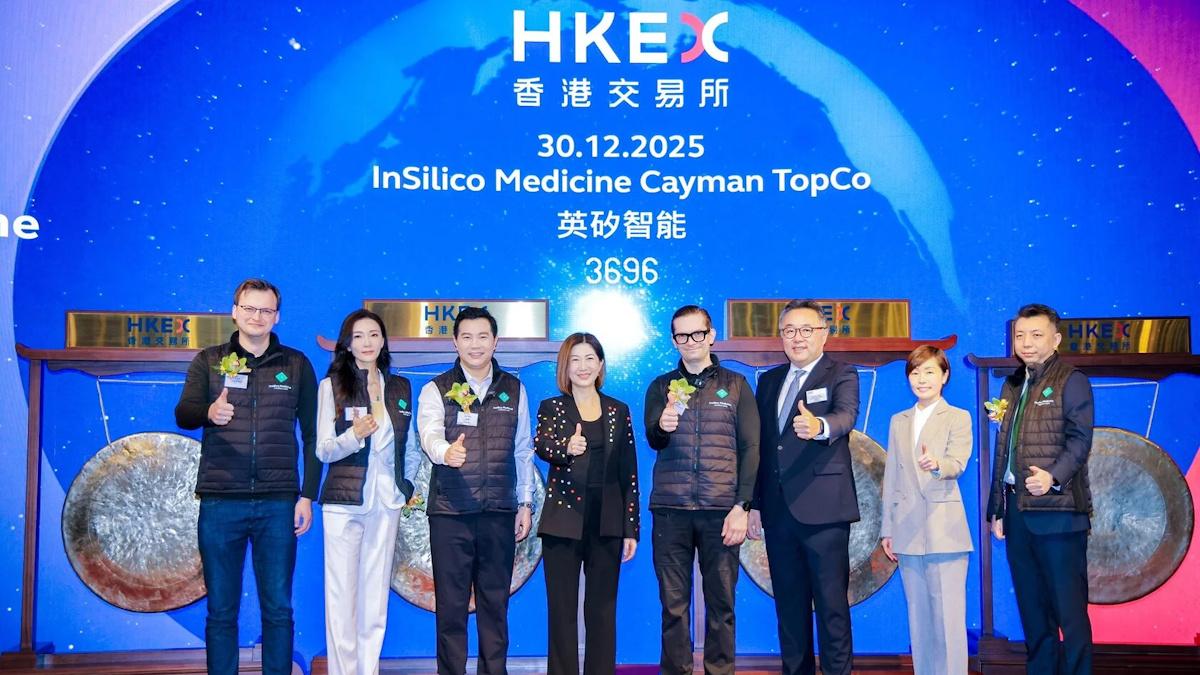
One of the pioneers in AI-powered drug discovery, Insilico Medicine, has completed an initial public offering (IPO) in Hong Kong, raising HKD 2.28 billion (around $293 million).
The US and Hong Kong-based company has listed on the HKEX in Hong Kong's biggest IPO of the year, which was massively oversubscribed, and also the first for an AI-driven biotech on the exchange. It was backed by a long list of investors that included the likes of US pharma group Eli Lilly and Chinese tech giant Tencent.
The IPO – which has gone through after earlier attempts were filed and subsequently dropped – comes after several private funding rounds and takes the total raised by the company well above the $1 billion mark. Its shares were offered at HKD $24.05 and rose swiftly to more than HKD $37, giving Insilico a market cap of HKD $20.7 billion (around $2.7 billion USD).
The successful completion of the IPO comes as momentum is gathering behind AI for discovery, transforming traditional drug discovery timelines and delivering some clinical successes, including Takeda's recent phase 3 win for AI-designed TYK2 inhibitor zasocitinib in psoriasis and positive phase 1/2 results for Recursion Pharma's MEK1/2-targeting drug REC-4881 in familial adenomatous polyposis (FAP).
Founded in 2014, Insilico has now taken its lead candidate rentosertib (formerly known as ISM001-055) into a phase 2a study in idiopathic pulmonary fibrosis (IPF), generating encouraging preliminary data that was published in the journal Nature Medicine.
The drug was developed using Insilico's generative AI (GenAI) platform Pharma.AI and inhibits TNIK (Traf2- and NCK- interacting kinase), a novel target that is thought to play a key role in the development of fibrosis (scarring) in tissues.
The biotech has also claimed regulatory approvals to start clinical testing of more than 10 other candidates, and has 30 programmes on the go in a pipeline that spans fibrosis, cancer, immunological, inflammatory, cardiometabolic, and central nervous system (CNS) diseases.
That fertile pipeline-generating platform has also attracted the attention of pharma manufacturers, with Lilly, Exelixis, Sanofi, Fosun Pharma, and Menarini signing partnerships that collectively are worth billions of dollars.
"Over the past few years, we set very clear industry benchmarks demonstrating that AI can help make drug discovery faster, cheaper, and deliver higher success rates in preclinical and early clinical development," said Alex Zhavoronkov, Insilico's chief business officer.
"We have validated the end-to-end capabilities of AI-empowered programmes from novel target discovery to molecular generation, and then to preclinical and clinical stages," he added. "Going forward, we will continue to increase investment in our AI platform and innovative pipeline [and] accelerate the advancement of differentiated innovative programmes into clinic."













