GSK delivers in new CEO Miels' first financial update
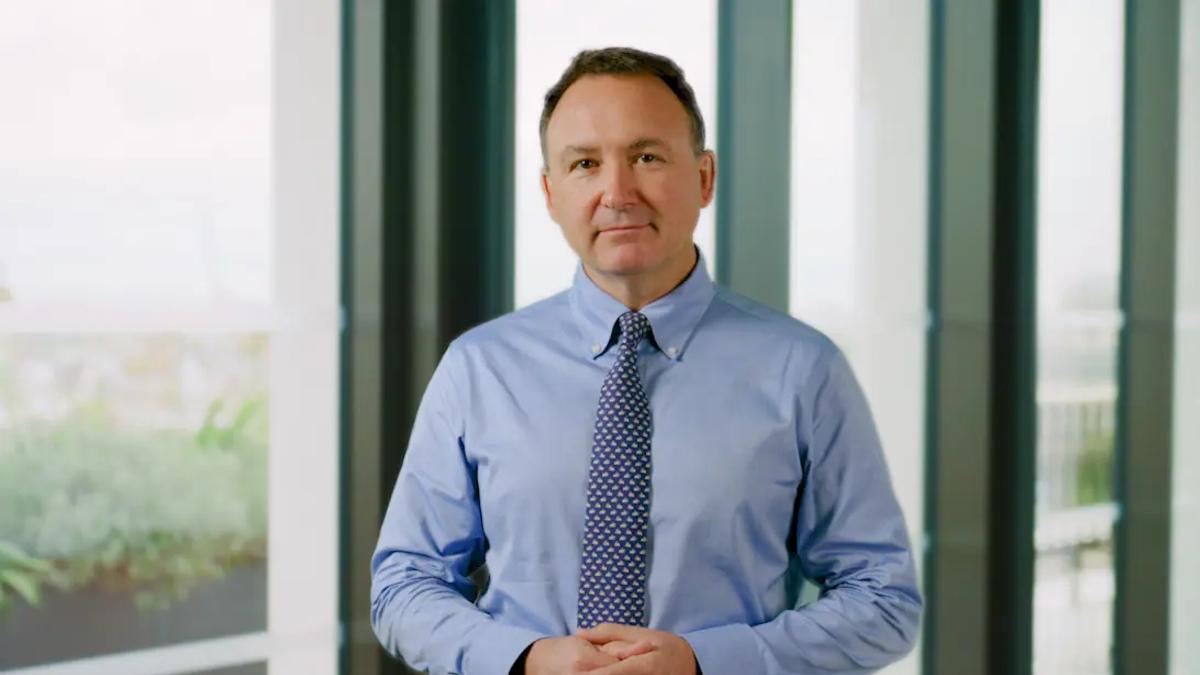
GSK's chief executive, Luke Miels.
Luke Miels' first financial results since taking over as chief executive of GSK revealed a jump in sales and profits, fuelled by HIV, cancer and respiratory medicines.
A buoyant fourth quarter saw an 8% in sales to £8.62 billion ($11.82 billion), helping GSK to post a 7% rise for the full-year to £32.67 billion. Miels, who took over from Dame Emma Walmsley as GSK CEO at the start of the year, said he expected "this positive momentum to continue in 2026."
Last year's growth was helped by the return to the market for multiple myeloma therapy Blenrep (belantamab mafodotin), which contributed £17 million following an FDA approval last October, along with approvals for Nucala (mepolizumab) in chronic obstructive pulmonary disease (COPD), twice-yearly asthma therapy Exdensur (depemokimab), paediatric vaccine Penmenvy, and novel antibiotic Blujepa (gepotidacin).
The rollout of those new products and indications, along with the anticipated approvals this year of bepirovirsen, a potential first-in-class treatment for chronic hepatitis B, and tebipenem, the first oral treatment for complicated urinary tract infections, means that 2026 looks set to be "a key year of execution and operational delivery" for GSK, said Miels.
When Miels moved up to the top job at GSK from his earlier role as chief commercial officer, he said a key priority was to accelerate pipeline development, particularly in oncology, respiratory, and immunology/inflammation, as the company pitches toward a target of growing its annual revenues to £40 billion in 2031.
An early sign of that push came last month, when GSK agreed to buy two US biotechs. It has offered $2.2 billion for RAPT Therapeutics in order to gain control of a promising therapy for food allergies, ozureprubart, in phase 2b testing, and recently closed a $1 billion takeover of gastrointestinal cancer drug developer IDRx.
Last year, under Walmsley, the company also bought a subsidiary of Boston Pharmaceuticals for $1.2 billion to claim rights to efimosfermin alfa, a late-stage candidate for metabolic dysfunction-associated steatohepatitis (MASH), and formed a strategic-level R&D alliance with China's Hengrui Pharma, spanning up to 12 programmes, that could be worth up to $12 billion.
"We are well placed to move forward in this next phase for GSK – to deliver our outlooks – and to create new value for patients and shareholders," said Miels.
Extending its pipeline has some urgency for GSK, as it prepares to face patent expiry in 2027 for HIV drug dolutegravir, one of its biggest sellers, as well as competition to shingles vaccine Shingrix, currently its top product, from the likes of Pfizer/BioNTech and Moderna. And like all vaccine developers, it faces the threat of an increasingly vaccine-averse operating environment in the US under the Trump administration.