FDA backs Curium's Bexlutry as 1st 'radioligand equivalent'
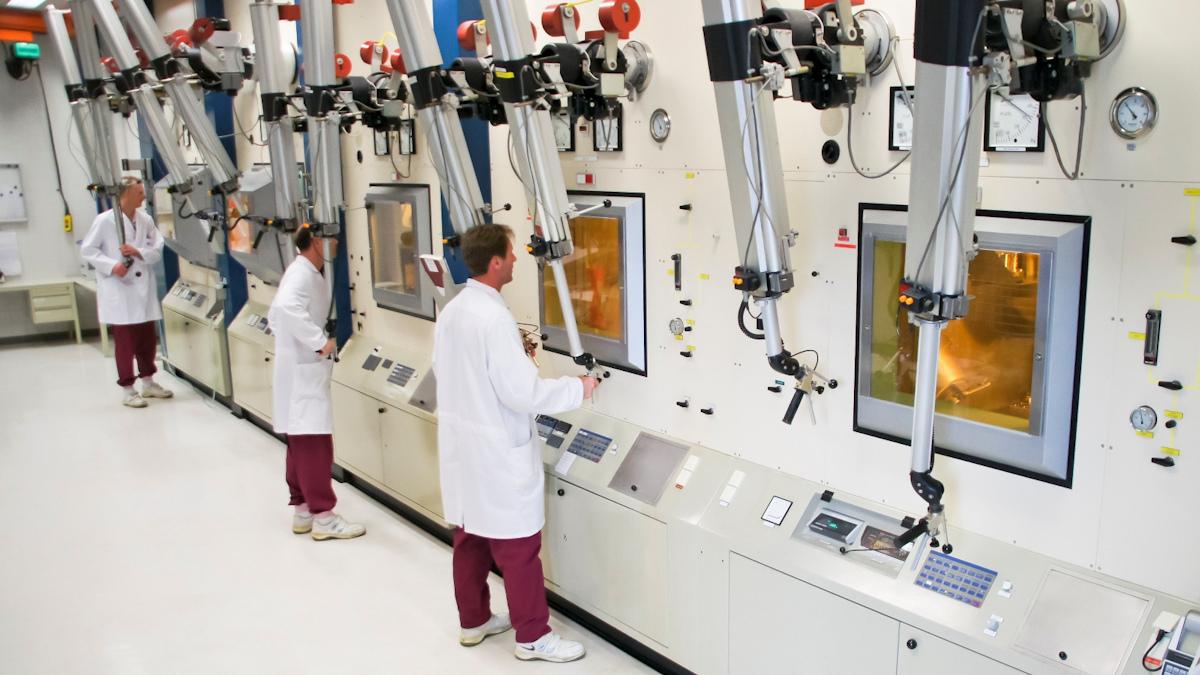
Curium production unit in the Netherlands.
Curium's radioligand therapy Bexlutry has been approved in the US as a generic – or 'radioligand equivalent' (RLE) – of Novartis' gastroenteropancreatic neuroendocrine tumour (GEP-NET) therapy Lutathera.
Bexlutry is based on lutetium Lu 177 dotatate, the same active ingredient in Lutathera, and is the first RLE product to be approved by the FDA. Like Lutathera, it can be used to treat somatostatin receptor-positive GEP-NETs, including foregut, midgut, and hindgut neuroendocrine tumours in adults.
GEP-NETs are a rare and complex type of cancer that forms from neuroendocrine cells of the gastrointestinal tract or the pancreas, and represent around two-thirds of all NETs.
Lutathera had global sales of $816 million last year, up 13% on the 2024 tally, and is still growing well, adding another $436 million in the first half of this year. Novartis sued Curium to try to block the launch of Bexlutry, claiming patent infringement, but a court invalidated its patent protection in June. Novartis is in the process of appealing that verdict.
Curium's group chief executive, Renaud Dehareng, said the FDA approval of Bexlutry is "a defining milestone" for the company and marks its expansion into cancer therapies, building on its existing portfolio of radiodiagnostics and imaging agents.
Privately held Curium sells a range of radiopharma products, including prostate cancer diagnostic Pylclari (piflufolastat F 18), generic SPECT brain imaging agent ioflupane I 123, and DetectNet (copper Cu 64 dotatate) for detecting NETs.
It comes as Curium is in the process of acquiring Lantheus in an $8 billion transaction, first announced in August, that is due to close in the first half of 2027, subject to regulatory clearances. It will create a radiopharma group with annual revenues estimated at around $2.1 billion and a growing pipeline of 'theranostics' – which combine a radiotherapeutic with a radiodiagnostic modality.
The merger comes as radiopharma – long dominated by diagnostics, but increasingly moving into therapeutics – is becoming one of the most dynamic areas of oncology R&D and has started to expand into other therapeutic categories, including neurology, cardiology, and inflammatory diseases.
"As the only vertically integrated, lutetium-based NETs therapy manufacturer, Curium is uniquely positioned to support a reliable supply of Bexlutry and help sites of care prepare for radioligand therapy delivery at scale," commented the company's North America CEO, Mike Patterson.
He added that Bexlutry's FDA approval "brings us a step closer to advancing our ambition of aiming to improve the lives of up to 80% of patients with cancer."