Data builds behind Bayer's Kerendia in kidney disease
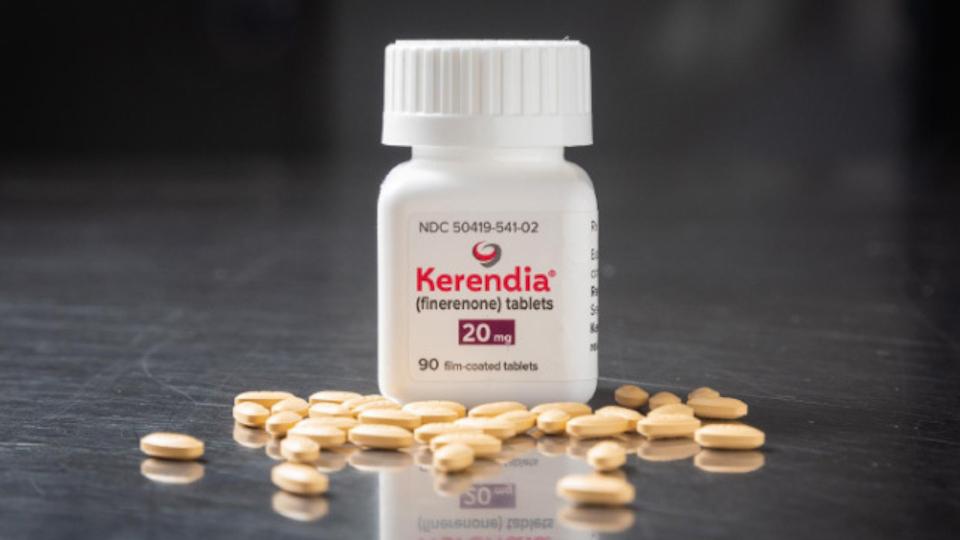
Bayer's mineralocorticoid receptor antagonist (MRA) Kerendia has hit the spot in another phase 3 trial that could extend its use as a treatment for patients with chronic kidney disease (CKD).
The latest readout comes from the phase 3 FIND-CKD study, which investigated adding Kerendia (finerenone) to standard therapy for people with CKD, but without diabetes. The drug is already approved to treat CKD in diabetic patients, and last year also had its label extended to include some patients with heart failure.
Extending the label for Kerendia is a strategic priority for Bayer, which is relying on the drug and a handful of other new products to help it to weather the loss of patent protection and declining sales for anticoagulant Xarelto (rivaroxaban) and pressure on eye drug Eylea (aflibercept). It already ranks among the German group's fastest-growing new products, with sales up nearly 80% to around $936 million last year.
In the 1,500-subject FIND-CKD study, the addition of Kerendia to standard treatment resulted in a reduction in the rate of kidney function decline, measured by tracking estimated glomerular filtration rate (eGFR) data, compared to placebo.
At the moment, only the top-line result is available, but Bayer said it will present full data from FIND-CKD at an upcoming scientific conference and plans to file to extend Kerendia's label based on the data.
CKD is a massive health issue worldwide, with around 850 million people living with the disease, of whom around half do not have diabetes, but develop kidney damage due to other causes, such as chronic high blood pressure – the second most common reason for kidney failure – and glomerulonephritis conditions like immunoglobulin A nephropathy (IgAN).
People with non-diabetic CKD are also at elevated risk of other complications, such as a fatal cardiovascular event, which occurs in this group with around 2.6 times the frequency of the general population.
"New treatments that can reduce kidney disease progression are needed to help improve the prognosis of these patients, who have a substantial risk for cardiovascular events and kidney failure, which can necessitate dialysis," said FIND-CKD co-chair Hiddo Heerspink, of the University Medical Centre Groningen in the Netherlands.
Worldwide, more than 3.5 million people with kidney failure are treated with dialysis, which is linked to a five-year survival rate of about 40%.
"The FIND-CKD results are encouraging because they show the benefits of finerenone in preserving kidney function in a dedicated study across several aetiologies of non-diabetic chronic kidney disease," he added.
Bayer has invested in a massive 10-study phase 3 programme for Kerendia – known as Firialta in some markets – and FIND-CKD is the fifth of these to show a positive result. The company has said it thinks the product can eventually bring in sales of more than $3 billion a year.