Could Alzheimer's be predicted with a finger-prick test?
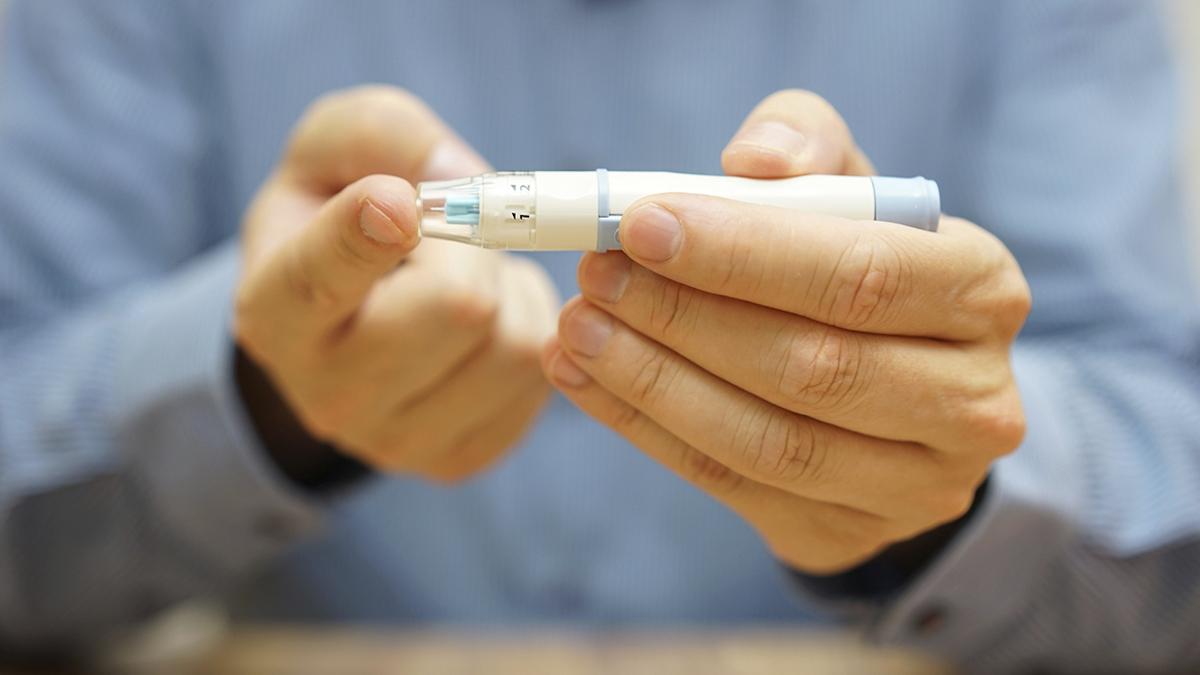
An international trial has started to see if a simple finger-prick blood test could predict the risk of Alzheimer's disease, before people start showing signs of cognitive decline.
The Bio-Hermes-002 study, involving 1,000 volunteers aged over 60 in the UK, US and Canada, is using finger-prick testing to look for three proteins that are known to be associated with an elevated risk of Alzheimer's, in the hope of providing a rapid screen for this leading cause of dementia.
The test is being compared to other approaches to diagnosing the disease – such as brain scans and lumbar punctures to look for amyloid and tau proteins in cerebrospinal fluid – which are slow, expensive for health systems, and invasive for patients. According to NHS England, less than two-thirds of people in England with dementia have a formal diagnosis.
If effective, a simple finger-prick test could allow people at risk of developing Alzheimer's to receive earlier intervention, including treatment with drugs that could slow down disease progression.
The study will look at the concentrations of three biomarkers – pTau217, GFAP, and NfL – and will compare the diagnostic results with alternative approaches such as PET/MRI scans, other blood tests looking for tau protein variants, and digital tests based on speech assessments, retinal scans, and cognitive scores.
So far, the trial has enrolled 883 subjects, a mix of people who are cognitively normal, those with mild cognitive impairment, and cases of early, diagnosed Alzheimer's disease.
One of those – London-based GP Dr Michael Sandberg – said he had been enormously relieved to learn the result of his test was negative, particularly as his mother Aline had been diagnosed with Alzheimer's.
"Being able to screen people to see if they are on the way to developing dementia without hugely expensive scans and lumbar punctures is going to be fundamental if we are to fulfil the potential of new treatments and develop simple and cost-effective tests," he said.
Bio-Hermes-002 is led by non-profit medical research organisation LifeArc and the Global Alzheimer's Platform Foundation (GAP), with support from the UK Dementia Research Institute (UKDRI), and results are due in 2028.
At least 25% of the volunteers will be from underrepresented communities, and the study will explore whether there are any differences in the sensitivity and accuracy of using blood samples to test for Alzheimer's in people of different ethnicities.
There are already a couple of blood tests for Alzheimer's approved for marketing – Roche and Eli Lilly's Elecsys pTau181 and Fujirebio Diagnostics' Lumipulse for pTau217 and beta amyloid 1-42 – and the hope is that broadening the panel of biomarkers could increase accuracy and allow earlier detection.
Other trials – called ADAPT and READ-OUT – are also ongoing and investigating other ways to use blood tests to enhance diagnosis. READ-OUT is focusing on multiple existing and novel blood tests for a range of types of dementia, including Alzheimer's, vascular dementia, frontotemporal dementia, and dementia with Lewy bodies, while ADAPT is zeroing in on pTau217 in Alzheimer's.
The tests could potentially help identify patients eligible for treatment with new amyloid-busting drugs like Eisai and Biogen's Leqembi (lecanemab) and Eli Lilly's Kisunla (donanemab), which have become available in the last couple of years.
Biogen said last year it had already started to see an increase in blood-based biomarker testing in the US, following recommendations from the Alzheimer's Association, which has encouraged take-up of its drug after a slow start in the market, attributed to its modest efficacy and obstacles in getting reimbursement.
"Over the last five years, there has been substantial progress in identifying blood-based biomarkers to identify people at high risk of developing Alzheimer's disease before their symptoms present," said LifeArc's director of strategy and operations, Dr Giovanna Lalli.
"Developing cheaper, scalable, and more accessible tests is vital in the battle against this devastating condition."