Chemistry Nobel goes to molecular chirality researchers
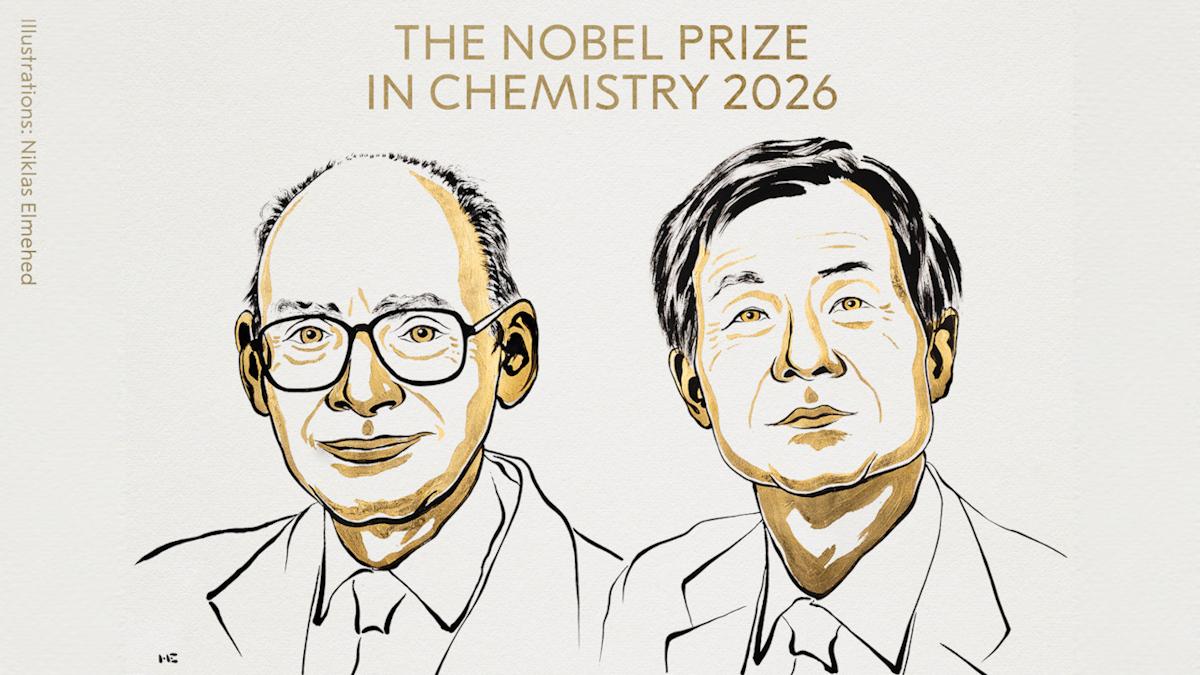
Paris-Sud University's Henri B Kagan and Kensō Soai of the Tokyo University of Science share the SEK 12m ($1.2m) prize.
The Nobel Prize in Chemistry 2026 has been awarded to two scientists - Henri B Kagan and Kensō Soai – for discoveries on mirror-image or 'chiral' forms of molecules that have helped advance drug development and our understanding of how medicines work in the body.
Some molecules, such as amino acids, exist as two mirror images, but living organisms only contain one form – a phenomenon known as 'homochirality' – and the other is rarely found in nature. Unfortunately, chemical synthesis usually results in a mix of both, and for many years pharma researchers have tried to find ways to make only the active form.
Paris-Sud University researcher Kagan and Soai of the Tokyo University of Science have been recognised by the Nobel Committee for their work on "the discovery of nonlinear effects and autocatalysis in asymmetric organic synthesis" – in other words, determining how chemical reactions can be manipulated to ensure that only one form of a molecule is produced.
"Henri Kagan and Kenso Soai have provided a solution to a chemical mystery that is over a century old: how homochirality can emerge spontaneously. The chemical reactions they have developed are spectacular," said Heiner Linke, chair of the Nobel Committee for Chemistry.
In the mid-1980s, Kagan discovered a technique that allowed chemical reactions to be manipulated so that they would produce an excess of one chiral form of a molecule. Then, in 1995, Soai published a Nature paper on the first-ever chemical reaction that had the potential to be homochiral, although he did not succeed in achieving that objective until 2003.
"Other than life itself, no one had previously achieved this feat," said the Nobel Committee in a statement. "Thanks to Henri Kagan and Kensō Soai, we now know how homochirality can emerge. Their discoveries have been decisive for chemists who design reactions for the manufacture of pharmaceuticals."
The development of drugs that include both mirror images of the molecule – known as a racemate – has had some devastating safety consequences in the past, most notably with thalidomide, where one form of the molecule had the desired sedative effect, while the other caused severe birth defects.
Kagan and Soai join other scientists who have been awarded chemistry Nobel Prizes for their work on chirality.
In 2001, William Knowles, Ryoji Noyori, and Barry Sharpless were recognised for their discoveries in chiral catalytic hydrogenation and oxidation reactions that helped drugmakers synthesise one chiral form of molecules, while Benjamin List and David MacMillan were recognised in 2021 for their work on using small organic molecules to build chiral structures cleanly and sustainably.
Commenting on the 2026 prize, Prof Robert Mokaya of the UK-based Royal Society of Chemistry (RSC) said: "Asymmetric organic synthesis is a powerful example of how fundamental chemistry can underpin solutions to some of the biggest challenges facing society."
He added: "Different isomers can have completely different biological and physical effects, so are crucial in finding effective medicines to treat all sorts of illnesses."
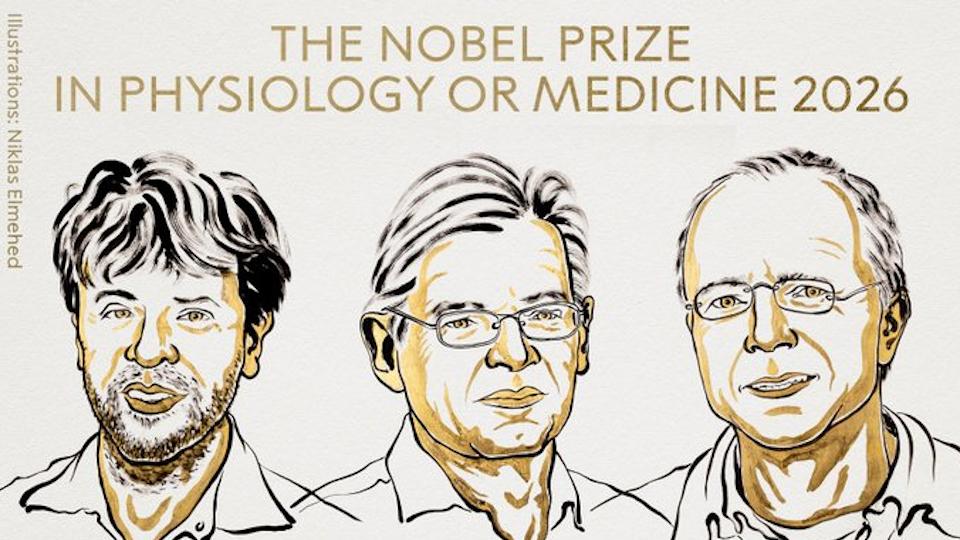
Earlier this week, the Nobel Prize in Physiology or Medicine was awarded jointly to three scientists – Karl Deisseroth, Peter Hegemann, and Georg Nagel – for their work on light-gated ion channels and optogenetics.