After setback, Rhythm gets good news on Imcivree from FDA
Rhythm Pharma has secured the first approval in the US for a drug to treat hypothalamic obesity, a rare condition in which damage to or a malfunction of the hypothalamus leads to excessive weight gain.
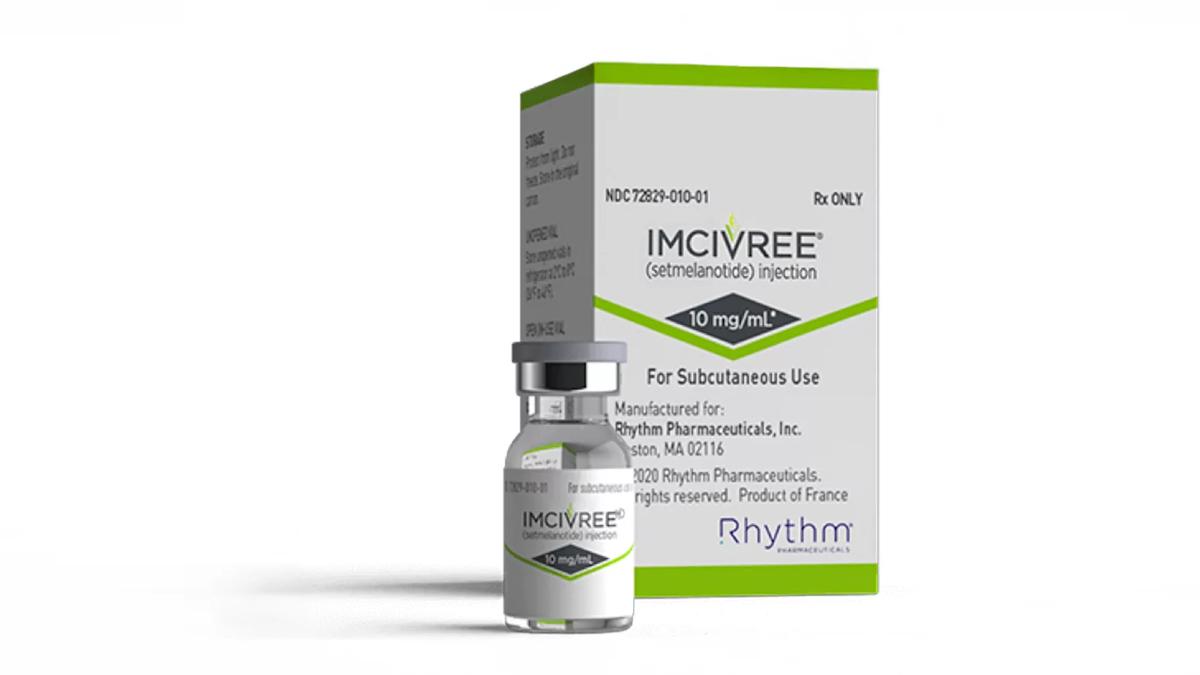
The FDA has extended the indications for Rhythm's Imcivree (setmelanotide) to include patients aged four and over with acquired hypothalamic obesity, based on the results of the 142-subject TRANSCEND trial, which showed that the drug reduced weight by more than 18% over 52 weeks' follow-up.
Imcivree has been approved in the US since 2020 for weight management in people with rare genetic causes of obesity, including POMC, PCSK1, or LEPR deficiencies and Bardet-Biedl syndrome, in patients as young as two. The new labelling covers use of the drug to reduce excess body weight and maintain that reduction long-term in hypothalamic obesity.
It's welcome positive news on Imcivree for Rhythm after another trial of the injectable drug, the EMANATE study in a clutch of other genetic conditions leading to weight gain, delivered negative results earlier this week.
Amy Wood, executive director and founder of the Raymond A. Wood Foundation advocacy organisation for people with rare brain tumours, said Imcivree "has the potential to be transformational" and "offers hope and a path forward for thousands of patients who have long been without options."
The new indication could significantly expand the number of potential patients for Imcivree, which is growing fast with sales of around $195 million last year, up from $130 million in 2024.
Rhythm Pharma – which specialises in melanocortin-4 receptor (MC4R) pathway diseases that impair signalling in the pathway that controls hunger, leading to excessive eating – has estimated that there are around 10,000 people living with hypothalamic obesity in the US who could be eligible for treatment with the drug, with a similar number in Europe and 5,000 to 8,000 in Japan.
The condition is most frequently a result of treatment for tumours that inadvertently causes damage to the hypothalamus, but can also be a consequence of traumatic brain injury, stroke, or inflammation.
"Imcivree [offers] a targeted approach that addresses the underlying biology of this disease and meets a critical unmet need for patients who previously had no treatment options," said David Meeker, Rhythm's president and chief executive.
"This is a transformative milestone for Rhythm and reinforces our commitment to bringing meaningful therapies to patients living with rare MC4R pathway diseases," he added. The company is also developing an oral MCR4 agonist, bivamelagon, which is due to start phase 3 testing in hypothalamic obesity later this year.
Shares in Rhythm were up almost 10% at the time of writing, reversing some of the declines that followed the EMANATE trial readout, and giving it a market cap of more than $6.1 billion.