In DTC's watershed moment, trust and partnership are key
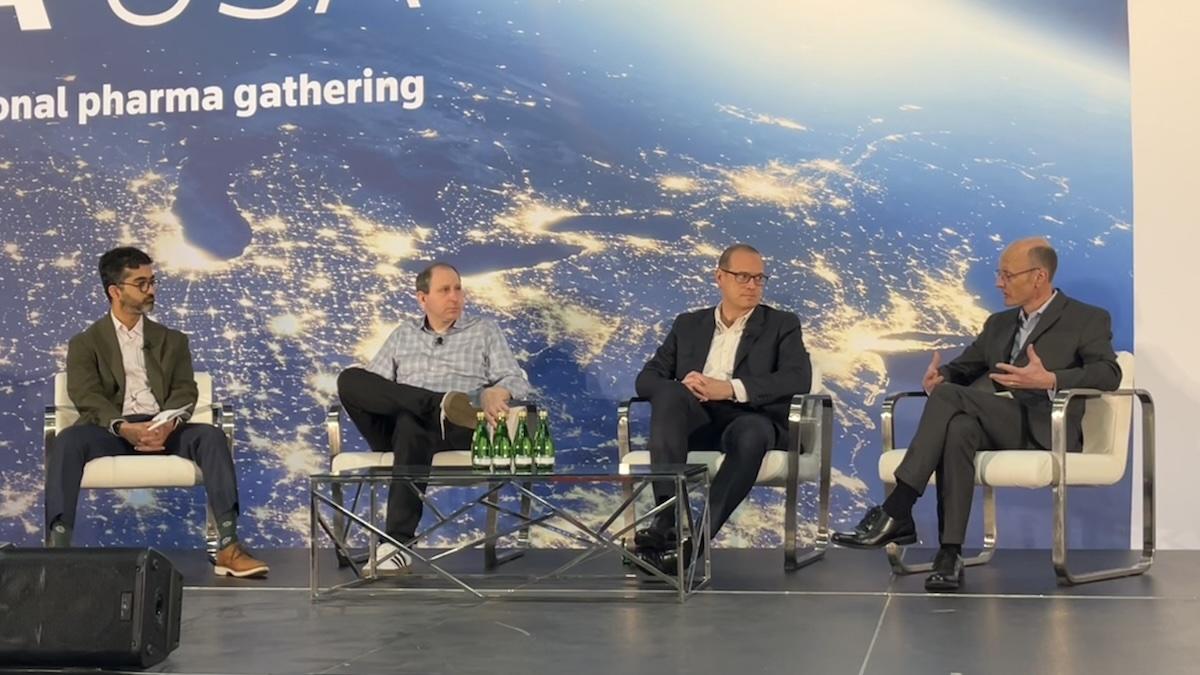
(L to R) ZS Principal Sankalp Sethi, Hone Health COO Stuart Blitz, Nestle Health Science US President Luis Briz, and Amgen CMO Paul Burton discuss DTC at Rueters Pharma USA.
In an increasingly fragmented and complex healthcare system, pharma companies are turning to a new model to improve access: Direct-to-Patient, or DTP, platforms. Connecting directly with patients solves a lot of problems for pharma companies, especially those selling mass market drugs like GLP-1s. But there are also hurdles and pitfalls associated with disrupting traditional access models.
“Our direct-to-consumer platform, Lilly Direct, was one innovation in the system of breaking down frictions for many people,” Ilya Yuffa, president of Eli Lilly USA, said in his opening keynote. “We now have more than 1 million people on our direct to consumer platform, getting care through self-pay.”
At Reuters Pharma USA last week, several sessions focused on DTP, patient trust, and the need to work together as an ecosystem.
Not just a marketing channel
“Direct-to-patient isn't another marketing channel,” Sankalp Sethi, principal for patient services and direct-to-patient at ZS Associates, said during a panel discussion. “There's real barriers here within the healthcare ecosystem that prevent a patient that's aware, that has an intent, but isn't able to move towards action. And so direct-to-patient is about moving these patients from intent to action consistently, systematically, with that context in front of us.”
The opportunity in direct-to-patient exists because patients don’t feel well-served by existing options, opined Stuart Blitz, cofounder and COO at Hone Health.
“There's obviously a lot of discourse around the entire health system extracting money from opaque pricing and all that stuff,” he said. “I think ironically, it's actually forced people to look for direct-to-patient offerings because they're kind of like, I don't trust the healthcare system. I'm gonna be charged too much. I'm paying for health insurance, but I still have to pay co-pays and I get a bill and I don't know what it's about. ... I'll just pay my money because I know what I'm getting. I think that philosophy is not slowing down and in fact is going to grow over the coming decades.”
These uninsured or underinsured patients are one reason pharma companies are pursuing DTP.
“There's 25 million people in this country alone who are basically uninsured and about 40% of under-65-year-olds have insurance with very high deductibles,” Amgen Chief Medical Officer Paul Burton said. “We launched a program late last year called Amgen Now, which brings one of these advanced lipid therapies, Repatha, which is a PCSK9, to patients for $238 a month. So it makes it accessible, easy to access, and puts decision making back in the hands of the patient, obviously in conjunction with discussions with the healthcare providers.”
A matter of trust
In some situations, where a patient already has a diagnosis and a prescription, a DTP channel is reasonably straightforward. But when a patient doesn’t have a PCP or isn’t seeing a healthcare provider regularly, the role of pharma becomes more complicated.
“There is an inherent conflict there because pharma is always like, hey, I'm going to do this. But if a patient comes to see their care platform, there's always going to be bias in their mind to say, well, are you just looking to prescribe the medication that you're making?” Blitz said. “Which is hard to get away from because true or not, …perception is reality. At the end of the day, no matter whether you're providing great care or not, there's always that perception there.”
For pharma, part of building patient trust in the face of that inherent tension is building a two-way relationship of communication.
“We go in with these preconceived ideas of what we think patients want to know. Half the time it's not really true,” he said. “So trying to understand and meet them where they are and then using the types of digital channels, what kind of channels do patients really want to be communicating through understanding that, it's like a new era for us.”
But while pharma can do the hard work of building that trust to a certain extent, ultimately they need help to overcome these hurdles.
“We live in a very regulated world on the pharma side,” Burton said. “And I think that engagement that Stuart described is what really we're searching for. How do you get a proper relationship with a patient, help educate them about a disease, the journey, help them understand the key questions to go and ask when they talk to a physician? That's what we're all striving for. But it's quite difficult for us on the pharma side to then have that discussion. We can't do it. We can certainly do it with physicians, we can do it with payers and systems, but we then kind of fall down there.”
Meanwhile, company's like Blitz's are more free to play the long game of building relationships.
"I get very excited when I see patients say 'My doctor talked about the options. They were not pushing any one particular type of care.'" said Blitz. "That is maybe it is not short-term business beneficial, but I actually think it's much more longer-term valuable because people ... refer friends to us because they say I'm going to get wonderful care. So that's one thing we've had to learn, and I think that's really important."
Partnering to innovate
Lilly's Yuffa also spoke about pharma’s need for partners to innovate in DTP.
“We have to reinvent ourselves in order to stay alive as an industry,” he said. “To take the strength which is innovation and breakthrough science and apply it to new things. And of course, from a regulatory standpoint, we're limited in what we're able to do alone. However, we work in an ecosystem, and we can collaborate on finding solutions to practically anything if we work together on finding ways to break through innovation in all aspects of the ecosystem.”
An obvious candidate for partnering is telehealth companies like Hone Health, which are focusing on building that patient trust. But Yuffa also spoke about partnering with employers, payers, PBMs, and any other stakeholders that could help reduce the friction patients face.
“We've also recently announced Employer Connect, where our goal and our aim is to advance the conversation with employers on how to say yes to coverage of obesity medications for their employees,” he said. “And we know that there are multiple frictions for employers and we want to work within the entire healthcare ecosystem, whether that's traditional existing PBMs to innovate in that space, whether it's to add a collection of third parties to advance the conversation with employers, or whether it's breaking down each friction that exists for anyone living with the stigma of overweight or obesity.”
An opportunity to architect care
In another keynote talk, Maria Whitman, principal at ZS Associates, spoke about the need to seize the moment and make sure that the direct-to-patient systems pharma is building now really work for patients, a theme that came up several times during the conference.
“We have a big opportunity right now,” she said. “I will be incredibly disappointed and sad if at the end of this journey we have our cash pay offerings and we have our digital front doors, but we have not used this moment to architect care.”
That means creating systems that work together, eliminating siloes and creating a seamless experience for patients.
“While we've made advancements in our direct-to-consumer platform and made advancements in our employer capabilities, we know that the system is still not where it needs to be,” said Yuffa. “We can't take for granted the success that we have. We have to continue to innovate to bring our breakthrough medicines to patients that need them.”