How AI simulation could help de-risk obesity and cardiometabolic trials

Obesity drug development is entering a new phase. With approximately 200 obesity medicines marketed or in development, sponsors are increasingly expanding beyond weight loss into cardiovascular disease (CVD), diabetes, chronic kidney disease, metabolic liver disease, and other obesity-related conditions.
As obesity is increasingly recognised as a chronic, heterogeneous disease that intersects with multiple cardiometabolic conditions, development programmes are being asked to answer more sophisticated questions across broader and more varied patient populations. Sponsors increasingly need to demonstrate broader cardiometabolic benefits, including reductions in cardiovascular risk and improvements in long-term outcomes, rather than weight loss alone.
The market opportunity is substantial. According to our research, obesity clinical trial activity grew by 240% between 2021 and 2024, while trial starts increased 23% between 2024 and 2025. As competition intensifies, development programmes are becoming larger, more complex, and increasingly focused on demonstrating value beyond weight loss alone.
Against this backdrop, there is growing interest in evaluating development choices before enrolment begins. Advances in artificial intelligence-enabled clinical development simulation are being driven by large-scale, domain-specific foundation models trained on clinical trial, biomedical, and real-world patient data. These life sciences models allow researchers to explore how different patient populations, protocols, and development strategies may perform before a study starts. Rather than relying solely on historical benchmarks and static assumptions, sponsors can evaluate potential outcomes during the planning process.
The goal is not to predict the future, but to better understand key assumptions before they become costly realities. For obesity-plus programmes, four applications are particularly relevant.
-
Looking beyond individual trials
Development decisions are often made one study at a time. Obesity increasingly requires a broader portfolio perspective.
Sponsors may be advancing multiple programmes simultaneously across obesity, CVD, diabetes, renal disease, and related cardiometabolic conditions. Viewed individually, each study may appear feasible. However, studies can compete for the same investigators, sites, and eligible patient populations.
Clinical development simulation provides an opportunity to evaluate those interactions before execution begins. Teams can explore enrolment assumptions, site demand, patient availability, and operational dependencies across an entire development portfolio, rather than assessing each study in isolation. And the questions extend beyond execution.
Sponsors may also wish to understand whether a study is likely to generate a meaningful treatment effect, accrue sufficient cardiovascular events, maintain an acceptable benefit-risk profile, or remain viable if key assumptions change.
Equally important are strategic questions: How many eligible patients are likely to be available? What might the standard of care look like at launch? Will the evidence generated address regulators’ and payers’ expectations? Could studies inadvertently compete for the same patients, investigators, or sites?
For obesity-plus cardiovascular programmes in particular, simulation can explore nuanced questions, such as:
- Are there enough eligible patients with obesity and established CVD or elevated cardiovascular risk to meet recruitment targets?
- Which patient populations are most likely to demonstrate meaningful cardiometabolic benefit, and can targeting those populations improve treatment effect, increase statistical power, and reduce the number of patients required for the study?
- Will eligibility criteria generate the expected cardiovascular event rates, or could the study require additional follow-up or enrolment?
- Do selected endpoints reflect outcomes that regulators, payers, clinicians, and patients consider meaningful beyond weight loss?
The answers can change the portfolio.
Some trials should advance based on their promise. Some need a better design based on additional evidence. Some should wait, and a few should stop. That is optimisation in its least glamorous and most valuable form: dedicating resources where they have the best chance of return.
-
Running the trial before running the trial
A protocol reflects a set of calculated assumptions about how a study is likely to perform.
Eligibility criteria, endpoints, comparator selection, follow-up duration, sample size, event rates, and recruitment assumptions all influence a study's likelihood of success. In obesity-plus programmes, those assumptions are increasingly important because seemingly small design decisions can have meaningful implications for both scientific outcomes and operational feasibility.
Clinical development simulation offers a way to explore those assumptions before a protocol is finalised. Rather than evaluating a single study design, teams can examine how alternative choices may affect performance under different scenarios. For example, sponsors may evaluate which patients are most likely to benefit from a therapy and which are most likely to experience a cardiovascular event that contributes to the study endpoint. This creates opportunities to identify patients who may demonstrate stronger treatment effects while also supporting the clinically meaningful event rates needed to evaluate efficacy. By improving both treatment-effect detection and endpoint accrual, sponsors may increase the likelihood of success while reducing enrolment requirements.
They may assess whether specific eligibility criteria improve the likelihood of demonstrating treatment effect, but excessively narrow the recruitment pool, or whether a comparator remains relevant if standards of care evolve during a multi-year study.
These approaches can also help sponsors question endpoint strategy, such as whether a composite cardiovascular endpoint is likely to be meaningful and achievable for the intended population or whether certain patient subgroups may experience different efficacy or safety outcomes.
They are not intended to generate a single prediction. Rather, these approaches can help determine where a design appears resilient, where uncertainty exists, and which assumptions are most likely to influence study success. They aim to reduce surprises, minimise avoidable amendments, and allow for better decisions before a protocol is locked.
-
Understanding patients beyond BMI
One of the defining characteristics of obesity research is heterogeneity.
Patients with similar body mass index may have substantially different cardiovascular risks, metabolic characteristics, obesity-related complications, treatment trajectories, and responses to therapy. As sponsors expand into obesity-plus indications, determining which patient populations are most appropriate for a given therapy becomes increasingly important.
Life sciences models create opportunities to combine historical trial data with real-world evidence to better understand how different patient populations may influence treatment response, event rates and outcomes. Sponsors can evaluate whether a therapy should focus on patients with established CVD, elevated cardiometabolic risk factors, or specific obesity-related comorbidities before finalising study design.
These insights also help refine endpoint strategy and evidence generation. Certain populations may be more likely to experience cardiovascular events relevant to study endpoints, while others may demonstrate greater treatment benefit or different safety profiles. Understanding these differences earlier can support more targeted and efficient development strategies.
Patient realities matter, as well.
Research conducted by IQVIA, for example, found that 69% of people with class III obesity reported feeling shame related to their condition, while 32% reported feeling alone and 52% worried about not being present for loved ones in the future. These feelings can influence recruitment, retention, treatment persistence, and what patients consider meaningful outcomes. Increasingly, patient insights are being incorporated into protocol design to ensure studies reflect both scientific objectives and real-world patient experiences.
-
Finding tomorrow's patient
Recruitment forecasts have traditionally relied on historical site performance and previously enrolled patient populations. Predictive patient finding takes a forward-looking approach.
By analysing longitudinal health data, life sciences models can help identify patients likely to become eligible for future studies based on evolving diagnoses, laboratory results, treatment history, and comorbidity patterns. Linked provider and site data can help identify clinicians and care settings most likely to encounter those patients.
In obesity research, this capability is particularly valuable. Eligible patients may receive care across cardiology, endocrinology, hepatology, nephrology, or primary care settings and may not yet carry the diagnosis specified in a study protocol. Understanding where future participants are likely to emerge can help sponsors anticipate recruitment opportunities earlier and allocate resources more effectively.
This changes recruitment planning from a static assessment to a living forecast. Sponsors can continuously evaluate patient availability, site readiness, and enrolment feasibility before recruitment slows or operational bottlenecks emerge.
Powered by life sciences models trained on clinical trial, biomedical, and real-world patient data, these capabilities help researchers explore where patients may be found, how recruitment assumptions may evolve, and which strategies are most likely to succeed. While they cannot eliminate uncertainty, they can help identify recruitment and operational risks before substantial resources are committed.
Ultimately, the goal is to improve visibility into where future participants are most likely to be found and how best to engage them.
Better choices made earlier
As obesity research expands beyond weight loss into CVD, diabetes, renal disease, and other interconnected chronic conditions, clinical development decisions are becoming more complex by the day. Sponsors are increasingly balancing scientific rigour, patient realities, operational feasibility, and evolving expectations from regulators and payers.
Clinical development simulation is not intended to predict outcomes with certainty. Rather, it provides a way to evaluate assumptions, explore trade-offs, and understand potential risks before enrolment begins.
In an increasingly crowded obesity-plus landscape, the ability to make better-informed decisions earlier and before they become costly to reverse may become an important component of future development planning.
About the authors
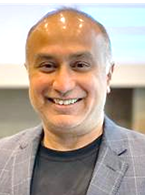 Raja Shankar, VP, machine learning, AI and technology innovation, at IQVIA is determined to change healthcare with the power of AI. He leads the team to create new narratives that fully leverage AI's potential to reshape the industry from R&D through to commercialisation. Shankar brings together a diverse set of technical and strategic capabilities, including machine learning, deep learning, generative AI, product development, life sciences expertise, and business consulting skills. His team drives impactful change by applying AI to life sciences and healthcare decisions.
 Magnus Ekelund, global therapeutic strategy lead, obesity, at IQVIA, helps sponsors develop clinical strategies for obesity, diabetes, and related cardiometabolic programmes. He brings deep therapeutic and clinical development experience, helping teams integrate scientific, regulatory, operational, and patient considerations into study designs that can generate meaningful evidence for regulators, payers, clinicians, and patients.