Bringing therapies to patients quicker with integrated CDMO and CRO partnerships
It’s no secret. Drug development and clinical research continue to get more complex. And with that increasing complexity come rising costs and the risk of delays that can slow the delivery of critical medicines to patients awaiting treatments – and flatten drug sponsors’ return on investment.
At its core, the drug development enterprise is hampered by a traditional fragmentation causing biopharma and biotech leaders to use multiple vendors for drug manufacturing, clinical trial solutions, laboratory services, and clinical supply chain services on the path to commercialisation. A missed handoff here, a lag in contracting there, or maybe an untimely miscommunication – all can add up to lost time. And time matters, with the patent clock ticking and patients waiting.
The landscape is familiar to drug sponsors. Clinical research, supply chain management, and drug manufacturing might each be handled by entirely different suppliers. Vendors bring their own systems, communication styles, and organisational cultures, adding layers of complexity. This puts a significant strain on resources and creates inefficiencies that can be costly for all drug sponsors, but disproportionately so for smaller, leaner biotech teams. The need for simpler and more efficient approaches has never been greater.
Fortunately, there’s another way. Biotechs and pharmaceutical companies can receive enormous value from a trusted partnership with an integrated Contract Development and Manufacturing Organisation (CDMO) and Clinical Research Organisation (CRO).
Leveraging partners with end-to-end capabilities
Working with an integrated CDMO/CRO partner reduces the number of handoffs and whitespace throughout the drug development and clinical research journey, lowers the risk of errors, and helps move projects along faster. In sharing their goals with a trusted CDMO/CRO partner, pharma and biotech leaders can receive tailored solutions that meet urgent needs, unlike sourcing a generic “one size fits all” approach. This produces enhanced ownership and accountability across the value chain, creating a performance-based mindset, rather than a task-based mindset. With visibility into the development programme across stages and phases, the integrated CDMO/CRO partner can help ensure data-driven decision making and time-efficient resource deployment.
Research by the Tufts Center for the Study of Drug Development offers a quantitative analysis of the benefits of an integrated drug development model, such as Thermo Fisher Scientific’s Accelerator Drug Development. Using drug development data from oncology trials, the study reported that using integrated services from Phase I through Phase III can reduce drug development times by up to 34 months and can generate up to $63 million in net financial benefits for drug sponsors, a return on investment of up to 113 times the initial investment. The findings provide a compelling case for sponsors to consider a single-vendor CDMO/CRO partner.
Combining clinical research, manufacturing, clinical labs, and supply chain under a single partner offers a strategic advantage by reducing risk, expediting decision-making, and creating a seamless data and process flow, leading to shorter development timelines and earlier entry to market. While biotech and biopharma companies can benefit from integrated CDMO/CRO solutions at any stage of their drug development journey, choosing an integrated partner early provides additional advantage.
How? By eliminating the inefficiencies of multiple handoffs, reducing the time and costs associated with repeated contracting and technology transfers, and enabling a seamless, end-to-end approach that accelerates progress from early development to commercialisation. With integrated CDMO/CRO services, sponsors can leverage global connectivity and broad service offerings that can be tailored to companies of any size. Smaller biotechs can gain critical resources and expertise they need, and larger pharmaceutical companies can improve pipeline efficiency and the ability to scale.
How does this work? In many ways, accelerating drug development is about avoiding deceleration. De-risking development programmes involves taking out the hidden costs and hidden risks, eliminating the cracks between functions where most delays and failures occur.
For example, with fragmented vendor networks, there can be no single risk register across manufacturing, supply, and clinical trials. Troubleshooting can be slow, with weeks or months needed to identify and resolve issues across disconnected teams. Costly delays can result, for instance, when losing a reserved drug product slot, which can add significant costs if there’s misalignment with drug substance readiness. Clinical supply chains can be disrupted by poor forecasting, which can be avoided by adjusting forecasts in real-time to the exact research sites where patients are enrolling. These are but a few of the areas that a single CDMO/CRO partner can control, since all the functions are sharing information and operating as one coordinated team.
Clinical trial innovation begets therapeutic innovation
Drug development is evolving, and simplifying the journey is more than just a smart business decision – it's also critical for patients. Integrated CDMO/CRO partnerships can alleviate many of the traditional roadblocks to ensure that safe, new therapies reach patients faster. When biotech and pharmaceutical companies spend less time managing vendors and logistics, they can focus on the science that drives innovation.
Looking ahead, the companies that embrace strategic partnerships with integrated CDMO/CRO providers increasingly will be the ones at the forefront of speeding future medical breakthroughs to patients. Together, we can simplify the complex drug development journey and bring new and advanced therapies to the market as quickly as possible.
About the author
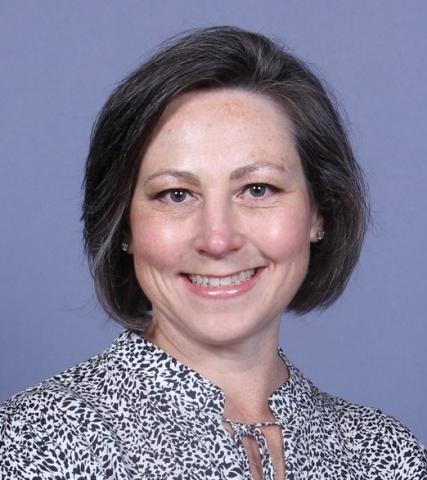
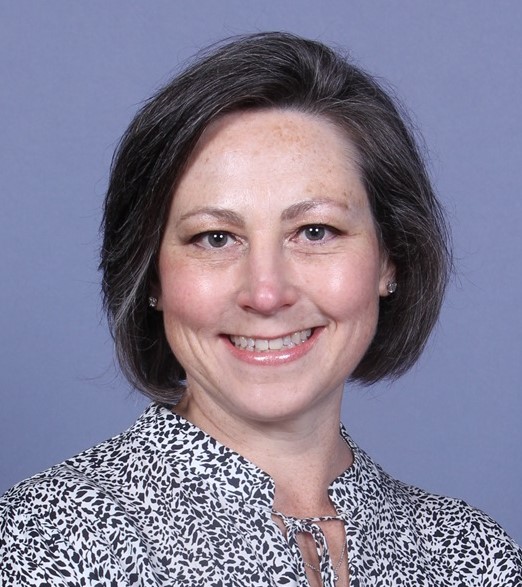 Brenda Bruker is part of the clinical development strategy & innovation team and leads several transformation initiatives supporting Thermo Fisher Scientific’s Accelerator Drug Development operational delivery model. She has been with Thermo Fisher Scientific since 2002, holding a variety of roles in new product/service introduction, commercial integration, and business transformation. Prior to joining Thermo Fisher Scientific’s PPD clinical research business in July 2023, Bruker developed and led the industry’s first CDMO integrated operating model with the company’s pharma services business. Prior to joining Thermo Fisher Scientific, she supported primary research in pre-clinical vaccine development with the National Institute of Allergy and Infectious Diseases, NIH, in Bethesda, Maryland, and the University of Wisconsin Medical School in Madison, Wisconsin. Bruker holds a BSc in Biochemistry from UW Madison and an MBA from the Robert H. Smith School of Business with the University of Maryland.