The role of advanced imaging in transforming early detection and patient outcomes

It’s Prostate Cancer Awareness Month this September; a powerful reminder of both the progress made and the urgent work still ahead. Prostate cancer remains one of the most prevalent cancers among men worldwide, and early detection is critical to improving survival rates.
To me it is clear that the future of prostate cancer care lies in reimagining how we diagnose and monitor the disease – starting, but not ending, with innovation in imaging technology.
The challenge of early detection
Prostate cancer often progresses silently, with symptoms appearing only in advanced stages. This makes early detection critical, as localised prostate cancer has a nearly 100% five-year survival rate, compared to just 32% for metastatic cases. Traditional diagnostic methods, such as testing and biopsies, have limitations, including false positives, overdiagnosis, and invasive procedures that can lead to patient discomfort and anxiety. Despite being widely used, there is ongoing debate about the efficacy of PSA (prostate-specific antigen) screening, and the risk of unnecessary biopsies and overtreatment has prompted new guidelines and made patients more hesitant.
Advanced imaging technologies, such as multiparametric MRI (mpMRI), are emerging as game-changers in addressing these challenges. By providing detailed insights into the prostate gland's structure and function, mpMRI enables more accurate detection of clinically significant cancers while reducing unnecessary biopsies and has demonstrated improved sensitivity and specificity over traditional imaging, leading to more targeted biopsies and, in some cases, allowing patients to avoid biopsy altogether when imaging results are clearly negative. However, the true potential of imaging is unlocked when combined with artificial intelligence (AI) to unlock unprecedented diagnostic precision.
How AI-powered imaging is transforming prostate cancer care
Companies at the forefront of medical imaging are integrating AI with advanced imaging to redefine prostate cancer care. AI-driven imaging biomarkers analyse vast amounts of imaging data to detect subtle patterns that may be invisible to the human eye. This approach not only enhances diagnostic accuracy, but also provides valuable insights into tumour aggressiveness, enabling personalised treatment plans tailored to each patient’s unique needs. For example, imaging solutions can help radiologists and oncologists identify high-risk lesions with greater confidence, reducing the risk of overtreatment or undertreatment.
One of the key benefits of AI-powered imaging is its ability to standardise interpretation across radiologists and healthcare centres, reducing inter-observer variability. This is particularly important in prostate cancer, where subtle differences in lesion appearance or size can lead to divergent clinical decisions. By using quantitative imaging biomarkers, clinicians can better stratify patients based on risk and select the most appropriate management strategy, whether it be active surveillance, focal therapy, or curative intervention.
Additionally, AI-powered imaging can play a pivotal role in active surveillance programs, where low-risk prostate cancer patients are monitored over time. By providing precise and reproducible assessments of tumour progression, these tools empower clinicians to make informed decisions about when to intervene.
Furthermore, AI algorithms are being developed to predict tumour behaviour and response to treatment, potentially allowing clinicians to forecast a patient’s individual disease course. This predictive capability could help avoid unnecessary treatments in indolent cases and ensure timely intervention for aggressive tumours.
Shaping the future of prostate cancer management
The integration of advanced imaging and AI is not just about improving diagnostics, it’s about transforming the entire continuum of prostate cancer care. From early detection to treatment planning and follow-up, imaging biomarkers are paving the way for a more patient-centred approach. This is particularly important as healthcare systems worldwide face increasing pressure to deliver better outcomes with limited resources.
Moreover, as precision medicine continues to evolve, imaging will play a critical role in identifying patients who are most likely to benefit from emerging therapies, such as focal treatments and immunotherapy. By providing a non-invasive window into tumour biology, imaging biomarkers can guide the development of novel treatments and improve clinical trial outcomes.
Another important aspect is the potential for advanced imaging to address disparities in prostate cancer care. In many regions, access to specialist diagnostics is limited, and automated imaging solutions powered by AI could help bridge this gap by providing high-quality assessments even in resource-constrained settings. As technology becomes more affordable and widely implemented, there is an opportunity to extend the benefits of early detection and personalised care to a broader patient population globally.
Raising awareness and driving innovation
Prostate Cancer Awareness Month is more than a public health campaign; it’s a call to action for the healthcare community to embrace innovation.
Awareness efforts should include not only education about risk factors and the importance of screening, but also information about the latest diagnostic tools available. Patients and clinicians alike should be empowered to ask about advanced imaging options and participate in shared decision-making about their care.
Importantly, collaboration between clinicians, researchers, technology developers, and patient advocacy groups is essential to accelerate the adoption of these tools. Continued investment in research, robust clinical validation, and efforts to ensure equitable access will be key to maximising the impact of advanced imaging and AI on prostate cancer outcomes.
This September, let us not only raise awareness, but also advocate for the adoption of cutting-edge tools that can make a tangible difference in the fight against prostate cancer. Together, we can ensure that more men have access to accurate, non-invasive diagnostics and personalised care, giving them the best possible chance at a healthy future.
About the author
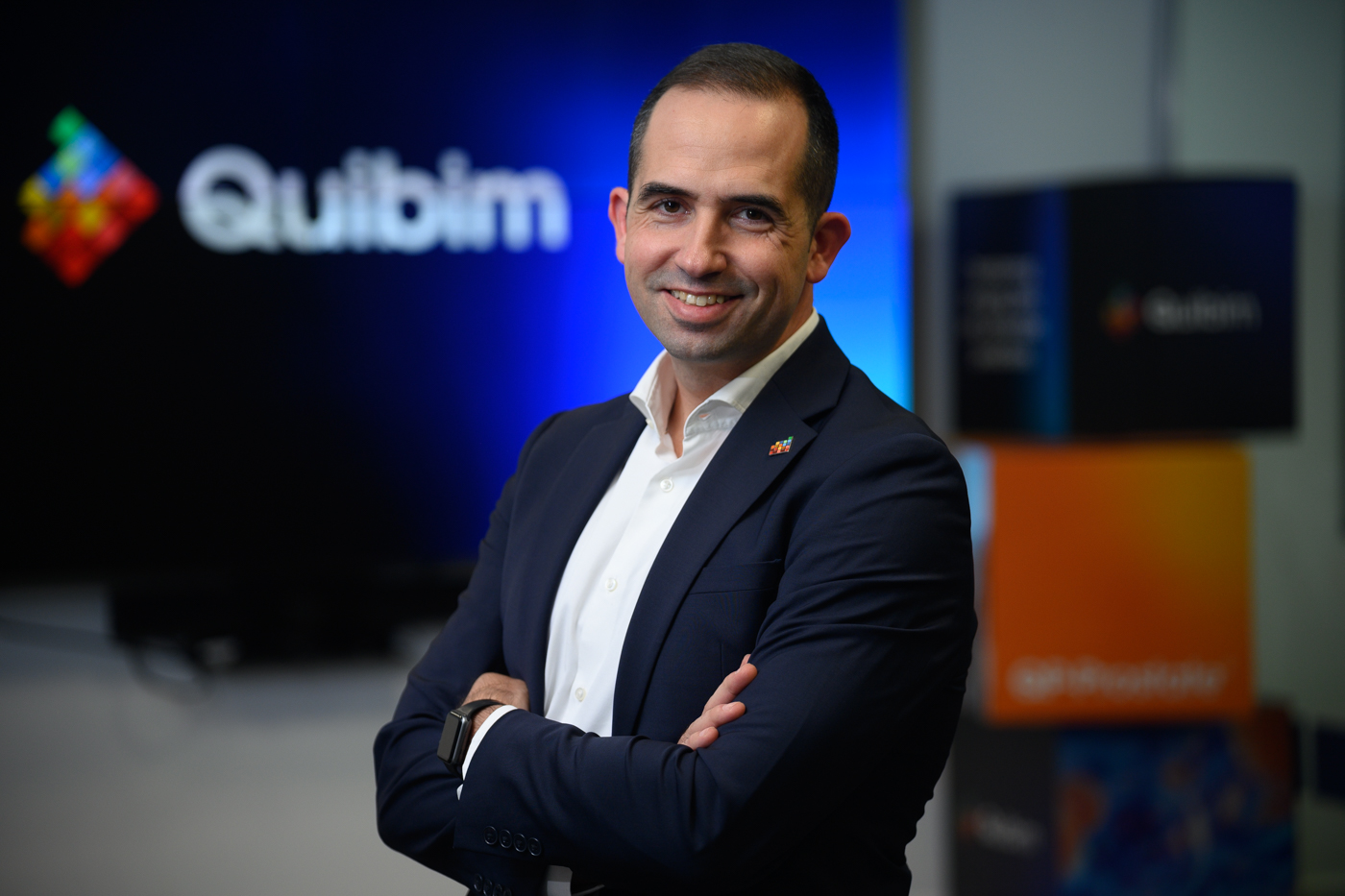 Ángel Alberich-Bayarri is the CEO and co-founder of Quibim, a global company leading at the forefront of imaging biomarkers research in life sciences, pioneering the development of advanced algorithms that transform imaging data into actionable predictions in oncology, immunology, and neurology. He holds a degree in Telecommunications Engineering from the Polytechnic University of Valencia and a doctorate in Biomedical Engineering. He is the inventor of six patents and has received numerous international awards for his innovative work, including the MIT Innovators Under 35. With more than 15 years of experience in the field of medical imaging and computer vision, he possesses deep knowledge of the challenges and opportunities in diagnostics and drug development. Previously, he served as corporate director of biomedical engineering at Quirónsalud and as scientific-technical director of the Biomedical Imaging Research Group at the University and Polytechnic Hospital La Fe. He has authored over 100 articles in prestigious international journals and is a featured speaker at major international conferences. In the social sphere, he serves as a Trustee of the Conexus Foundation and is the founder of the Imaging Foundation, among other initiatives aimed at promoting knowledge and science.