Day One's big bet on tovorafenib just keeps paying off
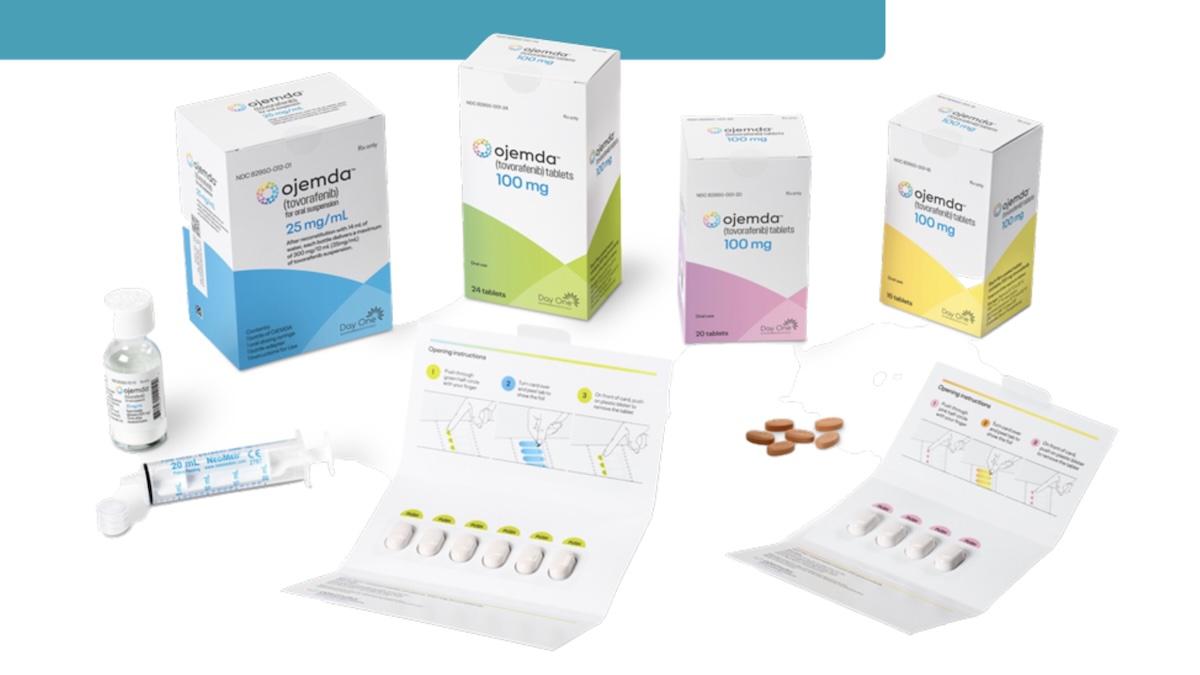
It was originally meant to be a drug for adult melanoma. But through a convoluted journey involving half a dozen different pharma companies and one very smart bet, tovorafenib, better known by its brand name Ojemda, has found its home in paediatric brain cancer -- and, from an initial licensing fee of a few million dollars, proved to be the value engine underpinning a $2.5 billion acquisition for Day One Bio.
When Day One Bio was founded, it didn't have any assets to speak of -- just an idea to try to right a wrong in the industry and provide some hope for children with cancer.
"The company was founded by two individuals, Sam Blackman and Julie Grant," Day One CEO Jeremy Bender told pharmaphorum back in July. "Sam is paediatric neuro-oncologist by training, has been in oncology development in industry for a bunch of years, a bunch of different experiences. He and Julie connected about the idea of putting together essentially a cancer-focused company that would prioritise the development of therapeutics for children living with cancer, which has been an area that's been neglected for some time."
In peadiatric oncology, all the economic problems that plague rare disease are even worse -- small patient populations and a lack of solid research into underlying tumour biology make it difficult to profitably develop drugs. Blackman and Grant decided to address the issue by looking for assets that had already been passed over in adult cancers, but that might be effective in children.
They found exactly that in tovorafenib, which was at the time being tested for adult melanoma at Takeda's Millennium Pharmaceuticals, who had licensed it from Sunesis Pharmaceuticals.
"What happened is Takeda, at around the same time, had a program that's a pan-RAF inhibitor that was at the time called TAK-580, that they were trying to figure out what to do with. And in the course of evaluating their development options, they basically decided to out-licence that programme," Bender explained. "But a couple of years earlier, they had started some work to supply drugs to an investigator-sponsored trial out of Dana Farber called PNOC 14, that basically took that programme and put it into children who have brain tumours because they had observed that those tumours were often driven by RAF and this is a RAF inhibitor."
So, on the strength of that trial, Blackman and Grant paid $1 million (plus $10 million in Day One stock) to Takeda and $2 million (plus a promise of future milestone payments) to Sunesis and built a company.
The company already made back that investment and more just by selling the FDA Priority Review Voucher they were granted with Ojemda's approval two years ago -- that sale made them $108 million, $8 million of which went to Sunesis (which had since merged with Viracta) to satisfy its lingering obligations to the drug's original development. That's not to mention the $200 million Ojemda has already made the company in US sales and the $111 million upfront cash plus royalties from its global licensing deal with Ipsen.
Now Servier believes Ojemda --along with the other assets Day One has been developing, many of which were similarly rescued from stalled or abandoned programmes -- to be worth $2.5 billion. And Bender believes Servier's commitment to rare disease and to patient access will keep Day One Bio's mission alive. (Unlike most pharma companies, Servier is private and owned by a nonprofit foundation).
"Servier’s successful track record in rare cancers and its commitment to advancing targeted therapies makes it the ideal home for our portfolio as part of Day One’s mission to bring medicines to patients of all ages with life threatening diseases,” he said in a statement today. “Joining Servier represents a unique opportunity to extend the reach of our science and our lead program in pediatric low‑grade glioma. Importantly, Servier’s dedication to the rare disease community preserves the patient‑first mindset that has defined our company since the beginning and has driven our deep commitment to the communities we serve.”
For its part, Servier is hungry to prove it's a serious player in oncology.
"Because we're not a public company, our financials are not public," Servier's US CEO David Lee told pharmaphorum at JP Morgan. "We've grown extremely fast, especially in the US. We started in US seven and a half years ago. We started from scratch. We'll be around $2 billion this year."
At JP Morgan, Lee said the company was very much in an acquisitive mode, and hinted that some late stage deals would be announced this year. Day One seems to be the first of these.
"We've been busy this past week," he said. "We're quite interested in our core in oncology and in pushing forward into neurology. ... We do think we have space for many more assets."