UK teams up with Singapore on healthtech regulation
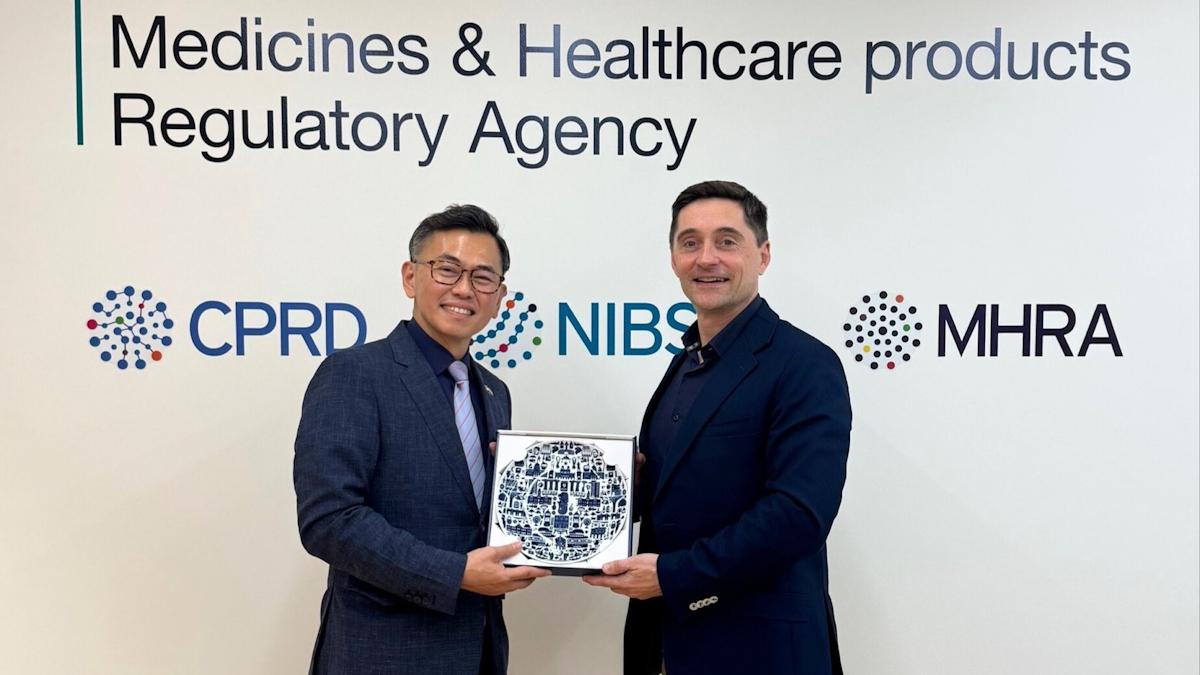
Raymond Chua of Singapore's Health Sciences Authority and Lawrence Tallon of the UK Medicines and Healthcare products Regulatory Agency.
A first-of-its-kind partnership between medicines regulators in the UK and Singapore could allow patients in both countries to access new medical advances more quickly.
The UK's Medicines and Healthcare products Regulatory Agency (MHRA) and Singaporean Health Sciences Authority (HSA) say the 'regulatory innovation corridor' aims to speed up patient access to breakthrough therapies in high-impact areas such as cancer, dementia, obesity, rare diseases and advanced diagnostics.
Developers will also be able to deal with both regulators simultaneously, and the conduit between the agencies will also allow them to seek early, informal joint advice, helping them plan and design better clinical trials, avoid duplication, and cut delays, according to the regulators.
The collaboration also envisages the two countries 'horizon scanning' for emerging health technologies and therapeutics and trade expertise on regulation, which they say will strengthen the position of both countries as hubs for life sciences investment.
It will also be supported by joint work on AI in healthcare, with the UK and Singapore the first two of a target of 10 countries to join the recently announced HealthAI Global Regulatory Network, which is focused on the safe, effective use of AI technologies in human health through shared learning, joint standards, and early warnings of emerging risks.
Life sciences investment group Flagship Pioneering, which currently has more than 40 companies in its venture capital portfolio, including both publicly traded and privately held firms, has already decided to participate in the scheme as it is incubating biotechs in both countries. It also has wide-ranging partnerships in place with Pfizer, GSK, and Novo Nordisk.
Flagship Pioneering will help put the new corridor through its paces in a pilot phase, and the aim is to eventually extend that to include other companies.
"By bringing together the UK's research strength with Singapore's agile approach to emerging technologies […] we can help companies build better evidence from the start and avoid delays in development," said MHRA chief executive Lawrence Tallon.
"For patients in the UK, this means earlier access to promising treatments in areas where progress is urgently needed," he continued, adding that "a clearer, more predictable path to market helps attract global investment, gives innovators confidence to develop their products here, and strengthens the UK's position as a leading hub for the next generation of medicines and medical technologies."
The deal comes as the UK's position as a life sciences hub has come under pressure from an increasingly competitive global environment for investment in R&D, clinical trials, and capital projects.
In recent months, MSD, AstraZeneca, and Eli Lilly abandoned UK investment projects, denting the government's recently announced life sciences plan, although there are hopes the recently announced UK-US pharma trade deal could help reverse the decline.