Skylark trials gene therapy for common form of child deafness

Skylark Bio has started dosing patients in a phase 1/2 trial of SKY-GJB2, a one-shot gene therapy designed to treat GJB2-mediated hearing loss, the most common form of genetic deafness in children.
The first patient has been treated with SKY-GJB2, which is designed to deliver a functional copy of GJB2 to supporting cells in the cochlea of the inner ear and restore the normal activity of connexin 26, a protein essential for normal hearing function.
This form of sensorineural hearing loss (SNHL) is often present at birth and can significantly impair communication and quality of life, according to Cambridge, Massachusetts-based Skylark, which was founded in 2021.
There is already one gene therapy for deafness caused by a genetic defect available in the US, Regeneron's Otarmeni (lunsotogene parvec), which can be used to treat SNHL caused by variants in the OTOF gene.
GJB2 mutations are the cause of hearing loss in around 15% to 20% of congenital cases in the US, with OTOF implicated in between 1% to 5%, according to estimates. There are no approved treatments for GJB2‑related hearing loss anywhere in the world, so, patients rely on hearing aids and cochlear implants to deliver some improvements in sound perception and speech recognition.
Skylark's phase 1/2 trial, called SONIX, is an open-label study that is designed to test the safety and efficacy of a single administration of SKY-GJB2 by intracochlear injection into one ear of each subject, allowing a comparison with the other, untreated ear. The injections are delivered using Skylark's proprietary SKY-CAT device.
The trial – expected to include around 10 children aged nine months to seven years with at least two pathogenic or likely pathogenic variants in the GJB2 gene – is expected to provide some preliminary data before the end of the year, with additional readouts due in 2027.
The start of dosing "brings us one step closer to a future where children born with genetic hearing loss have new treatment options that could meaningfully change the trajectory of their lives," said Skylark's chief executive, Jodi Cook.
She added that the recent approval of Otarmeni – which uses a similar delivery vector and route of administration – "provides important validation for the field and further reinforces our confidence in this approach."
Skylark is working with Forge Biologics to develop and manufacture supplies of SKY-GJB2, which uses an adeno-associated virus (AAV) vector, for clinical testing. The company is also developing a second gene therapy, SKY-PEN, for pendrin-related hearing loss associated with variants in the SLC26A4 gene.
Another company developing a gene therapy for GJB2-related SNHL, Sensorion, has a candidate called GLB2-GT in preclinical development.
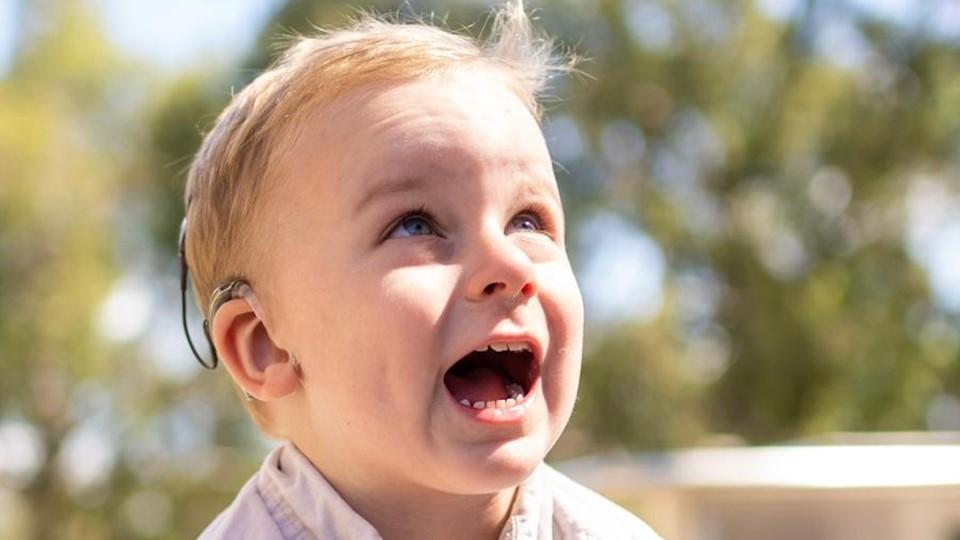
Photo by Franco Antonio Giovanella on Unsplash