SanegeneBio raises $110m for RNAi, plus other financings
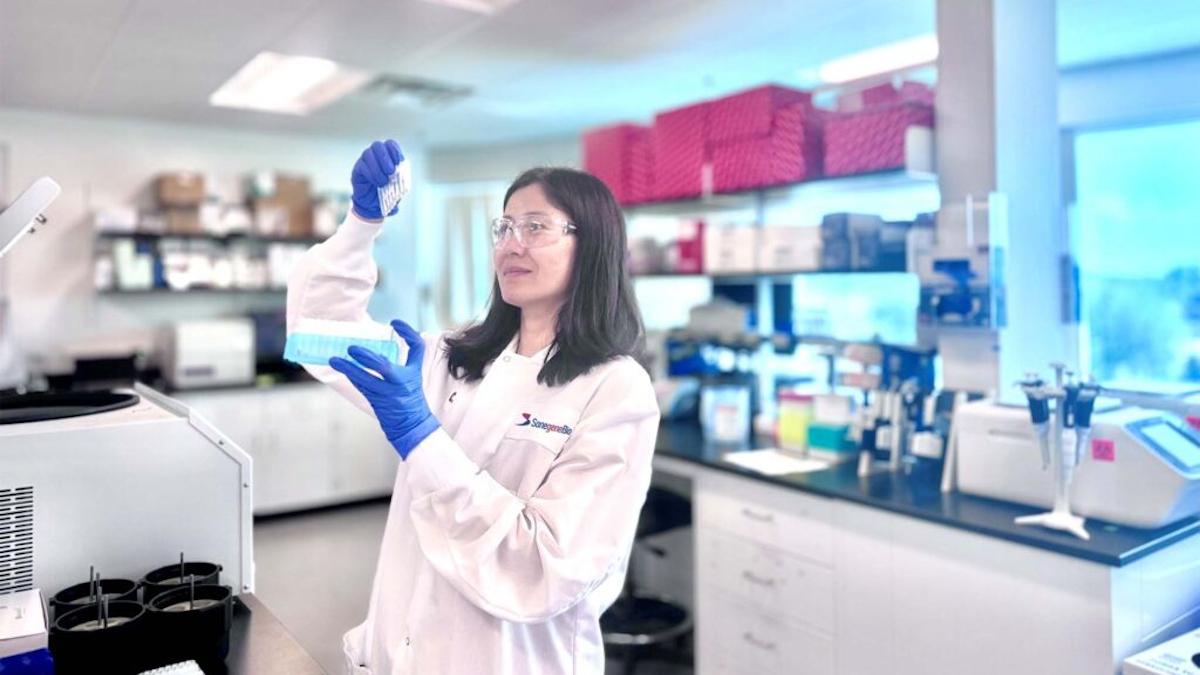
RNA interference drug developer SanegeneBio leads our round-up of this week's biotech financings, with a $110 million Series B backed by recent partner Eli Lilly.
SanegeneBio, a biotech company with operations in Boston, Shanghai, and Suzhou, which is backed by Chinese tech giant Tencent, has a pipeline of RNAi-based drug candidates for autoimmune and cardiometabolic diseases. Its lead candidates include SGB-9768, in midstage testing for diseases that include IgA nephropathy and C3 glomerulopathy, and an INHBE-targeted drug for obesity in early human testing.
The new financing comes a few weeks after SanegeneBio signed an alliance worth up to $1.2 billion with Lilly to deploy its LEAD platform for the delivery of RNAi drugs to tissues outside the liver, including fat and muscle cells, to seek out drugs for metabolic diseases. It also has a 2023 partnership with Innovent on a drug for high blood pressure called SGB-3908, which started human trials last year.
Investors in the round include an unnamed industrial investor, an international sovereign wealth fund, Sino Biopharm, Legend Capital, Vivo Capital, Invus, SymBiosis, Guofa Capital, TruMed, Lake Bleu Capital, as well as Lilly and other backers.
Other deals this week
Also this week, Danish cardiometabolic diseases start-up Sidera Bio raised DKK 700 million (around $109 million) in a Series A, according to a LinkedIn post from investor CVX Ventures, which said it is one of Denmark's largest ever biotech first rounds.
The company holds exclusive rights outside Greater China to develop and commercialise MWN105, a GLP-1/GIP/FGF21 triple agonist for obesity and metabolic diseases originated by Lepu Medical. Other backers in the new company include Forbion, Novo Holdings, RA Capital, and Gilde Healthcare.
Chinese biotech D3 Bio completed a $108 million second-round financing supported by IDG Capital and SongQing Capital, along with former investors Temasek, HSG, MPCi, Medicxi, and the venture capital arm of WuXi AppTec.
Proceeds have been earmarked for a planned phase 3 trial for lead candidate elisrasib (D3S-001), billed as a next-generation KRAS G12C inhibitor that would compete with Amgen's Lumakras (sotorasib) and Bristol Myers Squibb's Krazati (adagrasib). Elisrasib is being developed as a monotherapy for non-small cell lung cancer (NSCLC) and metastatic colorectal cancer, as well as in combination with other drugs like checkpoint inhibitors and Merck KGaA's anti-EGFR antibody Erbitux (cetuximab).
San Diego-based BlossomHill Therapeutics swelled its cash reserves by $84 million this week as it closed a Series B extension that will be used for two clinical-stage drug candidates, OMNI-EGFR inhibitor (BH-30643) and CLK inhibitor (BH-30236), which are being developed for cancers.
BH-30643 is in a phase 1/2 trial called SOLARA in EGFR-mutated NSCLC, while BH-30236 recently started a phase 1/1b study alongside AbbVie/Genentech's BCL-2 inhibitor Venclexta (venetoclax) in relapsed or refractory acute myeloid leukaemia (AML) and higher-risk myelodysplastic syndrome (MDS). The financing saw participation from institutional investors, including Janus Henderson Investors, Brahma Capital, Biotrack Capital, Cormorant Asset Management, OrbiMed, Plaisance Capital Management, and Vivo Capital.
Finally, Prolynx raised $70 million in a Series A led by 5AM Ventures, OrbiMed, and Monograph Capital that will be used for a series of obesity drug candidates that the company thinks could require dosing as infrequently as monthly or quarterly, rather than the weekly injections needed with current incretin-based therapies.
The Emeryville, California-based start-up hasn't revealed details about its pipeline, but said it includes both incretin and non-incretin therapies.