Sandoz says it is entering "golden decade" in biosimilars
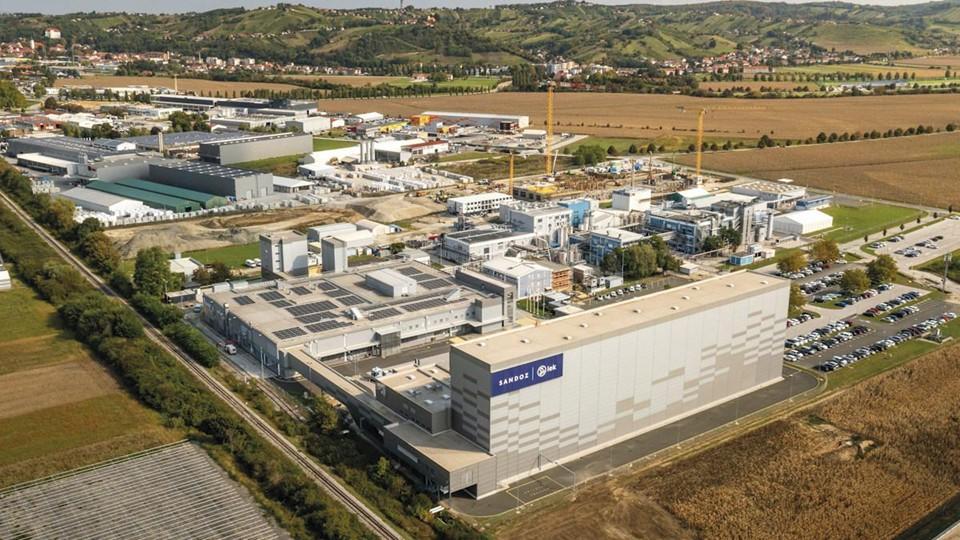
Aerial view of Sandoz' drug substance facility in Lendava, Slovenia, part of a $1bn European hub for biosimilar development and production.
Sandoz has told investors that it intends to double its net sales between 2025 and 2035, and sees a pivot towards biosimilars as the driving force for that growth.
Speaking to investors and analysts at its capital markets day in London, UK, Sandoz presented its new strategy – Bio100 – which revolves around the target of having 100 biosimilars on the market by 2040 from its current level of 13, fuelled by a steady stream of blockbuster biologics that will lose patent protection in the next few years.
"Our Bio100 ambitions are set to position biosimilars to become the majority of our sales, broadening access for patients while creating significant value for shareholders," said chief executive Richard Saymor, who suggested that Sandoz is entering a "golden decade" for biosimilars.
The new strategy has been announced just a few weeks after Sandoz added 10 new biosimilar assets to its portfolio under a new collaboration with China's Shanghai Henlius Biotech, expanding its pipeline of biosimilars to 39 projects alongside more than 300 new generic medicines.
"The scale of our ambitions is matched by the strength of our plan: a leading biosimilar pipeline, a scalable, flexible, and cost-competitive biosimilar development, manufacturing and supply network, best-in-class commercial engines, a culture to attract and retain the best talent, and disciplined focus on value creation," said Saynor.
"This is our opportunity to accelerate our topline and further strengthen our leadership in biosimilars for years to come."
Sandoz, which spun out of Novartis three years ago and reported net sales of $11.1 billion last year, also intends to increase its profit margin from less than 22% to more than 30% in 2035.
Shares in the company rose pre-market, but swiftly lost those gains and were down more than 1% at the time of writing, which might suggest shareholders are not wholly on board with the plan as yet.
The company's ambitious assessment comes from charting the pace of patent expiries for both biologic and small-molecule medicines in the coming years. In the decade between 2015 and 2025, that represented a market worth around $200 billion, but will swell to $270 billion in the five years between now and the end of the decade.
The trajectory will accelerate even further in the 2030s, with Sandoz estimating $380 billion in opportunity in the first half of the decade and $400 billion in the five years to 2040.
By 2035, the company aims to have around 70 biosimilars on the market, including products based on Novo Nordisk's big-selling GLP-1 agonist semaglutide for diabetes and obesity.