Rhapsido is first drug cleared for chronic hives disorder SD

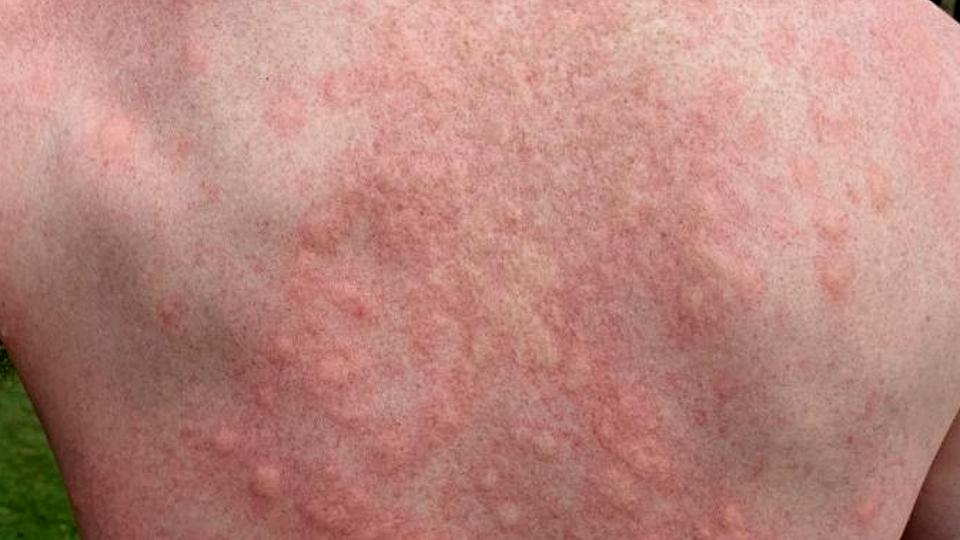
Novartis' oral BTK inhibitor Rhapsido has had its label expanded in the US to include a second indication, symptomatic dermographism (SD), which causes chronic hives.
SD is a condition in which itchy hives are triggered within a few minutes of everyday skin friction, scratching, or rubbing, and is estimated to affect approximately 2% to 5% of the US population.
Combined with chronic spontaneous urticaria (CSU) – for which Rhapsido (remibrutinib) was approved by the FDA last year – SD accounts for around 90% of adults who experience chronic hives, also known as chronic inducible urticaria (CINDU).
It is the first drug treatment to be approved by the FDA for SD, and is indicated for adults whose symptoms cannot be controlled with H1 antihistamines, the standard first-line treatment. It also provides an oral alternative to Novartis' injectable antibody Xolair (omalizumab), which is sometimes used off-label to treat patients with severe SD symptoms.
The FDA approval stems from the phase 3 RemIND trial, which showed that twice as many adults taking Rhapsido achieved complete hive resolution by week 12 compared to placebo – 29.3% versus 14.0% – with responses seen as early as week two.
"With Rhapsido now approved for the two most common forms of chronic hives, more people may have the opportunity to find relief from persistent itch, regain confidence in their daily lives, and focus less on their symptoms and more on the moments that matter," said Novartis' US president Victor Bultó.
Recent setbacks in Novartis' late-stage pipeline – including neuromuscular disease therapy del-desiran and cardiovascular disease candidate pelacarsen – have elevated the importance of Rhapsido to the Swiss group's near-term growth.
The drug made $101 million in sales in the first half of this year from the CSU indication alone, and should see its momentum pick up further now that the SD indication has been cleared, although collectively CINDU is roughly half as common as CSU.
RemIND also included patients with other forms of CINDU – including cold urticaria caused by exposure to low temperatures and cholinergic urticaria – which can occur in response to exercise, strong emotions, or hot water – but these have not been approved by the FDA.
Novartis said it plans to submit the full RemIND dataset "to health authorities globally, where appropriate."
Novartis also has plans to extend the uses of Rhapsido even further, and already has positive results in hand in relapsing multiple sclerosis, with readouts in food allergies, non-relapsing secondary progressive MS, and inflammatory skin condition hidradenitis suppurativa (HS) due next year.