MSD, Daiichi pull filing for lung cancer candidate I-DXd
National Cancer Institute
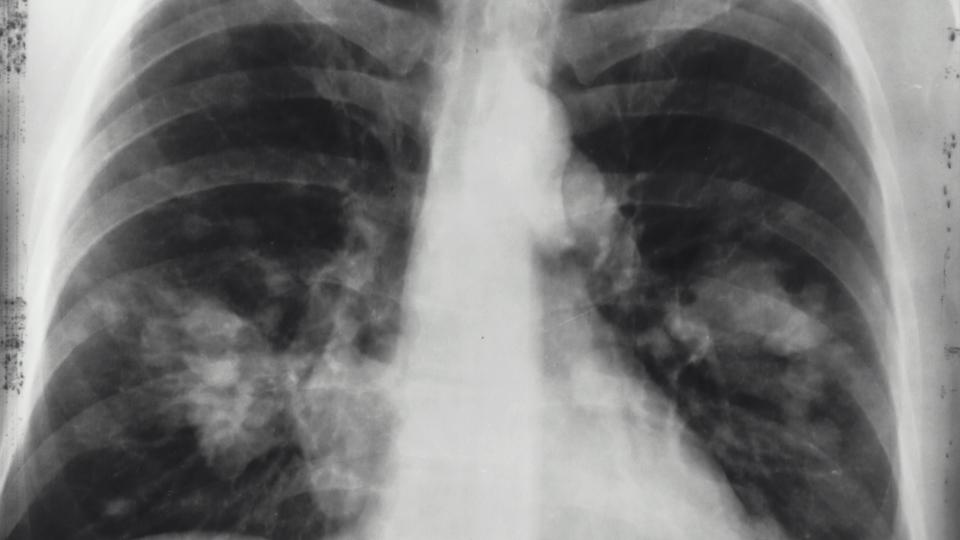
MSD and Daiichi Sankyo's regulatory efforts for their antibody-drug conjugates (ADCs) for cancer have stuttered again, with a withdrawn filing for lung cancer candidate ifinatamab deruxtecan (I-DXd) in the US.
The two partners had submitted the B7-H3-directed ADC as a treatment for previously treated extensive-stage small-cell lung cancer (ES-SCLC), but voluntarily pulled the filing based on feedback from the FDA.
It's not the first time that MSD and Daiichi Sankyo have had to withdraw a marketing application for one of their partnered ADCs. Last year, they also pulled a filing for HER3-directed ADC patritumab deruxtecan (HER3-DXd) in breast cancer that was intended to get the programme back on track after an earlier FDA rejection.
MSD – known as Merck & Co in the US and Canada – paid $4 billion upfront to Daiichi Sankyo for rights to I-DXd, HER3-DXd, and CDH6-targeted raludotatug deruxtecan in a deal that has a top-end value of $22 billion.
In a statement, the two companies said that the FDA's position is that the results of the IDeate-Lung01 phase 2 trial of I-DXd in ES-SCLC do not "satisfy requirements needed to support an accelerated approval for the proposed indication."
In that study – which compared I-DXd to physician's choice of chemotherapy (amrubicin, lurbinectedin, or topotecan) in patients previously treated with one prior line of platinum chemo – the ADC achieved an objective response rate (ORR) of 54.8%, with a disease control rate (CDR) of 80% when stabilised disease – i.e., no tumour growth – was included.
"While we are disappointed that the current dataset [is] not supportive of an approval at this time, we are continuing to evaluate the role of ifinatamab deruxtecan in patients with extensive-stage small cell lung cancer and other types of difficult-to-treat cancer," said Marjorie Green, head of oncology global clinical development at MSD Research Laboratories.
The decision means that MSD and Daiichi Sankyo will now have to wait for the results of the phase 3 IDeate-Lung02 study – for which enrolment is nearly complete, according to Daiichi Sankyo's head of oncology development Abderrahmane Laadem – before it can consider filing with the FDA again. That study is due to be completed in 2028, although interim data may be available earlier.
Other pivotal studies of I-DXd on the go include IDeate-Lung03 looking at the ADC in combination with Roche's PD-L1 inhibitor Tecentriq (atezolizumab), with or without carboplatin, as first-line induction or maintenance therapy in ES-SCLC. It is also being tested in prostate cancer and oesophageal cancer.