Joy as retinal implant restores sight in geographic atrophy
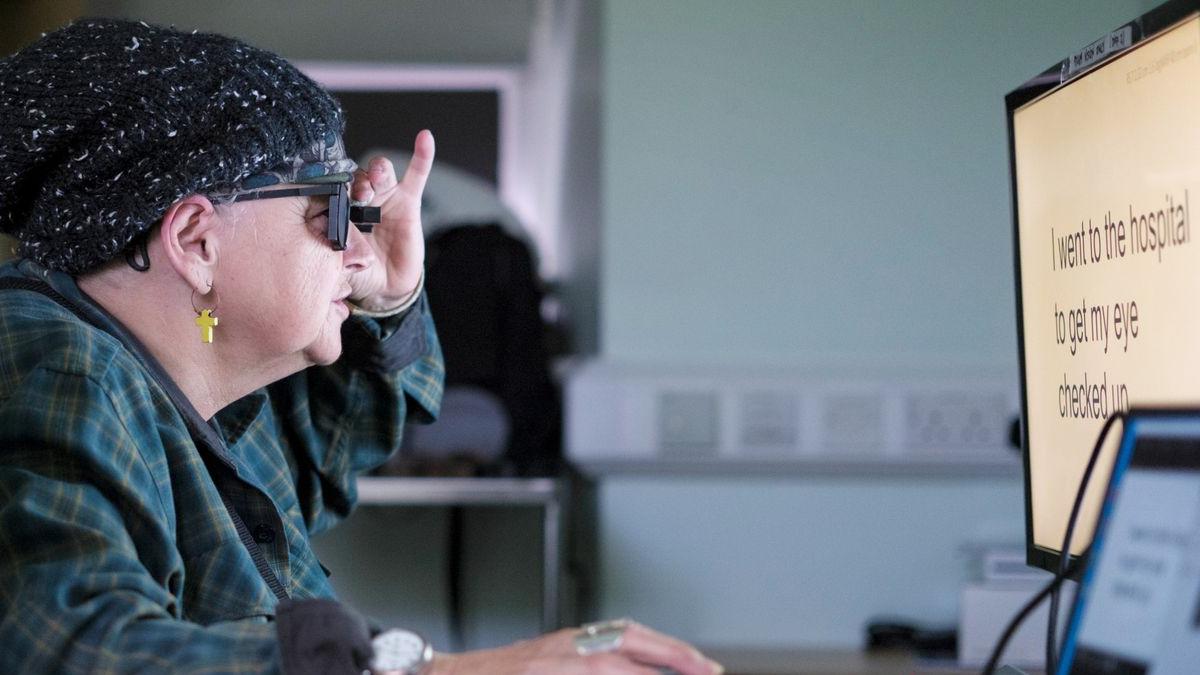
Sheila Irvine, one of the patients who received the implant at Moorfields hospital in the UK.
A wireless retinal implant has been shown to restore vision in patients with geographic atrophy (GA), a major cause of irreversible sight loss that affects millions of people around the world, and is being submitted for approval.
GA is a severe form of dry age-related macular degeneration (AMD) and tends to affect the central area of vision, initially robbing patients of the ability to carry out tasks like reading and – in time – sometimes progressing to complete sight loss.
Science Corp's PRIMA 2x2 mm implant device has been tested in a clinical trial involving 32 patients, which has been published in the New England Journal of Medicine, with remarkable results.
The microchip-based implants replace lost retinal cells in the eye and convert light into electrical signals. Patients wear a special pair of camera glasses that capture images, along with a pocket computer that uses AI algorithms to interpret data and allow patients to zoom in and enlarge text.
The images are transmitted form the glasses to the implant using near-infrared (NIR) light, and impulses are then sent to the patient's brain, via the implant and optic nerve, restoring some vision, although it takes time for the recipients to learn how to interpret the electrical impulses.
All told, 26 of 32 subjects (81%) who had received the implants in the PRIMAvera study for at least 12 months reported "clinically meaningful" improvements in visual acuity, while 27 of them (84%) said they were using the device at home for reading letters, numbers and words.
There was a mean improvement of 25.5 letters (more than five lines) on an ETDRS letter chart.
"I was an avid bookworm, and I wanted that back," said Sheila Irvine, one of the study subjects who received an implant at the Moorfields Eye Hospital in the UK, who described GA as "like having two black discs in my eyes, with the outside distorted."
She added: "It's a new way of looking through your eyes, and it was dead exciting when I began seeing a letter. It's not simple, learning to read again, but the more hours I put in, the more I manage to pick up."
The implant offers another way to treat people with GA other than drugs or even gene therapies, which have been developed slow down or prevent the loss of retinal cells but cannot restore cells that are already lost to the disease.
The study was led by investigators José-Alain Sahel, director of the UPMC Vision Institute, Stanford University's Daniel Palanker, who designed the implant, and Frank Holz of the University of Bonn.
The trial marks "the first time that any attempt at vision restoration has achieved such results in a large number of patients," said Sahel. "More than 80% of the patients were able to read letters and words, and some of them are reading pages in a book. This is really something we couldn't have dreamt of when we started on this journey, together with Daniel Palanker, 15 years ago."
Alameda, California-based Science Corp said that it has applied for regulatory approval in the EU, hoping to have PRIMA available to patients next year, while in the US, the FDA approval process "is underway."