
Boehringer gets FDA's second 'national priority' approval
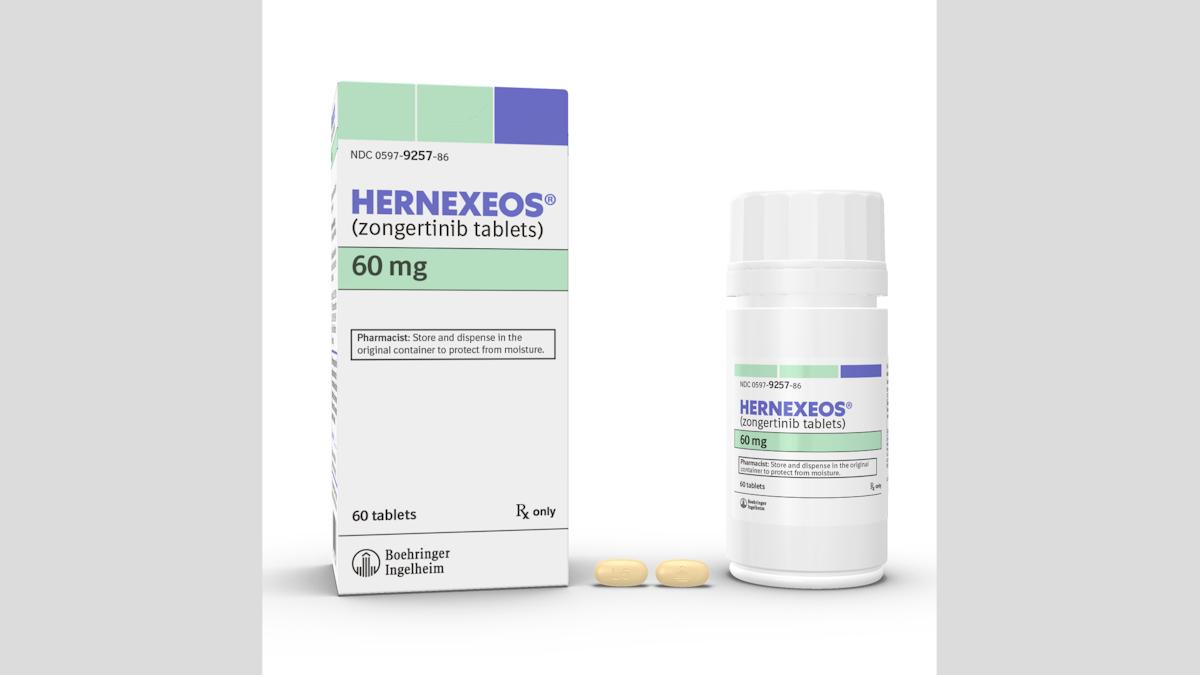
Boehringer Ingelheim has become the second company to get a product approved under the FDA's national priority voucher programme, claiming the go-ahead for first-line use of lung cancer drug Hernexeos.
The rapid decision comes just six weeks after Boehringer filed for approval of Hernexeos (zongertinib) for treatment-naïve, HER2-positive advanced non-small cell lung cancer (NSCLC), fulfilling the objective of reviewing applications within one to two months, rather than the 10 to 12 months.
The first product to be cleared under the Commissioner's National Priority Voucher (CNPV) programme was a US-made version of the widely used antibiotic Augmentin XR (amoxicillin-clavulanate potassium), intended to reduce the national reliance on imported versions of the drug.
The scheme is designed to plug gaps in the domestic supply of essential medicines, as well as bring important new therapies to patients more quickly, according to the FDA. "The FDA is on the hunt for game-changing therapies that can qualify for a priority review," commented the agency's Commissioner, Marty Makary. "In this case, a final decision was rendered 44 days after the filing date."
Hernexeos was granted accelerated approval last summer in the US as the first oral, targeted therapy for previously treated patients with HER2-mutant advanced NSCLC, handing Boehringer a lead, now extended, over Bayer, its nearest competitor in the category.
Bayer's Hyrnuo (sevabertinib) was approved for the second-line indication in November 2025.The company also has data in hand in the first-line setting from the pivotal SOHO-1 trial, but has not yet file for approval.
Hernexeos' frontline approval draws on data from the Beamion LUNG-1 study, which revealed an objective response rate of 76%, including 11% complete responses, and a median duration of response of 14.1 months, with two-thirds of patients seeing a response for six months or more.
Progression-free survival – how long patients lived before the disease progresses – came in at 12.4 months, according to a paper on the trial published in the New England Journal of Medicine last year.
Lead investigator John Heymach, chair of thoracic/head and neck medical oncology at The University of Texas' MD Anderson Cancer Center, said the drug is "setting a new standard as the first targeted therapy" for this type of lung cancer, with "demonstrated efficacy, a manageable safety profile, and once daily oral administration."
Both Boehringer and Bayer are also running phase 3 trials – respectively, Beamion LUNG 2 and SOHO-2 – that are specifically looking at frontline treatment of HER2-positive NSCLC. Boehringer could see the first data from its trial later this year and has said that could allow Hernexeos' accelerated authorisation to be upgraded into a full, permanent approval.
HER2 mutations are seen in between 2% and 4% of NSCLC patients, and are associated with a poor prognosis and a higher incidence of the cancer spreading to the brain. Patients with HER2-mutant NSCLC are predominantly women, and tend to be younger and non-smokers.













