Bausch Health hit as Xifaxan successor flunks trials
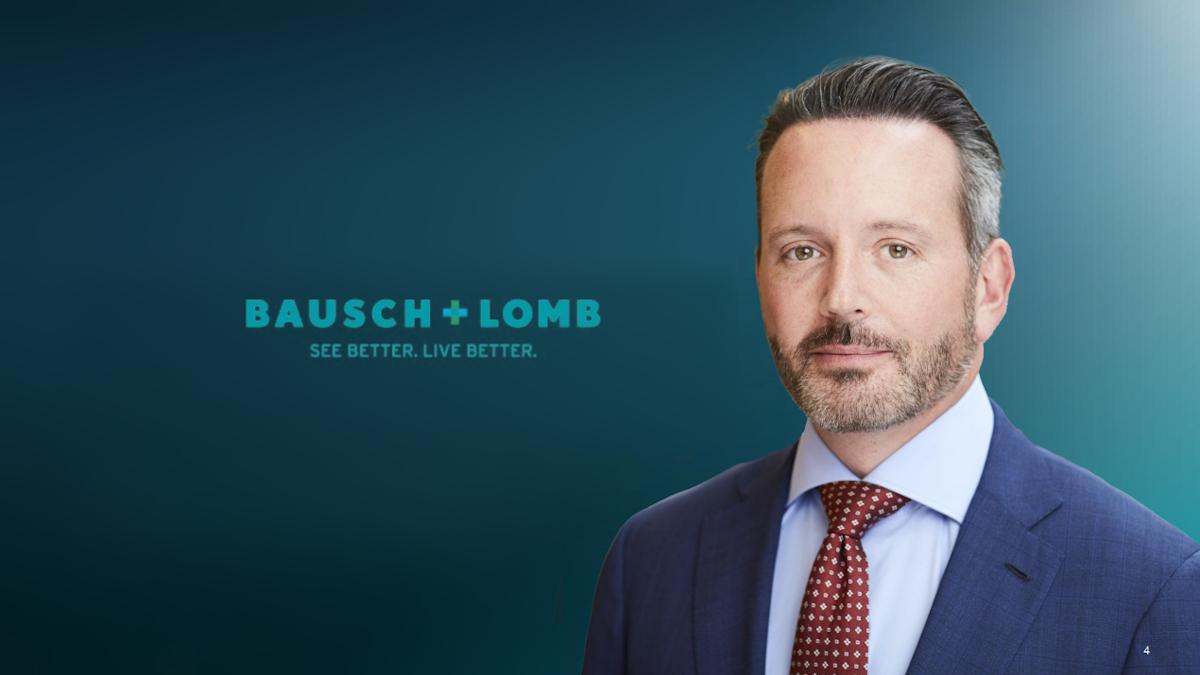
Thomas Appio, Bausch Health's chief executive
A hole has been blown in Bausch Health's late-stage pipeline, after a follow-up to its top-selling drug product Xifaxan failed not just one but two phase 3 trials.
The two phase 3 RED-C clinical trials were testing the new solid soluble dispersion (SSD) formulation of rifaximin, the active ingredient in Xifaxan, for the primary prevention of hepatic encephalopathy (HE) in people living with advanced liver cirrhosis. HE is a worsening of brain function that can occur in patients whose liver can no longer remove toxins from the blood.
Neither study achieved the primary efficacy objective – lengthening the time to first event of overt HE requiring medical intervention in hospital, or death – compared to placebo, according to a Bausch Health statement.
"We are disappointed in the results, as there is currently no approved treatment for these patients," said Thomas Appio, the company's chief executive. "We are currently reviewing the full dataset to determine potential new development opportunities," he added.
Shares in Bausch Health fell around 11% after the announcement, reflecting the importance attached to the SSD rifaximin programme by the company's shareholders.
Xifaxan was originally developed by Salix Pharma – which was acquired by Bausch Health (then known as Valeant Pharma) in 2015 – and has been on the market for more than 20 years.
Approved to treat traveller's diarrhoea, secondary prevention of HE, and irritable bowel syndrome, the product accounted for 85% of Salix's $1.89 billion in revenues in the first nine months of 2025, making it the largest individual contributor to the company's total pharma turnover of $3.77 billion in that period.
It is approaching the end of its patent life, with various lawsuits seeking to overturn its intellectual property ongoing, and generics are currently expected to reach the US market in around 2029 after a challenge by Alvogen was blocked in 2024.
Analysts had viewed SSD rifaximin as a potential $2 billion-a-year product, so, the setback could leave Bausch Health scrabbling to plug a gap in its growth drivers around the end of the decade.
SSD rifamixin is designed to enhance gastrointestinal solubility while minimising systemic exposure, potentially improving the efficacy and safety of treatment. Bausch Health has been hoping to also move rifaximin treatment into the primary prevention category, rather than reducing the risk of recurrence, which could triple the number of eligible patients.
The company's pipeline currently also includes epigenetic modulator larsucosterol for treating alcohol-associated hepatitis, S1P modulator amiselimod for ulcerative colitis (currently under an internal review), and Thermage FLX, a radiofrequency treatment for skin tightening.