Is DTx finally reaching drug-like efficacy? A Q&A with David Benshoof Klein
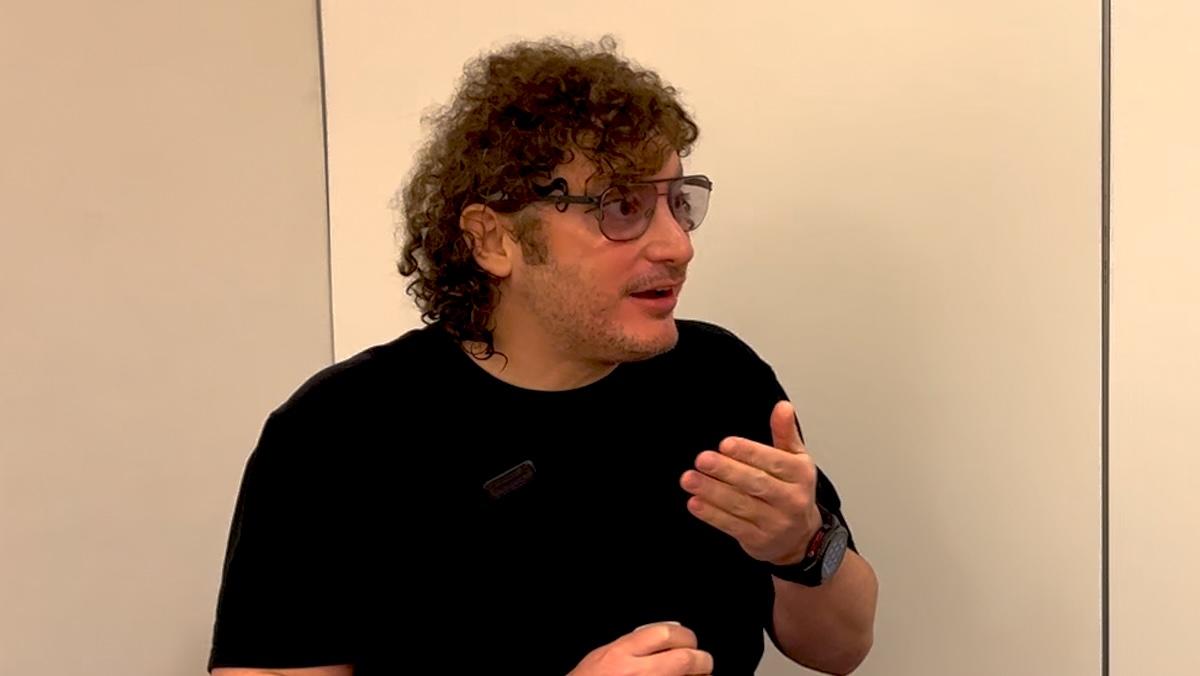
Click Therapeutics CEO David Benshoof Klein speaks with pharmaphorum at the Biotech Showcase in San Francisco.
Digital therapeutics (DTx) have had a lot of ups and downs in the past decade. A conventional wisdom in the space is that finding a workable business model is at least as big a hurdle as building a digital therapy that works.
Click Therapeutics is well on its way to doing both – and in a sit down interview at the Informa Biotech Showcase in San Francisco, CEO David Benshoof Klein shared his insights on what’s really been holding DTx back. And why the current moment is providing the ingredients for the space to finally break through.
pharmaphorum: For those who don't know Click Therapeutics, it’s one of the few companies that is really continuing to excel in digital therapeutic space. Tell me a little bit about what you do and how you stand out.
David Benshoof Klein: Click is developing essentially software treatments and we've been doing that over the last 10 years. It’s just starting to get exciting for us because a year and a half ago in collaboration with a company called Otsuka, we had the first separate FDA authorised apps to treat major depression symptoms. So, obviously that's a big deal and we're super excited about that programme.
Also pretty recently, maybe six months ago, we had the first ever app authorised by FDA as a treatment for migraines - specifically a preventive treatment for episodic migraine adjunctive to meds in the space. And that's based on an enormously exciting data set and study where in a clinical trial against a sham control group, we showed a reduction of three monthly migraine days.
So, you know, really meaningful outcomes with no treatment-related adverse events and extremely high engagement. Migraine is a space that affects a billion people worldwide and over 40 million people in America alone, many of which will tell you, look, the drugs are great, they're working, but I still need more help. So, it's a huge unmet need that we've proven that we can address digitally with no safety issues and we're really looking forward to bringing that to patients.
pharmaphorum: Historically, the problem of digital therapeutics hasn't so much been the efficacy, it's been the business model. How do you get patients to pay for value like you get from a drug that allows you to stay afloat as company when you're offering “just” an app?
DBK: You know, I'll kick back a little bit on that, on the efficacy thing. I think some 1.0 companies, if you will, for lack of a better term, did actually struggle on efficacy and kind of more publicly positioned it as a business model issue. If you look at the early players in this space, they weren't actually driving drug-like efficacy. You had a company with an app essentially indicated to increase compliance to opioid use disorder (OUD) outpatient therapy, right? So, really a compliance app that was more positioned in the light of ‘Oh it’s an OUD treatment’, but it really wasn't indicated like that with the FDA and the clinical outcomes didn’t show that it drove abstinence.
I think there's been a lot of conflation in this space. And don't get me wrong, I think they are yet to be proven in a mass-market type commercial way. And that really is the final frontier for us. But it's only been relatively recently where you've seen truly efficacious and safe programs start to get clinically validated and now come to market.
But the earlier players in this space really did struggle with efficacy […] Frankly, if they were drugs, they'd be shelved by the pharma companies, just to put it bluntly. But our programs are different. We’ve now hit on three pivotal trials in a row, which, as an ex-biotech person is real. As we just announced with our partner Boehringer Ingelheim, we hit our primary endpoint in negative symptoms of schizophrenia in a large-scale pivotal trial, which is a monumental thing. I mean, you've got a veritable graveyard of drugs that were really trying to hit those endpoints and failed.
So, we think that you're just starting to see now with Click and a very select group of other players, you know, truly efficacious and safe programs on the way to the market or coming to market that meet that criteria that if it was a drug, it would get covered.
pharmaphorum: What is it about Click’s digital therapeutics that allows you to have that drug-like efficacy? What’s the secret sauce?
DBK: We realised relatively early that engagement was the key in this space. There’s a lot of terrific neuroscience and behavioural psychology and neuropsychiatry and all kinds of, you know, academic and terrific ways to kind of treat people digitally and we embrace those with teams of scientists and physicians - you name it, we've got it at Click. And that's key for sure. But if you ask me what the secret sauce is, I think it is our ability to engage patients with our platforms. And we've demonstrated that in paper after paper and study after study. We've got industry-leading engagement results. And that's the real key.
It's one thing to know how to help people with digital. And, you know, much of that can sometimes be translational, like what's done in the real world and making that digital, some of it's much more experimental and we kind of embrace both sides. But if you ask me what the secret sauce is, it's our AI-driven ability to continuously drive engagement. And we do that largely through personalisation. So, you know, we give back, right? We show them that it's useful to use this and we work to create a what we call a digital working alliance with the patient.
pharmaphorum: Tell us about your big JPM news, the partnership with Ultrahuman.
DBK: A few months ago, we started to have a lot of interest from more of the wearable companies and, frankly, big tech and so on and so forth. I think if you really look at that space, it's blowing up. I mean, let's just face it, right?
The power of data is coming to the consumer and it's a tremendously exciting thing. I mean, not just for the industry, but I view it as personally exciting. To be able to track all of my data and health data and potentially be able to action these data, it's an extremely empowering thing. And there's a paradigm shift going on in healthcare now. When my wife gets her lab results, what’s the first thing she does? She puts it in as AI and starts asking questions about it. That's new. And that power is moving to the consumer.
So, we've had a lot of interest in our technologies from that space as a whole. If you look at that space, it's something that'll eventually be differentiated by software, and I think you have a lot of these companies that are getting these great biometric data from a lot of these users, but not necessarily able, whether it's for regulatory reasons or science reasons, to tell them what to do with it. Like I had a different device a few months ago and it would be like, oh, your sleep really sucked. You know, better luck next time.
pharmaphorum: Because if it tells you something useful then it becomes a different category of device for the FDA?
DBK: Well, it depends. There's treatment claims and then there's not treatment claims. And we view ourselves as a really a responsible custodian of that. We’re technically a medical device company. Everything we do has a quality management system wrapped around it and we're extremely sophisticated in that space.
I think, generally, companies have to be really careful in that grey area, and we don’t really go in that grey area. If it's a treatment, if we're going to claim it's a treatment and we really want to have FDA clearance that allows us to make these marketing plans.
So, initially, with Ultrahuman we’re codeveloping what in Ultrahuman language is a migraine power plug - you know, they have power plugs. They don't charge a base subscription, which is we think a fantastic business model. So, we’ve essentially developed a migraine management power plug based on our proprietary patented FDA-cleared technology that is more of a migraine management tool and essentially works in heart rate variability, sleep activity, menstrual cycle, and drives insights from these as it relates potentially to people's migraines. And we think, ultimately, that will really help people manage their migraines.
We think that the future state of that space is really the co-mingling of these digital therapeutic tools with biometric data. That's the most powerful way to to do it. There’s only so much the biometric data can do alone and there's only so much the digital therapeutic can do alone. But when you really co-mingle those two, you can get extremely powerful tools.
For years the tech companies have been talking about how healthcare is going to be the biggest space for us in the future. And that's been going on since I was a child. I truly think that this is how it'll happen, even to the point where you'll start to see these programs enter into the reimbursement system. And Click actually has a pipeline of not just migraine, but different derivatives of our programs that we are that we are in the process of essentially partnering with some of these big tech and wearable companies.
We're going to be launching our FDA cleared version, the actual migraine program in the US towards the summer or maybe a little bit later, and you can imagine the differentiating factor that any device that could include that would have to the healthcare system. I think a lot of these companies here in the US […] say we kind of help people sleep better and we do these things, you know, relatively soft outcomes, whereas our migraine program here in the US has proven how the economic outcomes that are outstanding and we've proven clinical outcomes. I mean, the health economics behind, you know, saving somebody, three monthly migraine days, could save thousands of dollars per patient per year.
We think that our technology and that our programs can not only help patients all around the world and bridge that gap in access and help patients take control of their health, but it can also help a lot of these technologies and wearables, you know, really enter into the healthcare system in a meaningful way.