Building an AI-native CRO
Artificial intelligence is transforming nearly every industry. In clinical research, the question isn't whether to use AI, but how to use it meaningfully.
Too often, organisations start with the technology, adding AI to existing processes without rethinking the workflow itself.
There's a better approach: reimagining processes around what AI now makes possible, rather than forcing AI into today's processes.
That's the foundation of becoming an AI-native CRO.
Starting with the work, not the technology
Clinical research teams are facing growing complexity. Data volumes continue to increase, studies are becoming more sophisticated, and teams are under constant pressure to improve efficiency while maintaining quality and compliance.
The common response, automating pieces of existing workflows, creates incremental gains at best.
An AI-native approach starts by questioning the workflow itself. Rather than asking where technology fits, it asks what work would look like if designed from scratch.
Take the study build. AI-powered EDC systems can produce a Clinical Data Acquisition Standards Harmonisation (CDASH)-compliant case report form (CRF), mapping every question to its standard variable and domain, yet, in practice that rarely happens at design time: the standards expertise sits with biostatistics, the form is built by data management, and reconciling the two means rounds of back-and-forth after the fact.
Now, AI designs the CRF from the protocol and the sponsor's own preferences, either prior designs or library forms, keeps it CDASH-compliant, and produces the mapping automatically. Data managers own the build, biostatisticians review the mapping, rather than constructing it, and the sponsor gets a form that looks like their own. Having the first pass drawn directly from the protocol reduces the risk of missed variables and, because the data is standard from the first record, it flows straight into Study Data Tabulation Model (SDTM), Analysis Data Model (ADaM), and every downstream capability. Live on multiple studies, this turns weeks of coordination into a review.
That standard data changes what happens downstream. Everything needed to define statistical analysis exists before first patient in, including the Statistical Analysis Plan (SAP), study builds, and shell templates. By using AI to draft analysis configurations from those sources, experts shift from programming to review and approval, enabling the analysis system to be stood up before first patient in from metadata alone. The shells a sponsor receives are generated by the same approved configurations that will later produce the final outputs, so end-to-end consistency is built in. Because everything derives from the source documents, rather than from production code, the same system delivers QC that is structurally independent of the programming path without a second programming team. Early setup acts as a dry run of the study build, catching gaps before data acquisition starts. Data then flows into a completed pipeline, enabling continuous analysis and complex trial designs.
The workflow doesn't just get faster; it changes shape.
Building AI by the people, for the people
Technology alone does not transform an organisation. The people closest to the work do.
In clinical research, data managers, biostatisticians, image graders, surveillance specialists, and operational leaders understand challenges that process diagrams cannot capture. They know where bottlenecks occur, time is lost, and quality risks emerge.
AI products should be built by people, for people. Working alongside experts from the beginning ensures their insights shape product direction, workflow design, and implementation.
According to data managers, the challenge isn’t just the review, but everything around it. The workflow needs to be redesigned from end to end: AI surfaces and prioritises issues as data arrives, enabling natural language interaction with datasets, and lets users generate the datasets they need without relying on programming queues.
Review, tracking, and clean-patient status live in one place, kept current as the team works, easily surfaced for communication and gap identification, with the site loop closing right there through reports and quick navigation.
With imaging, the clinicians need to be the experts. The graders label the data and guide the machine learning itself, whether for microperimetry analysis built around what the industry needs, or OCTA non-perfusion grading, where clinical judgement is so central the workflow could not exist without them. And none of it can be built and handed over: weekly reviews shape the products as they take form, practitioners and product in one continuous loop. That is what "by people, for people" means in practice.
Reimagining biometrics workflows
This philosophy is already reshaping some of the most data-intensive functions in clinical research. These results are still early, but directionally clear: data review platforms must run on a large and growing base of production studies, with review meaningfully faster than traditional processes, and independent statistical QC. And this is just the beginning.
Data management, biostatistics, imaging, and surveillance are critical to research, yet, professionals often spend significant time navigating manual processes, repetitive reviews, and operational complexity.
Developing data and workflow products will help these teams work differently, from streamlining data management and statistical review to enabling new approaches in imaging and data oversight, while keeping experts in command of every decision.
The goal isn't simply efficiency. It's increasing the expert judgement applied to every study, not just the speed of it.
AI and the expertise cannot be separated: AI is woven into the product, the product is built around the expertise that technology can now transform, and the workflow changes with it, because the technology enables processes that were not possible before. The best approach is to simplify every process as far as it will go, then augment it with agents, so each function can work independently without giving up accountability.
Transparency is a design requirement: every AI decision is fully broken down for quick review and verification, so oversight never becomes friction. As products are built, rather than point fixes, automation is used where appropriate and AI, where it changes what is possible, creating solutions that stay aligned with regulatory expectations while reducing timelines, improving quality, and removing overhead.
The DNA of an AI-native CRO
In a traditional CRO, capability lives in people and processes, with technology in a supporting role. In an AI-native CRO, capability increasingly lives in configurable systems that people govern. Every study improves the systems, and every improvement changes cost, timelines, and possibilities. When a workflow is genuinely redesigned, the impact extends beyond efficiency. It changes what we can commit to, how we plan, which trial designs we can support, and how experts spend their days. The offering evolves. That is the real test of AI-native.
Keeping human expertise at the centre
As AI becomes more prevalent across life sciences, trust remains essential. Clinical research depends on transparency, quality, and scientific rigour. That means keeping human expertise in the loop. AI can accelerate workflows, but expert oversight remains critical. The goal is not to replace expertise, but to amplify it.
The future of clinical research will be defined by organisations that combine human expertise, operational excellence, and AI to create better ways of working. The opportunity is not automation, but transformation.
About the author
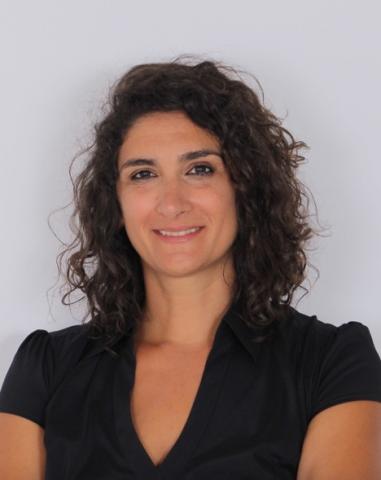
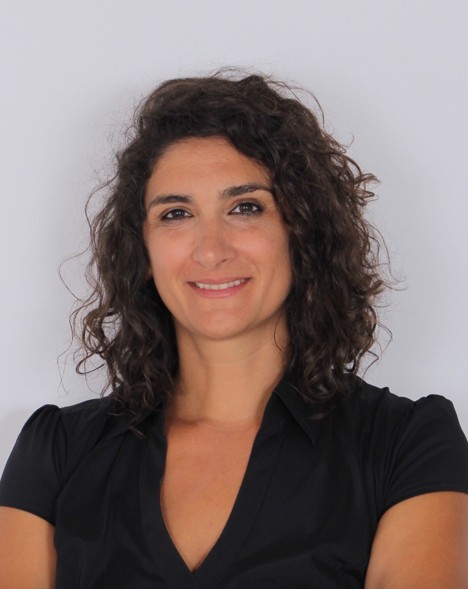 Katy Ghantous is vice president of data & AI at The Emmes Group, where she leads cross-functional teams building scalable data platforms and AI solutions for clinical research. Previously, she led data science at Medidata, embedding AI capabilities into its data management and biometrics offerings. Before entering clinical research, Ghantous applied data science and AI across multiple industries. She began her career in physics, earning a PhD at Princeton and completing postdoctoral research at École Polytechnique. She brings a scientist's rigour and an industry leader's pragmatism to advancing AI in clinical trials.