AI scientists and the robotic labs of tomorrow
The life sciences are entering a decisive new phase. Over the past decade, artificial intelligence (AI) has proven its value as a powerful tool, helping researchers analyse vast datasets, surface hidden patterns, and accelerate individual stages of discovery.
In 2026, however, AI’s role is evolving from exploration to orchestration. Rather than supporting isolated tasks, AI scientists – systems of agents that can work autonomously alongside human scientists – are already becoming essential collaborators embedded across the research lifecycle, fundamentally reshaping how innovation happens in healthcare and beyond.
This evolution marks a clear and deliberate shift away from trial and error and towards design and impact. For decades, discovery has relied on testing, iteration, and incremental learning. In the years ahead, that model will increasingly give way to one where experiments are designed by AI systems that can reason across biology, chemistry, and data at unprecedented scale.
For technology-led biopharma companies, this shift will change how ideas are tested, how experiments are prioritised, and how quickly insights translate into real-world therapies. The result will be a dramatic acceleration in discovery, unlocking new possibilities for genetic, infectious, and degenerative diseases. At the same time, it will enable broader global progress in rare diseases, neglected conditions, and personalised medicine by reducing the cost, complexity, and uncertainty that have historically slowed innovation.
AI scientists become core collaborators
As 2026 progresses, AI scientists will no longer operate at the margins of life sciences research. Instead, they will become essential collaborators in the labs of tomorrow, working alongside human scientists and other AI-scientist platforms and established tools to co-author discovery itself. These AI systems will propose novel targets and molecular structures, simulate biological behaviour across complex virtual networks, suggest possible indication expansion and help direct both digital and physical experiments.
Real progress will be made by combining advanced reasoning agentic systems with each other powered by accelerated computing. Accelerated computing uses parallel processing, through specialised hardware like GPUs, to perform data demanding tasks more efficiently.
The implications for development timelines are profound. The time from hypothesis to human proof-of-concept will shrink significantly, enabling faster validation of new ideas and accelerating the path to clinical trials and eventually patients. As these capabilities scale globally, we will hopefully see a surge in therapies for rare diseases and neglected conditions, alongside more precise and personalised treatments tailored to individual patients.
Integrating intelligence into R&D
This transformation will extend well beyond drug discovery alone. As intelligence becomes a first-class member of the research team, industries will be able to pursue more ambitious ideas and solve problems that were previously constrained by time, cost, or complexity. Across biology, chemistry, and materials research, the same capabilities that accelerate drug discovery will catalyse breakthroughs in sustainable materials, semiconductors, and energy storage systems. AI scientists will simulate molecular interactions, predict material properties, and guide experimental priorities long before physical synthesis begins.
By blending reasoning, automation, and accelerated computing, these systems will enable innovators to move from concept to creation with unprecedented speed and confidence.
Lab-in-the-loop redefines discovery
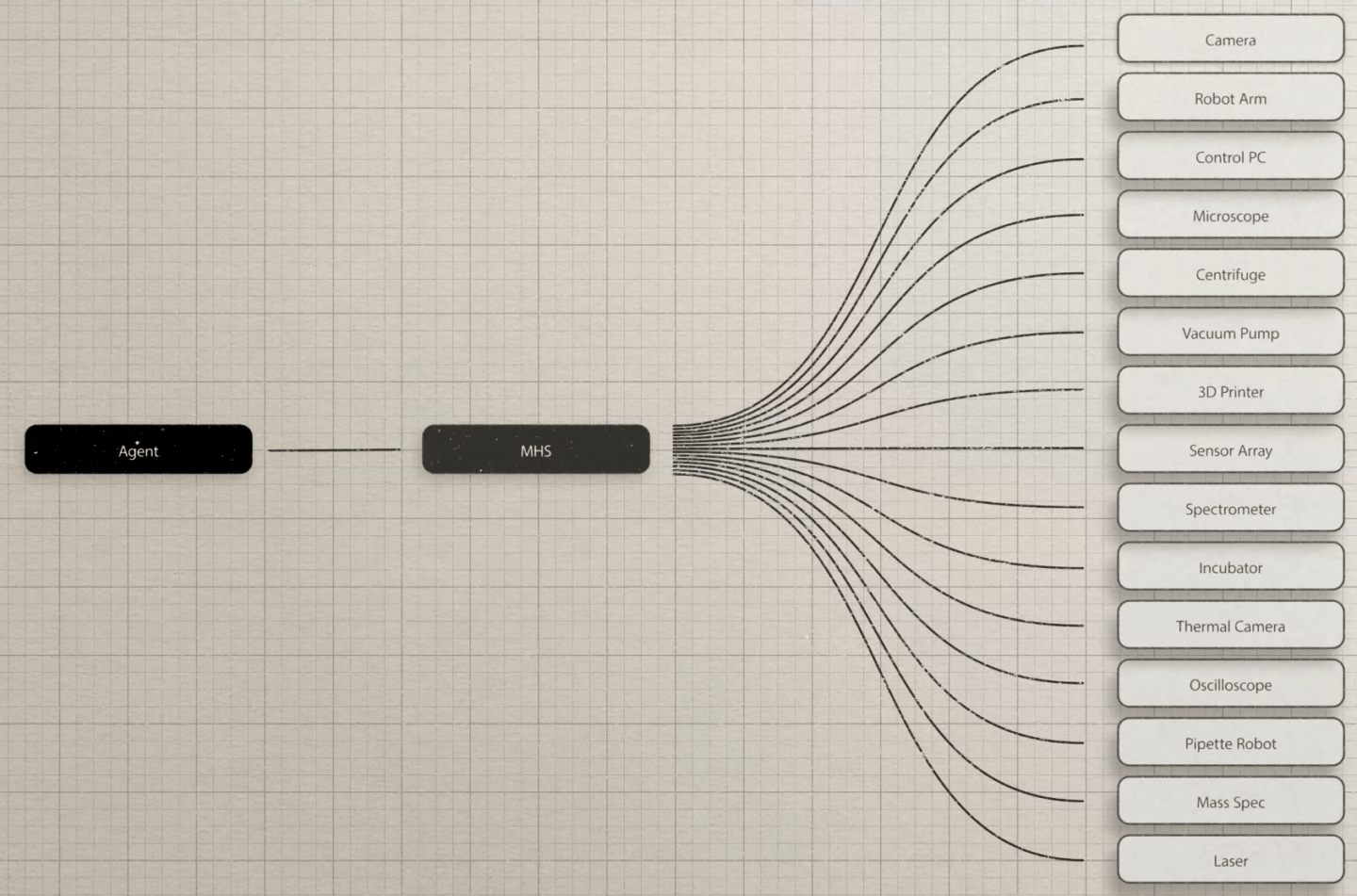
The final piece of this evolution comes from closing the loop between AI scientists and the physical laboratory. In 2026, AI systems will connect seamlessly with robotic laboratories, creating true lab-in-the-loop ecosystems that redefine how discovery is executed.
In these environments, robotic labs become the physical engines of innovation. AI scientists will generate experiment plans, which robotic systems execute with speed and precision. Data is analysed instantly and fed back into the AI’s reasoning cycle, continuously refining hypotheses and guiding the next round of experiments. From hypothesis generation to experiment design, execution, analysis, and iteration, the entire R&D pipeline will function as a single, continuous feedback loop.
As a result, workflows that once took months will compress into hours. Chemistry, biology, and materials science will increasingly share programmable infrastructure that designs, tests, and scales innovation in unified systems. This convergence marks the dawn of programmable research, accelerating breakthroughs in therapeutics, clean energy, and advanced materials at a global scale.
Looking ahead, the organisations that lead in 2026 are those recognising AI not simply as a tool, but as a collaborator. By embedding AI scientists into the fabric of research and connecting them directly to the lab, we will redefine the pace of progress and unlock a new era of discovery powered by human ingenuity and machine intelligence working together.
About the author

David Ruau is head of business development for healthcare & life sciences, EMEA, at NVIDIA, where he partners to drive the use of AI and machine learning in pharmaceutical research. With a background in computational biology, his work has focused on stem cell reprogramming and the electronic health records analysis across therapeutic areas. He previously held senior roles at Bayer, AstraZeneca, and a healthcare AI company, and has authored more than 30 peer-reviewed publications in leading journals including Nature, Cell, and Stem Cells.