Beyond being heard: The patient voice as a force for change
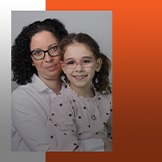
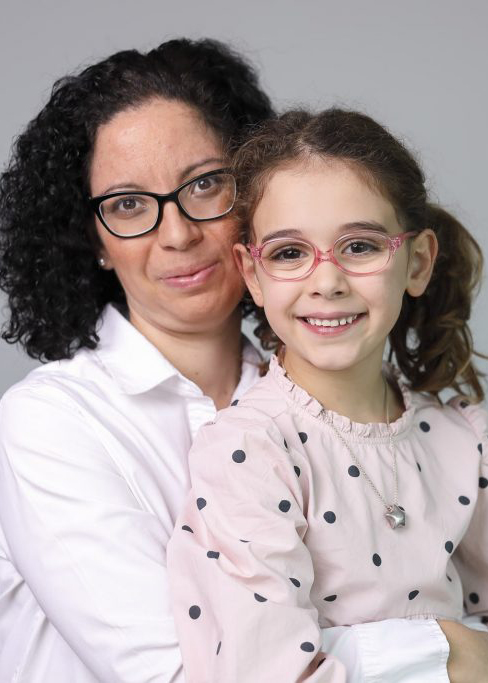
“There is nothing you can do.” Words that no parent ever wants to hear about their child. For Silvia Cerolini, those words marked the start of a journey that would change not only her family’s life, but the landscape of research into one of the world’s rarest eye conditions.
In 2016, when her then two-year-old daughter, Vicky, was diagnosed with an untreatable form of Inherited Retinal Dystrophy (IRD) caused by the RDH12 gene, Cerolini refused to accept inaction. In the years since, she has channelled that heartbreak into purpose – raising over $6 million, uniting families across more than 20 countries, and helping to drive concrete scientific progress in gene therapy and drug repurposing for rare eye diseases.
As CEO of Eyes on the Future and head of transformation at Sanofi UK and Ireland, she now stands at a unique crossroads between patient advocacy and pharmaceutical innovation. Ahead of her return to the Frontiers Health stage this November, she shares a mission that is both deeply personal and universally relevant: to prove that patients and their families can be more than subjects of research – they can be true partners in discovery and drug development.
Eloise McLennan: When Vicky was diagnosed, you entered a world that few parents expect to navigate. What was that moment of transition like, from mother to mobiliser?
Silvia Cerolini: We were in a dark place for a long time. Up until after the summer, it was a disaster. Then suddenly, we realised we wanted to do something about it, but had no idea where to start. The first thing was really reading every single article on Google. I normally joke that there is a final page in Google search results, because I went there for Vicky's condition.
There was this feeling of, “What can we do?” and “Let’s get as much information as possible,” but I had no idea we could actually do something about it. The world of science seemed so far away and so perfect. I thought, “I’m coming from a completely different reality. What can I do?” At the beginning, I couldn’t even imagine that we could make an impact. We just wanted to learn as much as we could and see if there was anything we could do.
It was a natural progression – talking to people, finding information, believing there must be something now or in the future. We started looking into who was doing research, what other people were doing, and which conditions were similar.
It was such a steep learning curve, trying to absorb everything and speak with as many people as possible. I started emailing patient organisations all over the world, reading research papers, and asking, “Where do we start?”
The turning point came when a doctor told us they were working on a gene therapy for RPE65 – what later became Luxturna, one of the first gene therapies ever approved. That approval came a few months later and gave us a huge push of hope. The doctor said they were also working on RDH12 and that it would come in the next 12 to 18 months. That was 2016.
Of course, that was an oversimplification and overpromise – things still haven’t happened even now, nearly 10 years later. That was when we realised things were not as easy as they seemed.
Coming from the fast-paced consumer world, how did you adjust to the very different pace of progress in the life sciences?
It’s quite frustrating for me, because people often say, “Science is full of miracles – things happen quickly, you never know.” For someone outside the field, it can seem that way. You read an article and think, "Oh, we've learned how to do this, we're doing it." But being deep in it, I know exactly where things stand and how long it takes to move things forward.
Things don’t happen by chance. Progress takes far too long, and it shouldn’t be that difficult. For us, commercial interests weren’t aligned, so we faced years of stops and starts. It really should have been faster.
That’s why I’m now trying to do things differently as we develop our programme and trial — to make things actually happen. There’s a lot of talk and expectation, but in practice, progress is still slow. Regulators need to adapt, and companies need to change their traditional ways of thinking.
From a patient perspective, that’s where I see the real opportunity. We bring urgency – a sense of “We need to find a way.” That mindset exposes opportunities that might otherwise be dismissed as, “We’ve always done it this way.”
Take trial design, for instance. The use of real-world data could make trials more efficient, with better endpoints and measures, but we’re still scratching the surface. The trial we’re designing now should be better and faster than the one used for Luxturna years ago.
You often talk about patients as partners, not just participants. What does real partnership look like in practice?
A great example is what we’re doing now with Opus Genetics – it’s a true partnership. We’re co-developing the programme, pooling resources, funding, networks, and expertise. Together, we’re engaging regulators, pushing for progress, and involving the wider ecosystem. We’re not just patients – we bring knowledge, connections, and a sense of urgency that can really change things. We’re constantly asking, “How can we do this faster, cheaper, more efficiently?”
We also bring ideas and connections to the table, especially in engaging regulators, where patients have a unique role. Regulators are often more open to dialogue with patients, rightly so. There are things only patients can bring, but the industry doesn’t always see that. They think, “You have lived experience, but we know how to develop drugs.” The truth is, we can help develop them faster.
I remember early on, when I was knocking on company doors, many said, “Thanks for reaching out – we’ll come back to you when we have a therapy.” If you see patients only as consumers at the end of the line, you’re really missing the mark.
Where do you see the biggest gaps in what families and patients know and what research and pharma think that families and patients need?
The big area is how you define the success of a trial. That generally is a combination of what the manufacturer of the therapy thinks, what the regulators want, and what the patient experiences. Sometimes these three are not necessarily talking the same language. A couple of years ago, one of the first things I did was bring people together to talk about endpoints and outcome measures for RDH12-IRD, and more in general for inherited retinal dystrophies.
It's touching a lot of the issues that touch rare diseases in general, in terms of the small patient population, slowly progressive disease. How do you measure success in a trial that cannot last for 10 years? Really, it doesn't make any sense.
We had some adult patients in our community, with advanced stages of disease, explaining how, for them, it was even critical to maintain light perception versus not having any light perception. How it would make their life better when it comes to knowing where a window is, or knowing whether they were sleeping with the light on or off, and the quality of their sleep and their life. Even explaining that, if we can maintain that, is a great benefit.
Even the fact that we were able to bring all these people around the table, and only we as patients were able to bring regulators, clinicians, companies, and we were the catalyst for this discussion, that's, again, showing the role that we can play in making sure that things move forward. On the surface, it is about understanding the disease and what patients want, but it's a lot more than that.
You've managed to create a truly global community around RDH12. What do you think are your biggest lessons that you've learned through that process?
Building the community is vital, but also very difficult, because everyone reacts differently to a diagnosis like this. Each family is on its own journey – some are newly diagnosed and eager to get involved, others were hopeful and have lost hope, and some are further along and want to give back. Add the diversity of culture, language, and geography, and it’s a real challenge to keep everyone moving forward together.
I wish I had more time to cultivate it, but we’ve done a lot to bring people together. We now have families from over 20 countries. It’s wonderful to be able to offer hope. We talk regularly, organise virtual calls, and even held an in-person family day a couple of years ago. We’re hoping to do another next year, though it’s a big commitment in time and cost.
For someone who might be in the position you were ten years ago, what advice would you give as they begin that journey?
My biggest piece of advice is if you really want to push the cure forward, get very close to the science, as close to the science as you could possibly be. I know I don't have a PhD in genetics, but I learned, because you need to be able to understand the language, to be taken seriously, to understand what the roadblocks are.
Don't assume that science is a well-oiled, fantastic machine. If you really want to understand, go deeper and really understand where the barriers are, because they might be different than it appears on the surface.
If I had to do it again, I would have pushed sooner for us to take this in our hands. At that time, it was like, "I don't know how to do it right," and I have to trust people that say they know what they're doing, even if they don't necessarily have all the answers. Don't stay at the surface, but go deep.
About Frontiers Health
Frontiers Health was founded in 2015 and celebrated its first global edition in 2016 in Berlin, which hosted the event until 2019. After a mainly virtual experience in 2020, amid the pandemic peak, with connected hubs from European countries and representations from the U.S. and Far East, the conference moved to Milan, Italy, where the next two global editions were held.
Over the years Frontiers Health has enriched its offerings with highly curated and innovative content, large ecosystem participation and international standing, both in presence and remotely.
About the interviewee
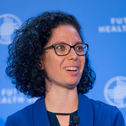
Silvia Cerolini is CEO of Eyes on the Future and a non-for-profit organisation Eyes on the Future, accelerating research on Inherited Retinal Dystrophies (IRD) causing progressive sight loss in children.
She coordinates the global patient organiation with families from over 20 countries. Her work led to multiple scientific publications and, most importantly, to concrete advancement across several therapeutics approaches from drug repurposing to gene therapy.
Passionate about data and technology, she is also looking at how innovation can accelerate clinical development especially in outcome measures and trial design for rare eye diseases. Her efforts have been featured on TV and Press all over Europe, from BBC to Vanity Fair, and at prestigious conferences like the Association of Research in Vision and Ophthalmology (ARVO). Originally Italian, Cerolini lives with her family in London where she also works as Head of GTM transformation and innovation for Sanofi.
About the author
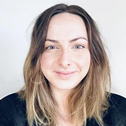
Eloise McLennan is the editor for pharmaphorum’s Deep Dive magazine. She has been a journalist and editor in the healthcare field for more than five years and has worked at several leading publications in the UK.
Supercharge your pharma insights: Sign up to pharmaphorum's newsletter for daily updates, weekly roundups, and in-depth analysis across all industry sectors.
Want to go deeper?
Continue your journey with these related reads from across pharmaphorum


FH25: Jessica DaMassa on hosting, hype, and health innovation
FH25: Ten years at the forefront of health innovation, with Kristin Milburn
Decoding the future: Key AI trends and innovations from Frontiers Health
FH25: On patient access and equity, with Roberta Sarno

Click on either of the images below for more articles from this edition of Deep Dive: Patients and Partnerships 2025