What’s powering the next wave of life sciences investment in the UK and Nordics?
After a few quiet years, life sciences investment across the UK and Nordics is showing signs of a powerful rebound. HSBC Innovation Banking’s UK and Nordic Life Sciences Investment Trends H1 2025 report reveals an ecosystem finding its rhythm again; deal volumes are up, valuations are strengthening, and investors are backing fewer, but bolder opportunities through so-called “mega deals.”
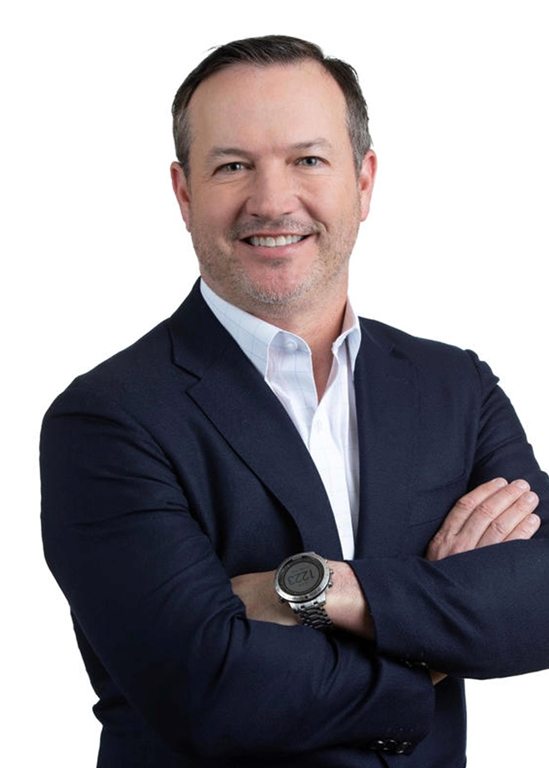
To explore what’s driving this resurgence – and where the next wave of growth could come from – Deep Dive sat down with Mike White, Head of Life Sciences and Healthcare at HSBC Innovation Banking. He shares his perspective on the forces shaping UK and Nordic investment, the growing influence of AI, and why the next year could mark a pivotal turning point for the sector.
The UK and Nordic Life Sciences Investment Trends document paints a striking picture of an industry in motion. From your vantage point, what do you see as the biggest trends shaping UK and Nordic Life Sciences Investment right now?

I think the UK and Nordics are mirroring what’s happening in US life sciences venture funding – a flight to high-quality management teams, interesting science, and innovative biotech modalities or business models in health tech and med tech. The total quantum of dollars going into the ecosystem is increasing at a healthy level. In the UK specifically, it went up about 21% to £1.8 billion in the first half of 2025.
That was largely driven by what we call the mega deals, in the $50-$100 million range. It’s great for these companies to be funded so significantly for the next few years and to bring in top-quality investors. It also helps management teams in a market where IPO exits are very quiet and M&A is the primary route, which, this year, has actually been quite strong globally for biotech.
If you have a quiet IPO market, with two ways to exit, and one exit door is closed, then you have to rely on an M&A transaction. Raising these mega deals helps them fund through the kind of funding trough we’re in today and bridge to when the IPO window may reopen in three or four years.
The flip side to that is that fewer companies are being funded, so the number of life science companies in the UK and Nordics is decreasing year over year. That’s a trend we’ve seen in the US too, and it’s one we need to keep an eye on because it doesn’t bode well for a healthy ecosystem if early-stage companies aren’t being funded.
The IPO window is important not only as an exit path, but because it lets institutional investors – VCs, crossover investors, and mutual funds – recycle capital back into earlier-stage stories. That’s another reason it would be very healthy for the ecosystem to see IPOs open back up.
Are there any specific areas where we're seeing a lot more investment or deals?

I’d point to three areas. First, medical devices. In the first half of 2025, we saw the strongest two quarters of device funding in three years, which is incredibly encouraging. A standout was OrganOx, which raised an oversubscribed £108 million round in Q1 and was soon acquired by Japan’s Terumo for $1.5 billion. That’s great for the ecosystem – companies are being funded at different stages and exiting quickly, giving investors strong returns they can reinvest.
Another category to talk about would be health tech. We saw several mega deals, including Neko Health from Sweden, which raised an oversubscribed $260 million Series B. That’s a real vote of confidence for European and UK health tech. Early-stage health tech also rebounded, particularly in alternative care, which aligns with the trend of companies like Neko offering new healthcare delivery models.
On the biotech side, oncology was heavily funded in 2024, especially around ADCs – antibody drug conjugates. Oncology investment cooled slightly in early 2025 as investors waited for milestones from those early-stage companies. Three of the four largest financings last year were pre-clinical oncology firms, so the pause makes sense. Oncology is here to stay, but it was interesting that it had a bit of a pullback.
We’ve also seen investors lean into neurodegenerative and CNS conditions like schizophrenia. BMS’s 2024 Karuna’s $14 billion acquisition and the success of its drug Cobenfy, now with blockbuster potential, sparked renewed interest. A next-gen version from MapLight is continuing that momentum.
Finally, metabolic disease is attracting major capital. With GLP-1 drugs like Mounjaro and Ozempic leading the way, companies are building around metabolic solutions. Verdiva, near London, raised $400 million for a next-gen GLP-1, and Pfizer’s $7 billion acquisition of Metsera gives the company a very strong 10- to 20-year footprint in the metabolic obesity space.
Five of the top 10 biopharma first financings were UK-led. What does that tell us about the strength of early-stage innovation in the UK?

I think everyone agrees that the UK has exceptional R&D and innovation. It’s largely driven by the Golden Triangle, with London and institutions like UCL, Cambridge, and Oxford, where OrganOx was spun out of.
In a small geography, you have a tremendous concentration of innovation, with PhDs developing new ideas, collaborating, and moving between Cambridge, Oxford, and London. We recently hosted a dinner in Oxford with a high concentration of Cambridge PhDs, which really highlights how connected and dynamic that ecosystem is. It’s unique to have so many highly motivated scientific minds working together to develop next-generation therapies.
There’s also strong access to early-stage capital in the UK and nearby regions like the Nordics and Amsterdam, with new funds raised by groups such as Sofinnova, Forbion, and EQT alongside major investors like Novo Holdings. The proximity of these investors to the Golden Triangle makes it easy for them to engage with top talent – an excellent combination for driving innovation.
Despite strong funding data, we’ve seen some recent pullbacks from companies like AstraZeneca, Eli Lilly, and Sanofi – particularly around manufacturing. It does suggest a bit of a confidence gap. From your perspective, what are the biggest friction points holding back UK growth?

This could be a long conversation. It’s on the minds of many in the UK right now. For the last few years, to take a biotech to scale and run a late-stage trial, you needed to raise $300-$400 million. The NASDAQ has been the exchange of choice for that kind of capital. There are exchanges in the UK and Europe – London Stock Exchange, AIM, and in Stockholm, the Euronext NASDAQ – but if you look at companies raising that level of funding, nine out of ten are going to NASDAQ. That’s the scale-up capital challenge.
There’s been real progress in the past year, with the government working with industry to adjust asset allocation strategies for pension funds – through initiatives like the Mansion House Compact – to help address that gap. The UK is excellent in early-stage innovation, and early-stage capital is there, but scale-up capital remains the main challenge.
In the report, you describe what you call the ‘barbell effect’ – capital concentrating at both the early and late stages of the funding spectrum. What’s driving that split, and does it leave mid-stage companies more exposed?

There’s been talk about that for a few years in the US – that dilemma of companies that can raise a Series A, but then struggle with a Series B. The barbell effect reflects investors concentrating capital at the early and late stages. When they have strong conviction around a management team, a biotech modality, and a market opportunity, they tend to overfund to give companies three to four years of runway, helping them weather IPO market troughs. It’s a way of de-risking capital market uncertainty.
In that Phase II category, we’re seeing companies raise very large rounds with the potential to be acquired once they achieve significant revenue traction. In the first half of the year, there were three exits exceeding $10 billion, which is rare in biotech. Intra-Cellular’s $14.6 billion exit is a good example – you don’t often see that scale. These were companies that launched a drug, demonstrated strong payer and patient traction, and grew top-line revenue above 50%, reaching that critical mass for a mega exit. That’s part of the trend we’re observing – funding levels increasingly correlate with exits, whether IPOs or mega exits of $10 billion-plus.
With the rise of AI, particularly in early-stage development, are you seeing more investment flowing into that space?

I think many people believe we’re in an AI bubble right now. CNN recently reported it’s 17 times larger than the dot-com bubble. Jeff Bezos also described it as an industrial, rather than a mainstream, bubble, meaning that even if there were a correction it would affect corporate valuations, but likely not trigger a major downturn – which is encouraging.
Speaking of AI, the largest deal of the year – arguably – was Isomorphic Labs. That wasn’t a clinical story, but a pre-clinical one built on years of work by the Nobel Laureate team behind AlphaFold. AlphaFold has already been used extensively by big pharma to identify targets, and I think it’s genuinely game-changing.
AI enables drug developers to go after previously undruggable targets, and to do so with far greater speed. It’s not necessarily about transforming later-stage development yet; rather, accelerating early discovery – finding new targets that can now be drugged.
Based on your findings from H1, what are you expecting to see in H2?

We’re already seeing some positive signs for biotech, health tech, and medtech. Bankers are saying there’s a sizable IPO pipeline. About a month ago, LB Pharma out of New York – a CNS neurodegenerative company running a Phase III trial – broke a six-month IPO drought. Now we have MapLight, which I mentioned earlier, developing the next-generation version of Cobenfy.
I think we could see the IPO market start to unlock at the end of 2025 and into the first half of 2026. That momentum in late-stage activity will also refresh early-stage funds with new capital to deploy. We’ll also see more stabilisation in the US after uncertainty earlier this year, and the FDA now seems more consistent in its leadership, decision-making, and communication. All of that bodes well for investors and for the broader ecosystem.

About the interviewee
Michael White is the market manager and head of life sciences at HSBC Innovation Banking UK, a position held since June 2023. In this role, he leads the team that delivers HSBC Innovation Banking UK's specialised banking and lending to high-growth public and private life science companies with market caps ranging from $100 million to $5 billion. Prior to this, White spent over two decades at Silicon Valley Bank in various leadership roles overseeing business development and investor coverage in the Southwest and West Coast regions. He co-managed the San Diego office and played a pivotal role in building a substantial life science credit portfolio.

About the author
Eloise McLennan is the editor for pharmaphorum’s Deep Dive magazine. She has been a journalist and editor in the healthcare field for more than five years and has worked at several leading publications in the UK.
Supercharge your pharma insights: Sign up to pharmaphorum's newsletter for daily updates, weekly roundups, and in-depth analysis across all industry sectors.
Click on either of the images below for more articles from this edition of Deep Dive: Patients and Partnerships 2025






Want to go deeper?
Continue your journey with these related reads from across pharmaphorum


The outlook for healthtech and life sciences in 2025

VCs upbeat about European life sciences market, despite uncertainty

News and advice from an investor-CEO, with Milenko Cicmil
Biotech ≠ tech: Why venture capital needs a new playbook for the therapeutics era