How war in the Middle East is disrupting medical supply chains
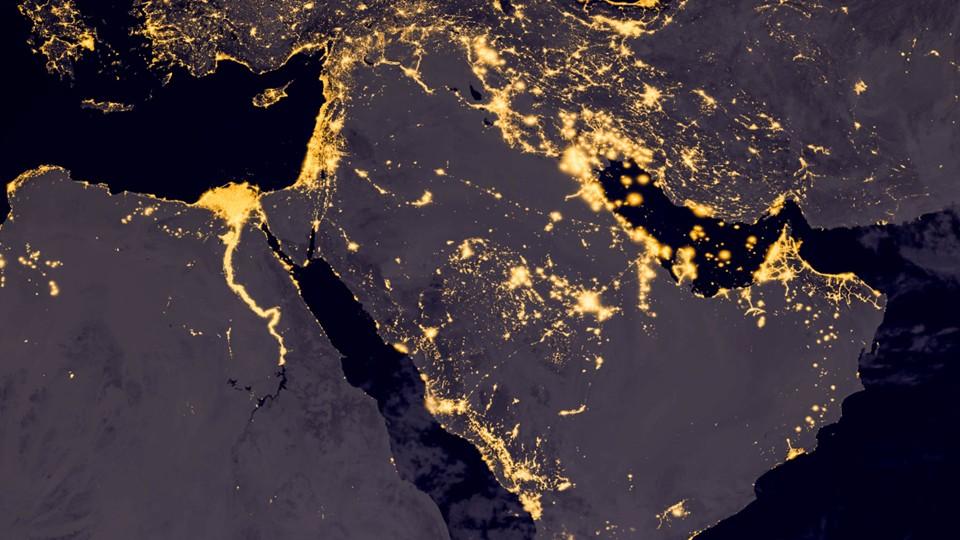
The conflict in the Middle East is sending shockwaves through the global economy and disrupting global trade.
The region plays a vital role in global trade and logistics. Around one fifth of the world’s oil supplies normally move through the Strait of Hormuz every day. It is home to crucial global logistics corridors, which can quickly become chokepoints in times of conflict, and this is exactly what has happened since the end of February.
We’re now starting to see the impact of this disruption on global supply chains for medicines and key chemicals needed for the pharmaceutical industry.
Impact on shipping and air freight
The Middle East is a vital part of the international air freight network. According to the International Air Transport Association, the region accounted for 13.2% of world air cargo in January 2026, before the war.
The conflict quickly and sharply disrupted air freight. Because many planes can no longer safely fly over Iranian or nearby airspace, they have been forced to divert to longer alternative routes that take more time and use more fuel. At the same time, average jet fuel prices have surged. They are up more than 100% over the past month, according to the International Air Transport Association's (IATA) latest fuel price monitor. As a result, air freight rates on key routes between Asia and Europe have risen by as much as 70%.
Shipping has also been deeply impacted, with key routes closed off. The closure of the Strait of Hormuz and renewed risks in the Red Sea have forced shipping companies to change course. Most major container lines have instead started taking the much longer route around the southern tip of Africa. This diversion adds roughly 10 to 20 days to journey times. As a result, over the past month, container freight rates have risen 28%.
Shifting along the supply chain, we see the friction created for freight forwarders – intermediaries that are essential to keeping goods moving from place to place. The world’s biggest freight forwarder, DSV, has reportedly warned customers to expect extended transit times, irregular schedules, and rate increases.
The transport supply chain reverberations don’t stop there. Rising fuel prices and supply chain blockages harm haulage providers, many of which are under contract and have limited room for manoeuvre if prices go up substantially.
What this means for pharmaceutical supply chains
It is worth noting that most countries in the Middle East are not major producers of pharmaceuticals. One important exception is Israel, where Teva Pharmaceuticals, headquartered in Tel Aviv, is the world’s largest manufacturer of generic medicines.
However, they still place a crucial role in global healthcare delivery, for several reasons. One is their oil supply and their transport infrastructure, which factors into the supply chains that sit behind the medicines and medical devices used the world over. Derivatives such as methanol and ethylene are used in the production of painkillers, antibiotics, and vaccines. The Strait of Hormuz is normally used to export these chemicals around the world. Disruptions to their production or export therefore create risks for drug manufacturing.
The conflict in the Middle East also impacts on healthcare supply chains from other parts of the world, notably Asia. Pharmaceutical products made in Asia normally travel through airports in the Middle East as part of their movement around the globe. This includes those from India, sometimes called the ‘pharmacy of the world’ because it is the largest global provider of generic medicines. A large part of the country’s drug exports to Europe, North Africa, and the US would typically move through the Middle East.
These conditions have forced pharmaceutical companies to reroute shipments, with some shifting to air freight for urgent deliveries while others rely on longer alternative sea routes, lengthening transit times.
While this is complicated enough for other types of cargo, pharmaceuticals present special challenges. They are high-value and often need tightly controlled conditions, including temperature regulation. This makes it difficult to secure alternative transport options during times of disruption. Reliability is key and longer transport times put pressure on patient-critical shipments.
If the conflict drags on, ultimately there could be shortages of drugs in end markets. Medical distributors typically keep just six to eight weeks of stock to avoid shortfalls. This means there is only a limited buffer if supplies are disrupted. Mark Samuels, the chief executive of Medicines UK, told The Guardian that drug shortages could emerge in just a few weeks’ time.
Beyond medicines themselves, other materials that are essential to modern healthcare are also at risk. This includes helium, which is essential in hospitals to cool superconducting magnets powering magnetic resonance imaging (MRI) machines. When helium runs out, MRI scanners cannot operate. It also includes petrochemical-derived inputs like plastics for IV bags.
The industry is working hard to adapt to the challenges. Freight carriers and logistics providers are attempting to adapt to new routes to maintain deliveries. Many companies have got better at this, having learned lessons from the COVID pandemic, which taught them the importance of diversifying logistics and transportation.
It is early in the conflict and the full impacts are still to play out, but the world is holding its breath for consequences – and that includes, ultimately, higher medicine prices.
About the author

Sarah Evans is a senior underwriter for UK risk at Atradius. She has worked at Atradius for over 30 years and throughout her career has specialised in several sectors, including energy and IT.