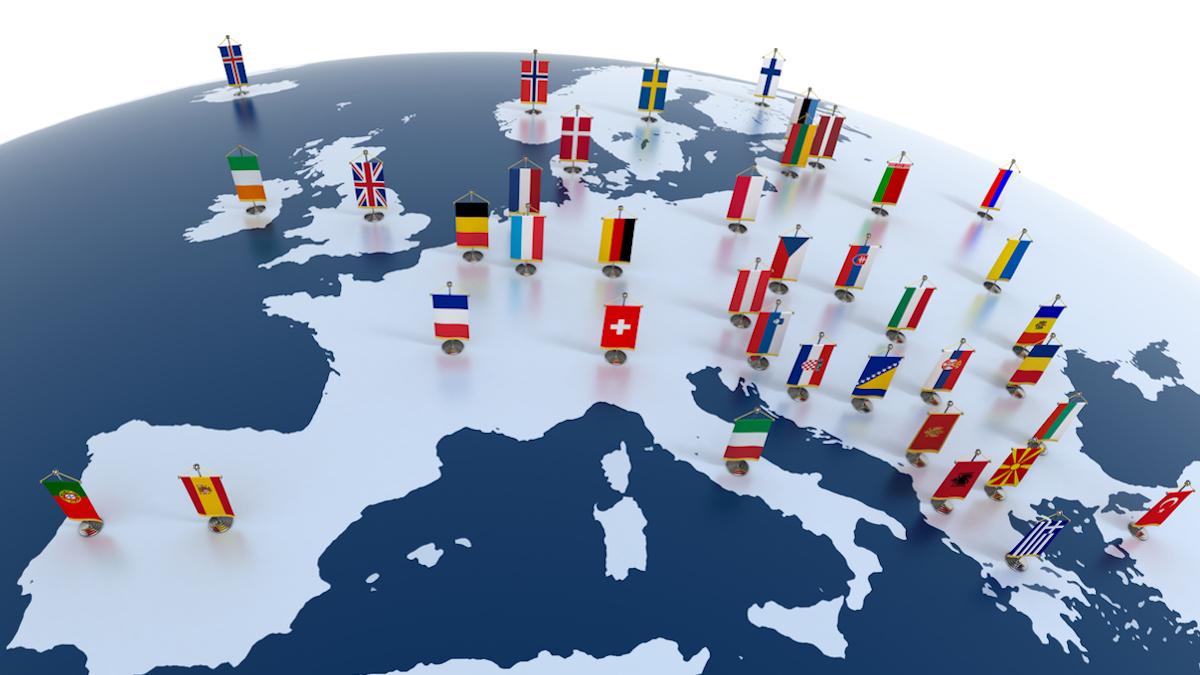
No longer the little fish: How Europe is holding its own through US uncertainty
It goes without saying that we are living in uncertain times, yet, this holds particularly true for the pharmaceutical industry.
The US, once a paragon for pharma innovation, is undergoing unprecedented change. During this period of uncertainty, pharmaphorum spoke with experts about their thoughts and predictions for the path ahead. With commentary from: Alexander Seyf, CEO of Autolomous; Rob Scott, head of translation consultancy at eXmoor Pharma; and Lindsay Davies, CSO of NextCell Pharma.
Q: In what way has the US long stood as the paragon for pharma innovation? And what has or might be changing now?
Seyf: The US has historically been a pharmaceutical innovation leader due to robust R&D investment from venture capital and public funding, and a favourable regulatory environment with strong IP protections from the FDA. Its large, lucrative market incentivised drug development, supported by leading scientific and academic institutions.
However, this is shifting. Increased scrutiny on drug pricing, notably with the Inflation Reduction Act, threatens R&D profitability. The evolving regulatory landscape and IP challenges create uncertainty. Geopolitical tensions expose fragile, centralised supply chains. Crucially, other innovation hubs, particularly in Europe and Asia, are emerging, offering competitive incentives.
Scott: Funding in the US has clearly gotten very difficult, and there's a degree of regulatory uncertainty as well. But what's changing in parallel is what's happening elsewhere. Here in the UK, for example, the government continues increasing support for the industry through initiatives like Innovate UK. Post-Brexit, we also see renewed participation in the EU's €7.3 billion Horizon research funding programme. Additionally, the EU has introduced clinical trial regulations that bring clarity and consistency to the process, in order to encourage innovation and investment.
It's hard to say yet what will happen, but we are hearing from companies that are reassessing the US as the default location for clinical trials and manufacturing. I would expect more strategic evaluations of long-term investments and regulatory environments in both regions.
Davies: From a European standpoint, we see significant shifts in policy and ensuing uncertainity in the US right now. How this will ultimately impact pharma innovation remains unknown. What is clear is that the US is a global leader for innovation and commercialisation in our sector, but these ongoing changes in geopolitics and cross-jurisdictional trading are an opportunity for Europe to showcase its strength and increase its market position in pharma. Europe and its wealth of worldclass institutions and universities are the powerhouses for life sciences innovation, a true strength of Europe. A shift in practice to hold product development, manufacturing, and commercialisation in the region offers nothing but benefit to strengthen Europe’s global position.
Q: Nevertheless, a relative calm across the pond means that European companies are realising the grass here is just as green, and that they have capabilities and knowledgeable workforce close to home to enable the scale and quality thought to be dominated by the US. What, for example, are the benefits of European-based manufacturing for the pharmaceutical industry?
Seyf: European companies are increasingly recognising the benefits of local manufacturing. We see significant advantages for cell and gene therapy production, including a skilled workforce and established expertise across countries like Germany and Switzerland. The harmonised EMA regulatory framework offers predictable approvals, crucial for complex therapies. Proximity to European markets reduces lead times and logistics for time-sensitive products. Local manufacturing enhances supply chain resilience, lessening reliance on distant suppliers. Europe's strong collaborative ecosystem and focus on sustainable healthcare further strengthen its appeal, alongside growing investment in biomanufacturing.
Scott: In growing areas like RNA and cell and gene therapy, the UK and EU have already been key players, supported by strong government backing and academic leadership. UK hubs at Imperial College London, University College London, and Oxford have fostered a skilled workforce and innovative environment, bolstered by AI and strategic manufacturing investments. Hot spots are popping up around Europe, such as at KU Leuven in Belgium, with companies collaborating with universities to develop training programmes that have led to new advances by a skilled workforce. UK initiatives also include high-level apprenticeships and spin-out support modelled on LifeArc or Syncona.
Davies: Yes, I would agree Europe has much to offer. Europe as a whole is a diverse collection of countries with differing expertise, which melt together to offer the full spectrum of needs for a drug product lifecycle. Comparatively speaking, manufacturing costs are lower in Europe to that of the US, with comparative offerings in terms of service providers, turnaround times, and specialist clinical centres for conducting trials. Europe as a whole, and individual regions within this, are strongly supported with funding for healthcare initiatives from the governments, with initiatives providing the infrastructure and cross-academic / industrial collaboration to fuel further translation of ideas from concept to clinic, as well as now being the home for some large pharma companies supporting globalisation of European borne pharmaceuticals.
Q: Overall, how is Europe making sure development keeps on ticking, so to speak, during these incredibly uncertain times?
Seyf: Europe is proactively navigating current uncertainties with a multi-pronged strategy. They're prioritising supply chain resilience, shifting from "just-in-time" to "just-in-case" through vulnerability mapping, securing alternative sources, and building inventory buffers. This includes regionalising manufacturing despite the costs. European pharma is also fostering strategic alliances and collaborations to share infrastructure and tackle pre-competitive challenges. Furthermore, robust policy support and regulatory adaptation, like the Critical Medicines Act, aim to future-proof the industry. Finally, significant investment in advanced manufacturing technologies (Industry 4.0) is boosting efficiency and robustness for complex therapies.
Scott: Consistent, selective government funding plays a crucial role in advancing science and innovation, particularly in the UK. Support is channelled through organisations like Innovate UK for businesses, or the catapult network, including Cell and Gene Therapy Catapult.
In parallel, structured university funding continues to support the many scientific breakthroughs that originate in academic research. This connection helps translate early-stage ideas into viable commercial ventures. Bridging the gap between early clinical trials and market readiness is especially important, and UK funding bodies are actively focused on supporting this transition. Overall, well-structured funding strategies are vital for maintaining a competitive edge in science and industry.
Davies: Europe has demonstrated its stability and strengths in these turbulent times. The region is firmly established and shown already that innovation, translation, commercialisation continues with business as usual. As a region, we are building on the opportunities being presented to us right now, highlighting the strengths of working, developing, and retaining business inside Europe for stable business continuity – a factor that cannot be underestimated while investment is still in flux.
Q: And, all these things considered, what should be borne in mind by industry for the future?
Seyf: The future of cell and gene therapy manufacturing hinges on operational resilience through intelligent automation and data integration. Manual, fragmented processes are unsustainable. Manufacturers must embrace end-to-end digitalisation for real-time visibility and error reduction. Leveraging data enables proactive risk mitigation, moving beyond reactive problem-solving. Standardisation and modularity in processes facilitate scalability and flexibility. Finally, fostering an agile culture that embraces continuous improvement is crucial. Investing in these smart, resilient, and data-driven operations is vital for navigating uncertainties and emerging competitively.
Davies: I would reiterate that, while the US is a global player in pharma development and has been the natural market to evolve into for European life sciences companies, it is not the only market. There are also significant opportunities here at home and also into the APAC region that should not be ignored. Ultimately, for successful commercialisation of a drug product, we need to move where the market is, and that is where the patients are and the systems are in place for reimbursement.
About the interviewees
 Alexander Seyf is co-founder and CEO of Autolomous. A seasoned entrepreneur, business leader, and management consultant with strong business acumen and strategic
thinking, combined with an innovative mind to challenge existing thinking, Seyf has over 30 years of consistent progression, building and reinventing businesses and working with market leading firms and clients. In the current ever-evolving technology landscape, Seyf thrives on finding an appealing and viable business model for a disruptive technology
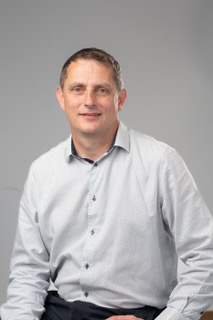 Rob Scott has 20 years’ experience of working with early phase novel biotherapies in QC, QA, and QP roles, the past 4 years exclusively in cell and gene therapies. His experience covers everything from process development, qualification of facilities and equipment, managing and developing QC and QA systems, to aseptic validation and management of materials and shipping of product. He is named on the license of multiple client sites for QP batch release.
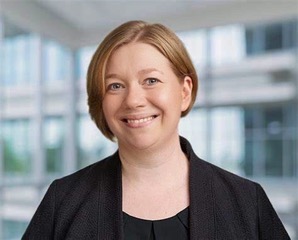 Lindsay Davies completed her PhD in Biochemistry in 2006 at Cardiff University, UK. Focussing on cell therapy for cartilage repair, her thesis work introduced her to cell and gene therapy, springboarding her into a career within the field, starting with a postdoc and two fellowship positions in stem/stromal cell biology within the UK. Alongside her academic work, she worked with the Finnish Red Cross Blood Service and an industrial partner in developing a new medical device for burns therapy. In 2020, Dr Davies moved into industry, setting up her own consulting company, CellTherEx, to support academics and companies spinning out and handling regulatory compliance within the drug discovery and advanced therapeutic development space. This offered her the opportunity to join NextCell Pharma. As their chief ccientific officer, she has supported the company´s movement from a phase I company, with one initial clinical trial to 5 active Phase I/II trials, international expansion and a phase III in development. In 2024, Dr Davies co-founded QVance, a subsidiary of NextCell Pharma, aiming to be a “one-stop-shop” analytics company serving the Nordics and wider Europe.