The frontier of 3D biofabrication in the race for healthy longevity

At the Founders Longevity Forum last year, a community of high-powered entrepreneurs came together to discuss a topic that has not just been on everyone’s minds lately in the life sciences, but much discussed, also: longevity.
The high-stress and packed travel schedules of founders take their toll, and to motivate and improve the longevity – but also the quality of that – for founders is an important goal. 2025 marked the third year of the longevity-specific event for Founders Forum – a joint venture with Phil Newman, founder and CEO of Longevity.Technology – and the day highlighted the central focus longevity has not just for founders, but in mainstream media, for influencers, for mainstream brands, and – yes – Big Pharma.
Biohacking having been done by at least half of those in attendance, the nuance between Healthspan and Lifespan was noted, as was the need to ‘do away with’ ageing related diseases: US healthcare spend per annum, for instance, is some $4.9 trillion, 85% of which is associated with ageing diseases.
With 'Longevity 3.0' the focus of discussion at the 2025 event, so it was that pharmaphorum was on the ground and had the opportunity to speak with longevity fund Immortal Dragons (don’t worry, we’re not going SciFi here; even Super Agers at the event foresee only 120 years or so being possible) and Frontier Bio.
Notably, Immortal Dragons has made a strategic investment in Frontier Bio, a biotechnology company at the forefront of biofabrication, drawing on a suite of technologies including 3D biofabrication, stem cells, organ-on-a-chip, and perfusion bioreactor technology. The company produces functional blood vessels that demonstrate superior performance, including complete absence of thrombosis, significant cell infiltration, proper endothelium formation, and integration with surrounding tissue.
Eric Bennett, CEO of Frontier Bio, and Boyang Wang, founder of Immortal Dragons, discussed 3D tissue biofabrication and engineering longer human lifespans – a targeted bet on solving organ failure, the leading cause of death for humans over 65.
Q. What drew Immortal Dragons to invest in Frontier Bio specifically, and how does this partnership fit into your broader longevity thesis?
Boyang Wang: Immortal Dragons supports radical life extension technologies that are usually under-supported by conventional ventures. We value moonshot ideas put into action and would like to push longevity boundaries to faster technology development and longer human lifespan. Frontier Bio's 3D biofabrication is one of the key ideas to many tech breakthroughs, for example: tissue vascularisation and organ rejuvenation. This fits into our investment thesis perfectly and our mission is to support technologies like this to bring longer, healthier lifespans into fruition.
Q. What makes this deal ‘strategic’ beyond the capital? Are there shared R&D, commercialisation, or data-sharing goals between the two organisations?
Wang: 3D biofabrication is our first and strategic step into tissue engineering, which leads to broader possibilities in the future for tissue engineering support in the longevity sector. At the moment, there's no shared R&D, commercialisation, or data-sharing between the two organisations.
Q. What criteria does Immortal Dragons use to assess whether a biotechnology company truly advances human longevity?
Wang: Immortal Dragons is a purpose-driven fund. We consider impact far more important than financial return, and support companies that may seem to be a ‘long shot’, but could potentially bring high impacts to mankind if they succeed. We invest in technologies that we see are truly possible to extend human lifespan and push boundaries. There are specific investment themes that we are particularly interested in, [such as] replacement technologies – xenotransplantation, TPE (Therapeutic Plasma Exchange), tissue engineering and fabrications, etc. – radical life extension techs, and special economic zones with flexible regulations that accelerate clinical trials.
Q. Can you explain, in layman’s terms, how Frontier Bio’s biofabricated blood vessels differ from traditional synthetic grafts?
Eric Bennett: Traditional grafts are essentially high-grade plastic tubes. They can be durable, but the body treats them as foreign, which can lead to clotting and limited healing at small diameters. Our graft is designed as a living conduit. It uses a temporary, bioresorbable support that is seeded with the patient’s own stem cells at the time of surgery, so, the inner surface becomes endothelialised and the wall behaves more like a natural artery. As the support resorbs, the tissue remodels toward native structure. The design goal is a vessel that becomes functionally indistinguishable from a real one.
Q. How does perfusion bioreactor technology improve the maturation or stability of engineered tissues?
Bennett: Cells mature best when they experience the right flows and forces. The perfusion bioreactor provides continuous nutrient and oxygen delivery and controlled mechanical cues, like the rhythmic pulse of blood flow, that help cells align, form a stable endothelial lining, and build the extracellular matrix that gives tissues strength and elasticity. We are actively testing two workflows: seeding the graft at the bedside just before surgery, and pre-maturing tissues in the bioreactor ahead of time. The aim in both cases is stronger and more uniform tissue.
Q. Can you walk us through how your organ-on-a-chip and 3D-bioprinted mini-lung models are used to accelerate drug development?
Bennett: We recreate key features of human tissues on small microfluidic chips built with human cells and controlled micro-flows. In our mini-lung models, we model the transition from bronchioles to alveolar air sacs and the air–blood barrier architecture. In our blood–brain barrier model, we recreate the interface between brain microvasculature and brain tissue. Across these systems we can read barrier integrity, transport and permeability, inflammatory signalling, fibrosis markers, and functional responses to candidates. Because they use human cells and support higher-throughput studies than animals, they can generate data more relevant to human biology and help teams focus clinical resources on the most promising approaches.
Q. Many deaths in older adults culminate in failure of critical organs, often driven by underlying diseases like heart disease, cancer, or stroke. How does Frontier Bio’s platform directly target that challenge?
Bennett: Our immediate focus is small-diameter vascular grafts that surgeons use between organs or as bypasses to restore or reroute blood flow. In parallel, that same vascular know-how is the foundation for de novo, fully vascularised organs that can replace a failing organ entirely. The near-term work creates real clinical utility and manufacturing depth, and the long-term objective is full replacement of diseased organs.
Q. Do you see biofabricated organs eventually reducing the need for transplantation or donor waiting lists?
Bennett: Yes, in two phases. First, deliver small-diameter vascular grafts that raise the standard of care in an existing market that is ready for something better. Second, use those vessels and the associated manufacturing playbook as the backbone for fully functional, lab-grown replacement organs designed to eliminate dependence on donor availability and the tragic reality of the waitlist.
Q. How might your technology integrate with or complement regenerative medicine approaches like stem-cell therapy or gene editing?
Bennett: We build functional tissues and, over time, whole organs from a patient’s own cells. Stem cells can serve upstream as the source of mature, specialised cells, but the implant itself contains differentiated cells chosen for performance. This pairs naturally with stem cell workflows by turning patient-derived cells into structured organ-level replacements. Gene editing can be applied ex vivo to those cells to remove disease-causing mutations and to enable enhancements, such as resistance to fibrosis, improved metabolic performance, better stress tolerance, stronger cellular maintenance, fewer senescent cells, and greater mitochondrial resilience. The goal is durable, patient-specific replacement organs that restore function, extending healthspan and lifespan.
About the interviewees
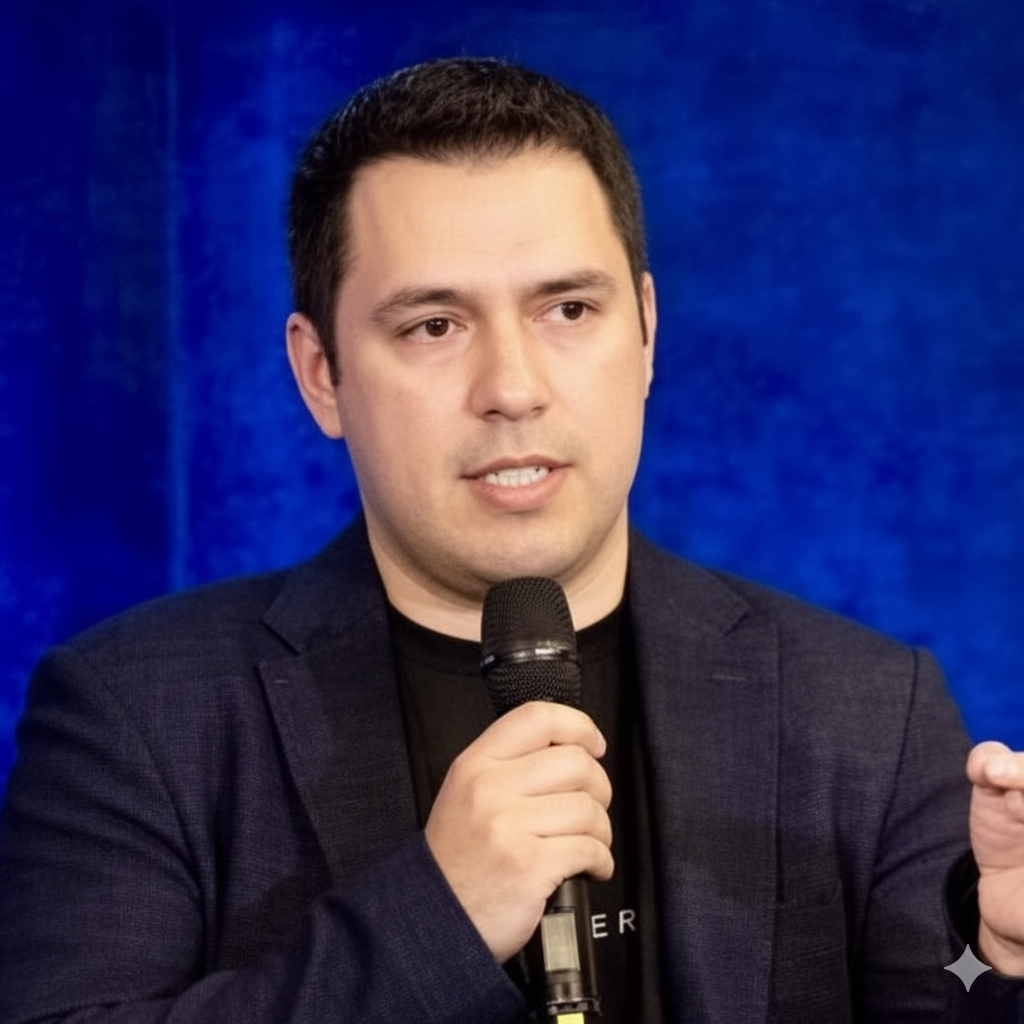 Eric Bennett is a serial entrepreneur and biomedical engineer. Prior to Frontier Bio, he was CTO at Aether, where he developed advanced low-cost bioprinters. His scientific background spans brain-computer interfacing, optogenetics, microfluidics, DNA assembly, and bioprinting. His past endeavours include using optogenetics and brain-computer interfaces to study and mitigate neural disorders. Bennett is driven to create transformative technologies that push the frontier of what’s possible.
 Boyang Wang is the founder of Immortal Dragons, a purpose-driven longevity fund based in Singapore. A former computer scientist and tech entrepreneur, Wang now runs the $40mn fund supporting underfunded bets on healthspan and ageing.