Europe has the tools to fight superbugs. Let’s use them.

The EU set concrete targets for tackling antimicrobial resistance (AMR), but the latest data shows countries are off track – increasing the risk of profound health and economic consequences. The good news is we have medical technologies that can help.
In July 2022, the European Commission and EU Member States identified AMR as one of the top three health threats facing Europe.[1] Within a year, in June 2023, the EU Council published recommendations for stepping up action, including five specific targets by which to measure progress.[2] Momentum was building, with a shared sense of urgency among policymakers, healthcare providers, and industry – as well as greater awareness among the public.
However, we are already off track.
Of the five 2030 targets agreed eighteen months ago, Europe is behind on four.[3] Data published by the European Center for Disease Prevention & Control (ECDC) last month makes for grim reading: since 2019, bloodstream infections caused by carbapenem-resistant Klebsiella pneumoniae have increased by more than 60%. The target is to achieve a 5% reduction by 2030. Antibiotic consumption also increased last year, despite a 20% reduction target.
The ECDC warns of a ‘perfect storm’ and calls for innovation, including through the development of new medicines, enhanced lab capacity, digital tools, and data-driven decision-making. We firmly believe that innovative, as well as existing, medical technologies can help Europe to turn the tide.
But there is no time to lose. Medical technologies and solutions are already available and can be applied now, while continuing to invest in the research and development pipeline.
Counting the cost
It is worth recalling the cost of inaction, both in terms of the health impact and the staggering economic burden posed by AMR and Healthcare-Associated Infections (HAIs).
AMR infections cause more than 35,000 deaths every year in the EU/European Economic Area (EEA). This takes an irreversible toll on individuals, families, and communities. Many more suffer serious – and, for some people, long-term – ill-health. Each year, 4.3 million patients acquire at least one HAI in the EU/EEA.
There are also countless patients whose care is disrupted by the knock-on effects of AMR and HAIs. For example, when a hospital ward closes or surgery is cancelled, it can affect cancer therapy, organ transplantation, and dialysis. In this way, HAIs harm those who are infected by resistant organisms and all who may need to avail of our health systems. HAIs are a problem for every one of us.
A strain on health systems
All of this impacts healthcare providers. The disruption that AMR and HAIs cause adds to the stress experienced by doctors, nurses, and other essential health workers, who often operate in a system under pressure.
By reducing infections, demand for care can be curbed, and the strain associated with cancelling surgery and care can be eased. Europe faces a healthcare workforce shortage of 4.1 million by 2030. If we are to combat shortages by addressing burnout, controlling HAIs will be part of the solution.
The economic cost of this challenge is eye-watering. AMR leads to €1.5 billion in healthcare and productivity losses annually in the EU, while HAIs add up to an additional €7 billion.[4],[5] In an era where budgets are under pressure, economic stress translates into lower health system spending – with obvious implications for care.
Healthcare systems are, of course, about people. But health spending shapes patient experiences and outcomes.
Technological solutions
There’s no denying that the picture is stark and, as the ECDC has noted, things have been getting worse. But all is not lost. In fact, when we consider the range of technologies we have now – with more coming on stream all the time – there is reason for hope.
We see four key ways in which today’s medical technologies can address the challenge of AMR and HAIs: prevention, detection & diagnosis, treatment & surveillance, and supporting innovation.
Prevention is better – and cheaper – than cure. That is why the medical technology industry has developed and delivered a wide range of products that reduce infection rates. Not only do these products curb the risk of infection, but they also help enable the appropriate and targeted antibiotic use, reducing the chance of resistance developing in the first place.
From microbial screening and antimicrobial dressings to automated environmental disinfection and surveillance software, medical technologies can prevent and control HAIs at every step of the patient journey.
Keeping patients out of healthcare settings should also be a key focus of our innovative efforts. Technologies that allow patients to be treated and monitored at home reduce exposure to infection risk and ease pressure on healthcare facilities.
Not only can antibiotics be administered at home using modern technologies, but remote monitoring solutions also reduce the number of days patients stay in hospitals after active treatment. Other established technologies, such as home dialysis, protect a vulnerable cohort from infection by facilitating safe and effective care outside of dialysis centres, where the HAI risk is higher.
Information is power
Not all infections are preventable. However, when a patient presents for care, it is vital that any infection is identified promptly so that clinicians can make informed decisions. Rapid and molecular diagnostics allow healthcare providers to detect infections and prescribe targeted antibiotics if appropriate. These tools bring significant value not only to hospitals, but also in the community care setting, where most antibiotics are prescribed.
Knowing which bacterium is causing the patient’s illness allows prescribers to choose the right treatment the first time – which is better for the patient, better for the clinician, and better use of finite resources.
Clinical information empowers health systems to protect today’s patients while safeguarding the future. Modern clinical surveillance systems, stewardship platforms, and integrated data tools support appropriate prescribing, monitor resistance, and help to manage outbreaks.
We need to embrace the best tools we have based on patient needs while vigorously pursuing new innovations. The life sciences industry continues to develop advanced diagnostics and drug discovery technologies to add to the arsenal we need to overcome AMR and HAIs.
Making an impact
Medical technologies can prevent and reduce infections and improve patient outcomes.[6],[7] Existing tools are already reducing mortality and driving down the duration of hospital stays.[8] According to the OECD, antimicrobial stewardship and improved hygiene – supported by medical technologies – is the most effective way to reduce AMR infections. Infection prevention and control programmes can prevent close to 613,000 infections every year in the EU/EEA. OECD research shows that the health and economic benefits of taking a One Health approach are almost three times the cost of implementation.[9]
A shared challenge
AMR and HAIs represent a challenge that is too great for any one organisation to tackle alone. The medical technology sector is working around the clock to play its part in getting Europe back on track. Let’s make sure we are using the technologies we have today to protect patients, support health professionals, and safeguard health systems.
References
[1] European Commission. Identifying top 3 priority health threats. 8 July 2022. https://health.ec.europa.eu/document/download/18c127ce-da4b-4e4e-a27c-f7b93efb2980_en?filename=hera_factsheet_health-threat_mcm.pdf
[2] Official Journal of the European Union. Council Recommendations on stepping up EU actions to combat antimicrobial resistance in a One Health approach. 22 June 2023. EUR-Lex - 32023H0622(0Healthcare-Associated1) - EN - EUR-Lex
[3] European Centre for Disease Prevention & Control (ECDC): Time to act and not react: how can the European Union turn the tide of antimicrobial resistance? (18 November 2025.)
[4] European Commission (consulted August 2025). EU Platform on Antimicrobial Resistance.
[5] World Health Organisation (2011). Report on the burden of endemic health care-associated infection worldwide clean care is safer care
[6] Wabe, Nasir et al. (2019). The impact of rapid molecular diagnostic testing for respiratory viruses on outcomes for emergency department patients.
[7] Clark, Tristan W. et al. (2023). Rapid multiplex PCR for respiratory viruses reduces time to result and improves clinical care: Results of a systematic review and meta-analysis.
[8] Perez, K. P. et al. (2012). Integrating Rapid Pathogen Identification and Antimicrobial Stewardship Significantly Decreases Hospital Costs.
[9] OECD (2023). Fighting Antimicrobial Resistance in EU and EEA countries: Embracing a One Health Approach.
About the authors
 Isabella Notarangelo is a vice-chair of the Working Group on Antimicrobial Resistance and Healthcare-Associated Infections. She is the global governmental affairs and policy manager at Mölnlycke Health Care. Since March 2022, she has been contributing to the development of the company’s global advocacy strategy, equipping Mölnlycke with the tools to navigate an increasingly complex geopolitical landscape. Her role involves leading the engagement with policymakers and high-level stakeholders, coordinating participation in trade associations such as MedTech Europe, and training colleagues on effective institutional advocacy. With a strong background in health policy, Notarangelo has previously worked with the European Hospital and Healthcare Federation, MedTech Europe, and a private hospital group in Milan. Her experience spans both the public and private healthcare sectors, giving her a comprehensive understanding of the dynamics shaping global health systems.
 Claude Mabilat is a vice-chair of the Working Group on Antimicrobial Resistance and Healthcare-Associated Infections. He is director of medical value AMR/AMS at bioMérieux Medical Affairs, with over 30 years of experience in microbiology and in vitro diagnostics. A recognised expert in antimicrobial resistance and stewardship, Mabilat focuses on the clinical and economic value of rapid diagnostics to improve patient outcomes and support global AMR strategies.
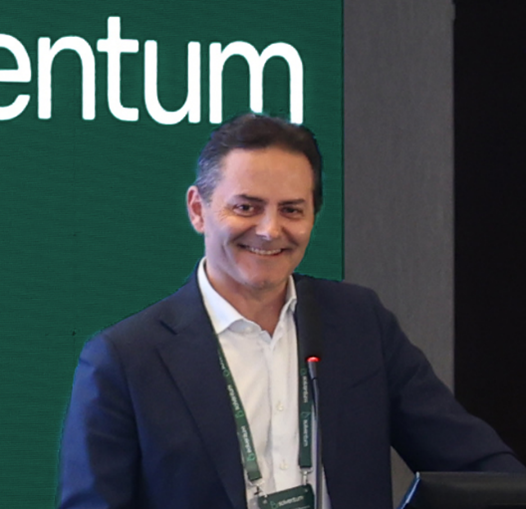 Paolo Capelli is a vice-chair of the Working Group on Antimicrobial Resistance and Healthcare-Associated Infections. He is market access manager EMEA at Solventum and an experienced professional in market access and value-based healthcare within the medical devices industry, with a strong background in strategic leadership, health economics, stakeholder engagement, and multiple certifications and trainings in healthcare and business administration.