Changing how the world finds new medicines: Physics modelling
Finding treatments for diseases afflicting humanity often proceeds at a crawl, leaving many serious medical needs unmet. Solving this problem requires a fundamentally novel approach to finding drugs.
Adityo Prakash, CEO of drug discovery platform Verseon, spoke with pharmaphorum to share his perspective on the challenges facing the pharmaceutical industry and possible solutions.
Q. What do you see as the biggest obstacle to the pharmaceutical industry in drug discovery and effectively treating more diseases?
Adityo Prakash: The biggest obstacle is that current small-molecule drug discovery is primarily reliant on trial-and-error experiments in the form of high-throughput screening. While this approach has produced some important treatments, it is slow, costly, and fraught with uncertainty.
Q. Why has this inefficiency persisted for decades, despite massive investments and technological advancements?
Prakash: Anything we want to test as a potential drug candidate has to be made in the lab first. Making new molecules that haven’t been synthesised before is a time-consuming, expensive process. As a result, humanity has managed to make fewer than 10 million drug-like chemotypes over the last 150 years.
Even though the entries in medicinal chemistry vendor catalogues may number around 100 million, when we cluster them based on structural similarities, this number falls to roughly 7 million compound families. On the other hand, the total number of drug-like chemicals possible under the rules of chemistry is 10^33, and the great medicines of the future lie in this unexplored chemical space.
Unfortunately, at the current rate of trial-and-error experiments, we will never be able to explore a meaningful fraction of the possibilities.
Q. Many analysts see AI as the key to R&D in the pharmaceutical sector. Yet, you’ve said that AI alone can’t discover truly new drugs. Why is that?
Prakash: AI needs a lot of data for training, and then when you ask for something similar, it knows what to predict. As many AI experts who are not trying to sell you magic dust have often pointed out, AI is good at interpolation and terrible at extrapolation. AI trained on existing, limited experimental data can only generate molecules that are highly similar to those in its training dataset.
As a result, current AI efforts are making small tweaks on existing drugs or repurposing old drugs for new indications. But AI’s ability to create entirely new drug molecules is fundamentally limited.
Q. What do you think needs to change in how AI is integrated into the drug discovery process for it to become genuinely transformative?
Prakash: Given the fact that AI cannot extrapolate outside its dataset, the industry needs to abandon the notion that “naked” AI in the absence of other technological breakthroughs will lead to truly novel drugs.
Since making and testing meaningful portions of the drug-like chemical space to generate training data isn’t practical, physics-based modelling needs to be the first step in drug discovery.
Unlike AI, physics-based modelling, if done right, would not require preexisting experimental data to generate drug-like molecules that belong in previously uncharted regions of the chemical space. Results from the physics-based design of new molecules can then be used to train AI to create further variants.
Q. Have other companies tried using physics modelling for drug discovery?
Prakash: The concept of physics-based molecular modelling is not new. Organisations like Schrӧdinger and CCDC have been selling physics-based modelling tools for almost three decades. However, while these tools are valuable for understanding molecular interactions, they typically lack the accuracy needed to serve as the primary driver of drug discovery. Achieving that level of precision remains a significant challenge in the field.”
Q. What recent advances in molecular physics modelling are making drug discovery more feasible?
Prakash: Accurately predicting how drug molecules interact with proteins in the body is incredibly complex, governed by the fundamental laws of quantum mechanics. Directly applying these equations at scale is computationally unfeasible, even with the world’s largest supercomputers.
Recent advances in modelling focus on creating tractable approximations that capture these interactions with sufficient accuracy, making it possible to explore previously uncharted areas of chemical space and generate truly novel drug candidates.
About the interviewee
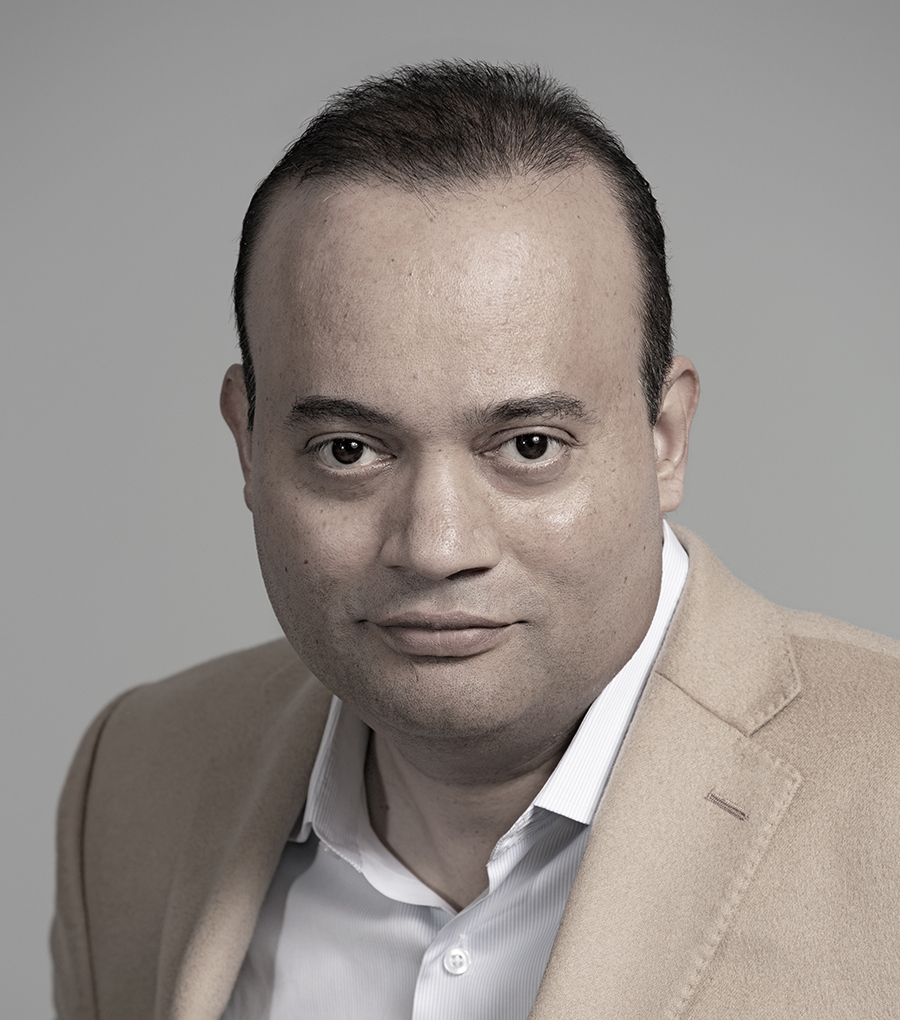 Adityo Prakash is CEO of Verseon. Prakash started Verseon to change the way the world finds new medicines. He enjoys building fundamental science-based solutions to major business problems that impact society, and has led the development of Verseon’s drug discovery platform, novel drug pipeline, and overall business strategy. Previously, Prakash was the CEO of Pulsent Corporation and is the primary inventor of technology at the heart of video streaming today. With a track record of delivering industry firsts, he is an inventor on 40 patent families. Prakash received his BSc in Physics and Mathematics from Caltech.