AI can help us build a new, more precise, antibiotic pipeline
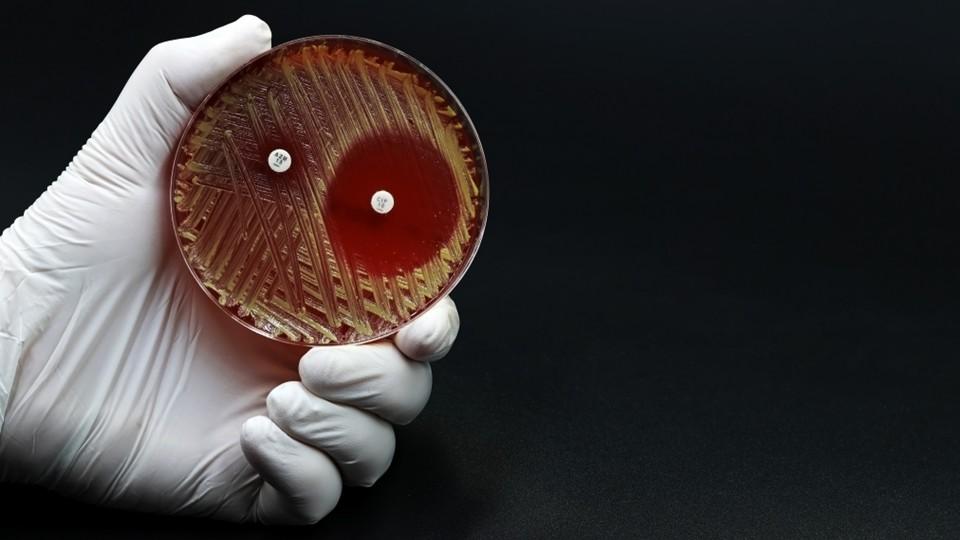
Antimicrobial resistance is often framed as a looming threat – something that our health systems will need to deal with "soon". But anyone working in infectious disease research knows that moment is already here. Drug-resistant infections kill more than a million people annually and are expected to kill 10 million people per year by 2050. Calling this problem “emerging” understates the scale and immediacy of the crisis already unfolding.
Compounding our troubles is the fact that our current antibiotic pipeline is worryingly thin, with significant reliance still being on variations of broad-spectrum antibiotics discovered in the 1940s, 1950s, and 1960s to keep infections under control. Collectively, these drugs have saved likely billions of lives, making them the most consequential tools in medical history, but they come with a significant cost. Conventional broad-spectrum antibiotics – the ones we discovered 60+ years ago – kill both pathogenic bacteria and all the beneficial bacteria that make up the gut microbiota. This approach makes increasingly less sense, as we are just beginning to understand how the human microbiota supports human health.
In other areas of medicine, there would be less inclination to accept such an artless approach. For example, oncology is not built on the idea of irradiating the entire body to kill a localised tumour. However, when it comes to antibacterial therapies, the entire microbiome is routinely destroyed to treat a single pathogen. The result of this indiscriminate killing includes a radically disrupted microbiota (dysbiosis), the rapid spread of antibiotic resistance elements, and less than perfect patient outcomes. In some cases, broad-spectrum antibiotics simply cannot be used at all to treat bacterial infections.
This sub-optimal treatment isn't because the field lacks talent or imagination – it’s likely due to the fact that antibiotic drug discovery is scientifically challenging and financially unrewarding. For decades, the system has enabled only incremental updates to existing drug classes, rather than the discovery of fundamentally new ones.
A shift toward precision medicine
Across the field, researchers are beginning to ask a different question: can we eliminate a bacterial pathogen without disturbing everything else in the body? This perspective has propelled some of the field toward narrow-spectrum antibiotics – antibacterial molecules that target specific bacteria while sparing the broader microbiome. It's a concept that aligns with modern medicine's trajectory toward targeted interventions, yet, has been peculiarly under-explored in many aspects of antibiotic discovery.
Recent research demonstrates that this approach can work in practice. Consider inflammatory bowel diseases like Crohn's disease, where patients often harbour adherent-invasive Escherichia coli (AIEC) strains that exploit gut inflammation and a disrupted microbiome. Traditional broad-spectrum antibiotics exacerbate the problem, disrupting an already fragile ecosystem and sometimes giving AIEC a competitive advantage.
Precision antibiotics targeting AIEC specifically, while leaving beneficial microbes intact, could transform treatment options for these patients. Early studies have shown promising results, demonstrating that selective targeting is both scientifically feasible and potentially clinically significant.
AI as an accelerator
In recent years, AI has begun to influence early-stage antibiotic discovery by identifying novel antibacterial compounds that are difficult to uncover with traditional screening methods. While this represents an important advance, it is only the first step in the preclinical pipeline. Once a promising molecule is identified, researchers must determine its Mechanism of Action (MOA), how it inhibits or kills bacteria. What's transformative about this moment is the role AI is now playing in accelerating MOA elucidation. Traditionally, this process required years of intensive lab work and could cost over a million dollars, creating significant uncertainty for researchers and investors pursuing new antibacterial strategies.
Today, researchers are using deep learning models to predict binding mechanisms and molecular interactions in ways that were previously impossible. These AI tools are reducing early-stage costs, accelerating mechanistic hypothesis generation, and making antibiotic discovery compatible with real-world investment appetites. Rather than replacing the wet lab, AI is accelerating the work conducted there, fundamentally changing the risk profile of antibiotic development.
Market misalignment remains the obstacle
Yet, even with artificial intelligence-enhanced scientific momentum building, the antibiotic market remains fundamentally misaligned with public health priorities. New antibiotics must be used sparingly to preserve their efficacy, which means traditional return-on-investment models don't work. The UK's subscription-style payment scheme is a promising start, offering predictable revenue for novel antibiotics, but broader adoption will be essential to show whether this model can succeed globally.
An optimistic path forward
Despite these challenges, there’s reason to remain optimistic. The tools and insights currently available are unprecedented. Not only is the antibiotic pipeline starting to be filled with truly new molecules, but the field is shifting from "kill everything, figure it out later" to precision antibiotics designed with highly tailored clinical needs in mind.
We should realise that AI will never replace human creativity in antibiotic discovery – not even close. But when used appropriately, it can help navigate the endless complexity of chemistry and bacterial physiology. Now is the time to take advantage of the opportunity to redesign how antibiotics are discovered, developed, and deployed. If scientific capabilities are aligned with the correct public policy and economic frameworks, a robust pipeline can be developed. One that is both innovative and sustainable.
Here's the bottom line: in the past 100 years, researchers have discovered roughly 20 antibiotic classes that have redefined human health on a global scale. For $20 billion, researchers can discover, develop, and deploy another 20 antibiotic classes that will get us through the next 100 years. This is an insanely cheap price tag to solve a pressing global challenge that will cost orders of magnitude more in lost GDP alone. The science is there. The tools are there. Now, what is needed is the will and the framework to make it happen.
About the author
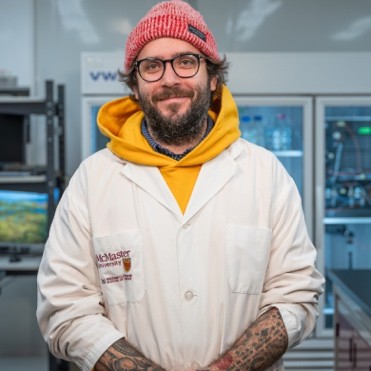
Jon Stokes is a research affiliate at the MIT Jameel Clinic and an assistant professor in the Department of Biochemistry and Biomedical Sciences at McMaster University. He received his PhD in antimicrobial chemical biology in 2016 from McMaster. From 2017–2021 he was a Banting postdoctoral fellow at the Broad Institute of MIT and Harvard. Upon completing his postdoc, Stokes established his laboratory back at McMaster in the Department of Biochemistry and Biomedical Sciences, in the summer of 2021.