Reframing obesity beyond stigma and simplicity
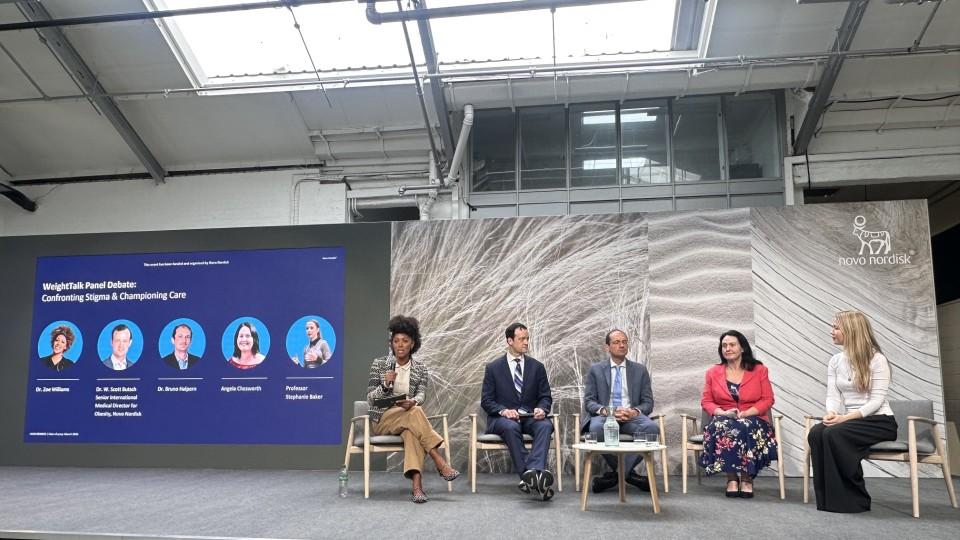
For decades, a perfect storm of economic societal, physiological challenges converged to make maintaining a healthy weight seemingly impossible for some individuals. Doctors – with little understanding of what was causing the unexpected increase in obesity cases – advised familiar solutions: eat less; exercise more. In simple terms, the condition was framed in starkly individual terms, reduced to questions of willpower, lifestyle, and personal responsibility.
But, as speakers at the inaugural Weight Talks Summit in London attested, our understanding of obesity as a complex chronic disease has evolved rather dramatically over the last 40 years. Unfortunately, the way we view and talk about the disease has not. And so the event, sponsored by Novo Nordisk, sought to use the spotlight of World Obesity Day to address the proverbial elephant in the room: we need to change the way we talk about obesity.
Bringing together clinicians, researchers, patient advocates, and industry voices, the event marked the beginning of a broader effort to rethink how obesity is discussed – and, crucially, how people living with it are treated.
From personal responsibility to chronic disease
The scale of the issue at hand was left in no uncertain terms. As president-elect of the World Obesity Federation, Bruno Halpern, explained, approximately one billion people worldwide today live with obesity. If left unchallenged, the condition will impact half of the world's population within a decade.
One of the clearest threads running through the discussion was the growing recognition of obesity as a chronic condition. This shift has been gradual, shaped by a deeper understanding of the biological mechanisms involved in weight regulation, appetite, and metabolism. Over time, this evidence has begun to influence how clinicians and researchers talk about obesity, and how it is positioned within healthcare more broadly.
Sebnem Avsar Tuna, general manager of Novo Nordisk UK, reflected on how advances in biology and research have helped reshape understanding, allowing obesity to be seen less as a short-term issue and more as something long-term.
“It's all about understanding the disease itself,” she said. “It's been recognised that it's a complex, chronic, relapsing situation. You're not able to cure it because it always comes back.”
That perspective carries practical implications. A condition that develops and reoccurs over time is unlikely to be addressed through brief episodic interventions alone, nor can it be reduced to a matter of individual choice. Yet, as multiple speakers noted, much of the public discourse – and, at times, clinical practice – continues to lag behind the science.
The enduring weight of stigma
That gap between scientific understanding and lived experience became more apparent as the discussion turned to stigma. Speakers described how assumptions about weight can shape interactions long before someone enters a clinical setting. They influence how individuals are spoken to, how seriously symptoms are taken, and whether people feel comfortable asking for help at all. In some cases, noted Novo Nordisk’s senior international medical director for obesity, Dr W Scott Butsch, bearing the weight of this stigma, the judgement and shame, can be tantamount to living with the disease itself.
Angela Chesworth’s story brought this into sharp focus. Recounting her experiences from childhood through to adulthood, she described a life shaped not only by obesity, but by the responses it provoked in others – from bullying at school to exclusion in the workplace, and, perhaps most strikingly, dismissive and, at times, unsafe encounters within healthcare settings.
For people living with obesity, these are not isolated experiences. Taken together, they reflect a broader issue in which obesity is moralised, and responsibility is placed squarely on the individual, isolating them in a way rarely seen in other conditions. The result is a cycle that is difficult to break: stigma discourages engagement with healthcare, which in turn limits access to support, reinforcing the very outcomes it purports to address.
Chesworth’s account also highlighted how stigma can narrow the conversation. For those living in a larger body, weight becomes the defining feature, while the broader picture of health is pushed aside. Speakers returned to this idea throughout the session, reflecting on how deeply embedded these assumptions can be, and how difficult they are to shift. To truly change the dialogue, they said, we must move beyond superficial terminology updates, and address the deeper issues that influence how obesity is approached in everyday interactions.
“We need to understand how each patient is different,” said Dr Butsch. “We treat different cancers differently; we should look at chronic obesity differently.”
A problem of scale – and inequality
Alongside the shift in understanding sits a more practical question: how systems respond. The number of people living with obesity or who are overweight continues to rise, and with it the pressure on healthcare services. The scale of the challenge makes it difficult to approach obesity through isolated interventions or short-term initiatives. Any meaningful response has to account for how widespread the condition has become, and how differently it can present across populations.
As Tuna highlighted, no single part of the healthcare system can achieve this goal alone. “It takes a village,” she said. Primary care, specialist services, community support, and policy all play a role, and the gaps between them can shape patient experience as much as the services themselves.
“Treating diabetes is not expensive, but not treating obesity can be very expensive due to the fact that it is related with 200 different diseases and comorbidities,”Tuna continued. “The health outcome, accordingly, can be quite different from what we are trying to achieve for any healthy person living with it. That's the reason it requires continuous talks and improvements in general.”
Chesworth’s experience echoed this idea. She described the difference made by finding a GP who approached the conversation collaboratively, focusing on health, rather than solely on weight. That shift changed how she engaged with care and how she understood her own progress.
This kind of continuity remains uneven, but speakers suggested that it reflects the direction obesity care is beginning to move. As understanding develops, expectations around support are also evolving, with greater recognition that long-term conditions require long-term engagement.
For healthcare systems, this means moving beyond fragmented approaches and toward more integrated models of care. For policymakers, it involves aligning funding and access with the realities of a chronic disease. For media, it requires a more responsible and nuanced portrayal of obesity, one that resists simplification and avoids reinforcing harmful stereotypes.
And for individuals, it may begin with something smaller, but no less significant: a willingness to question assumptions, and to recognise the biases that shape everyday interactions.
Rethinking care – beyond the consultation
While much of the discussion centred on systems and services, there was also a quieter thread running through the day. Change, speakers suggested, often begins in smaller interactions. A conversation handled differently, a patient feeling listened to, a clinician approaching the topic with more confidence. These moments may appear modest in isolation, yet, they can shape how individuals engage with care over time.
Tuna reflected on the potential impact of even small shifts in perception, whether that means someone seeking support earlier, or feeling less alone in their experience. The role of communication surfaced repeatedly – not as a separate initiative – but as something embedded within everyday practice.
This extends beyond clinical settings. Media coverage, public discussion, and community understanding all influence how obesity is perceived. As these conversations evolve, they can gradually reshape expectations, creating space for a more empathetic and informed dialogue.