Overseas doctors are keeping the NHS alive: It’s time we stopped taking them for granted

As a loud minority pushes Britain towards devolved nationalism, it’s worth remembering this sobering truth: without immigrants, there would be no NHS.
Built on borrowed shoulders
The National Health Service has always depended on overseas talent. By 1960, 40% of all junior doctors came from India, Pakistan, Bangladesh, and Sri Lanka – according to the University of Manchester’s Centre for History of Science, Technology, and Medicine –filling posts in deprived urban areas, rural practices, and neglected specialisms like mental health and elderly care.
The very scope of the NHS system means it was never built to function solely on home-grown talent. Our dependence on international doctors and nurses forms the very cloth the UK health system was cut from, with the safety and wellbeing of national citizens sitting squarely on the shoulders of those trained and qualified abroad for 75 years plus.
History repeats itself
By the late 1960s, as many as 50% of all British medical graduates emigrated for better pay and working conditions across the Atlantic, according to Manchester researchers, consolidating our foundational reliance on overseas teams. Indeed, by 1971, 31% of all England’s doctors were born and trained outside of UK borders. Fast forward half a century to 2022, and half our secondary-care doctors are trained abroad, according to The University of Oxford’s Migration Observatory. International graduates now make up 37% of all NHS doctors, with 26% hailing from non-European countries and 11% from non-EEA nations (per Sheffield, Newcastle, and Rotherham academic studies).
The beating heart of the NHS
We rely heavily on overseas professionals to safeguard specific fields, as well. In 2021, over two-thirds (68%) of non-consultant specialists, 60% of ophthalmologists, and 57% of endocrinologists were trained abroad, according to the Institute for Fiscal Studies. International doctors are likewise overrepresented in locally employed roles: positions with heavy out-of-hours duties and unsociable hours that many native graduates tend to avoid.
There’s no denying it. Overseas doctors form the beating heart of the NHS, propping up the parts of our system that others will not. Without them, fundamental lifelines would simply collapse.
Biting the hand that saves us
Whilst the NHS indubitably runs on international talent, however, this does not stop our system from pushing overseas nurses and doctors to the absolute limit, whilst sweeping them personally into the margins.
Despite almost 100,000 overseas health and care workers coming to the UK in the year ending March 2023, according to the Migration Observatory, NHS England still reported 112,000 vacancies in that same month. Indeed, even with a workforce increase of 56,000 in a single year (2022), the House of Commons Library data shows that productivity continues to fall, with fewer patients treated in 2022 than 2021.
Whilst an influx of overseas staff may be plugging gaps, it’s not enough to stem the flow of systemic inefficiencies and chronic underinvestment in training and retention – threatening the very survival of the NHS. The only real way forward is to celebrate our international talent based on real-world merit, no longer pushing those we rely on so heavily to carry us through 40% privatisations to the margins by treating them as a stopgap when they’re really the glue holding everything together.
A revolving door of talent
Too often, professionals that step up to save us are met with poor induction practices, stunted career pathways, and a hostile working culture. This is not a sustainable way to express gratitude and solicit much-needed loyalty from those who must be recognised and rewarded as fundamental system players. It’s time we recognised that our overseas doctors are not replaceable, or part of a revolving door of talent. If such a ripe-pickings scenario ever existed, it long dried up with Brexit, which forced us to ramp up recruitment among non-EU nations to make up a shortfall, even among countries on the World Health Organization’s red list. Critics now argue that it’s unethical to be recruiting so heavily from countries already struggling with their own healthcare skills crisis, making it more important than ever to hold onto our international medical talent. This means prioritising adequate, real-world progression and support.
Systemic hurdles
International doctors face daily systemic hurdles. Though fully qualified, many still struggle with cultural adaptation, subtle linguistic differences, and the NHS’s much flatter team structure, which can clash with hierarchical processes and norms they may be familiar with in their home countries. Visa delays and expensive renewals add to the stress of quickly adapting to new, alien protocols under a system that criticises foreignness despite depending on it so critically.
Sometimes, these hurdles can prevent doctors from working altogether, leaving many wondering why they left their home countries in such desperate need of qualified medical services. Career progression is another stumbling block that feeds into this, with a disproportionate number of international medical graduates ending up in non-training posts or locum roles with little chance of advancement, according to GMC reports. These positions are vital for the NHS, but leave many doctors trapped in dead-end jobs. Unsurprisingly, this fosters demoralisation and burnout.
Discrimination becomes the icing on the cake in this context. The NHS Workforce Race Equality Standard shows that ethic minority staff – disproportionately international graduates – are 25% more likely to face harassment or bullying from colleagues than white peers. Such conditions feed the very attrition crisis we are attempting to resolve.
From stopgap to solution
The NHS’s own Long-Term Workforce Plan proposes cutting international recruitment from nearly a quarter of hires to just 9-10.5% over the next 15 years, perhaps in an attempt to address the ‘red list crisis’. Nevertheless, this ambition rests on rapidly expanding domestic training – something governments have repeatedly promised, but failed to deliver for decades.
A far more pragmatic approach is needed. It’s time to accept that overseas doctors are here to stay, and treat these valuable people not as stopgaps, but as the foundational pillars of the UK health service they truly are. Investing in the wellbeing, integration, and career progression of these professionals proves far more ethical and economical than incessant recruitment drives breaching the WHO’s red list, setting us up for much greater returns. Indeed, research shows that every £1 invested in the NHS generates £4 for the wider economy, rising to £14 for every £1 in primary care, according to the NHS Confederation. What better place to invest than the wellbeing and stability of our international doctors?
Supporting those who support us
The solutions are neither radical nor impossible. Properly funded induction schemes that address both clinical skills and cultural integration, dedicated mentorship programmes, and expanded training places that prevent bottlenecks must all be part of the solution. And the more critical measures we can add to tackle lingering systemic discrimination, the better – all while celebrating the contributions of international staff more.
The alternative is grim: an NHS that continues to consume international talent without retaining it, locked in an endless cycle of recruitment and attrition, and potentially dissolved by ongoing attempts at privatisation.
About the author
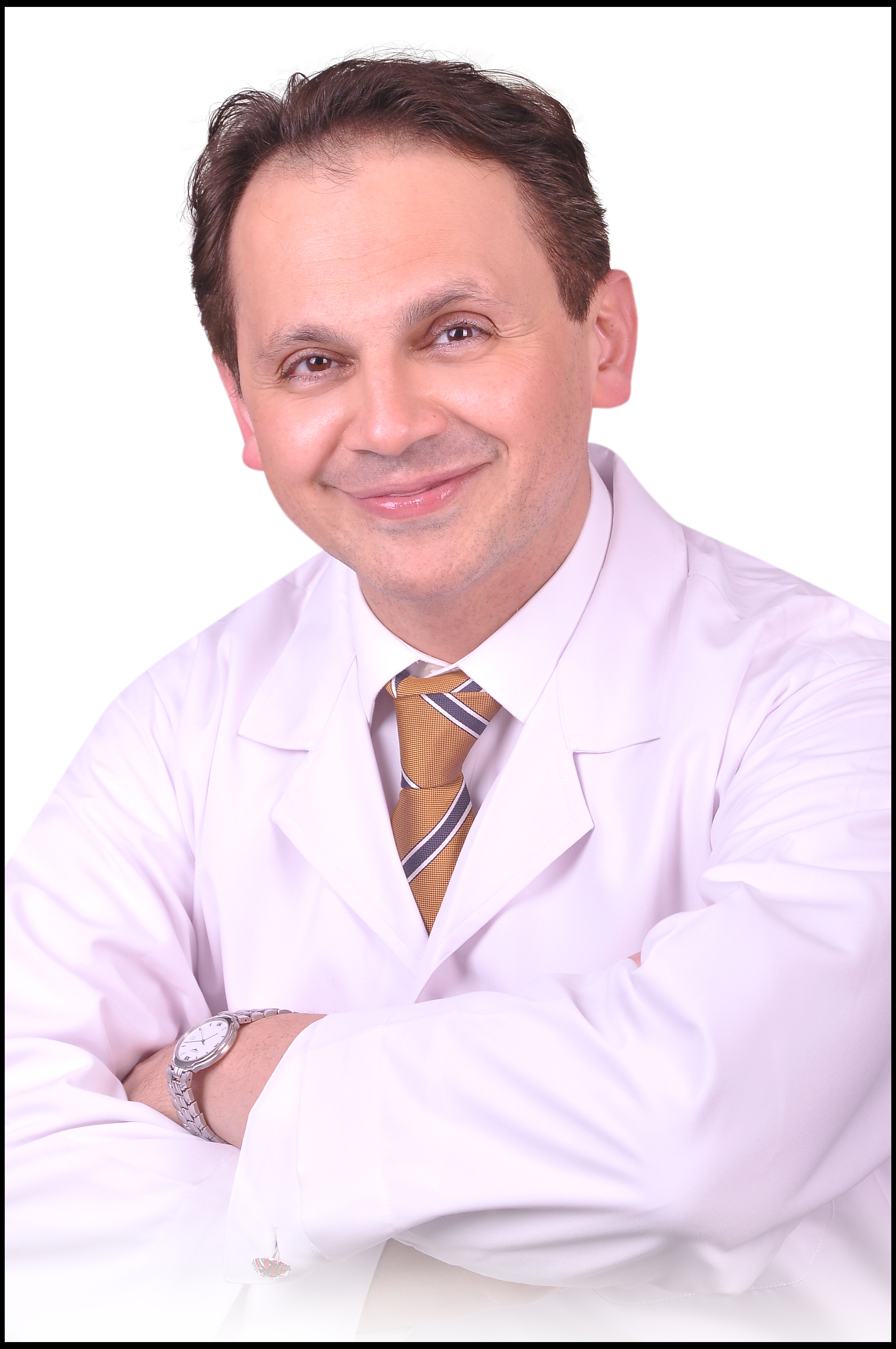 Dr Mohamed Elsayad is founder of NHS Success Circle. He is a distinguished consultant radiologist with a specialty in musculoskeletal imaging, ultrasound-guided injections, and cross-sectional body imaging. In his current position, he has honed his expertise in advanced pelvic imaging, including complex cases in colorectal, gynaecological, and multiparametric prostate MRI, and is a key contributor to multidisciplinary team meetings. As the lead radiologist for the BHRUT Endometriosis Tertiary Referral Centre, Dr Elsayad has been instrumental in pioneering innovative practices, such as the introduction of microbubble contrast ultrasound for enhanced liver imaging. A passionate educator, Dr Elsayad regularly teaches on prominent national and local radiology courses and is a lead trainer, particularly for trainees preparing for the FRCR 2b exam. With a deep commitment to supporting overseas doctors, he guides them in navigating the NHS and advancing their careers, providing essential advice and mentorship for those facing challenges. Dr Elsayad is an award-winning doctor, mentor, author, speaker, and passionate advocate for human potential and excellence in patient care.