The importance of globalisation for patient access
At ESMO 2025 in Berlin, pharmaphorum spoke with Jo Feng, president of Hengrui Pharma, about the company's work in the oncological space and globalisation efforts more broadly.
Hengrui Pharma (Jiangsu Hengrui Pharmaceuticals Co, Ltd) is a global pharmaceutical company focused on oncology, metabolic and cardiovascular diseases, immunological and respiratory diseases, and neuroscience.
Founded in 1970, to date Hengrui has invested more than RMB 50 billion in R&D, taking a lead in China's pharmaceutical industry. The company has built 15 R&D centres across the world, including in China, Japan, the United States, Australia, and Switzerland, with a global R&D team of over 5,600 professionals.
Bringing Chinese innovative drugs to the world, globalisation is the company’s long-term development strategy. At present, its pharmaceutical products have entered more than 40 countries and regions and Hengrui has launched more than 20 international clinical trials. Through its international partners, the company has obtained more than 20 registration approvals in the EU, the US, and Japan.
Q: Please share with us some details of the partnerships and agreements Hengrui has recently entered into with pharmaceutical players, such as Merck and GSK and others, and why is that so important in terms of globalisation?
Jo Feng: Going global does not mean that we need to do everything by ourselves. In China we are experts, but outside of China we are still a small player. So, these kinds of global partnerships are very important because they allow Hengrui to build global expertise as well.
For example, last year we out-licensed our Lp(a) inhibitor asset to MSD with a deal valued at up to $2 billion outside of China. And this year we just completed a collaboration with GSK, which includes our latest PDE3/4 inhibitor currently being studied for COPD, as part of a broader pipeline of 12 co-developed assets covering multiple therapeutic areas. These deals signal confidence from leading global companies in our innovation engine and help accelerate access to international markets.
This partnership structure enables global R&D synergy by combining Hengrui’s early-stage research strengths with the development and commercial infrastructure of established international companies.
Ultimately, this creates a “win-win-win” model: validation for Hengrui, broader access for global partners, and faster benefit for patients worldwide.
Q: To give a taste of some of the data presented at ESMO this year, please share some of the key highlights from what Hengrui presented.
This year we had 46 studies from Hengrui presented at ESMO, across different formats – including late-breaking abstracts, oral presentations, mini-oral sessions, and posters. The data spans several oncology areas where we are building a strong pipeline.
In breast cancer, for example, we already have a full set of treatment options – from endocrine therapies to CDK4/6 inhibitors and antibody-drug conjugates (ADCs). The latest one is a HER2-targeted ADC for late-stage breast cancer, which has shown very good results and was officially announced during the Congress.
We also have a strong presence in gastrointestinal cancers. GI cancers represent a major burden in Asia, especially liver cancer, where we presented data on a perioperative (neoadjuvant) treatment approach that combines targeted therapy and immunotherapy before surgery to improve surgical outcomes. The results are very encouraging. The GI portfolio also includes promising early-stage pipeline candidates such as HRS-4642 (a KRAS G12D inhibitor) and SHR-1701 (a dual-targeting PD-L1/TGF-βRII antibody), demonstrating the breadth of Hengrui’s next-generation oncology research beyond breast cancer.
Q: Turning to the ESMO Congress as a whole, what have been the key takeaways from the Congress for you this year?
This year at ESMO, there was a very strong focus on early diagnosis and early treatment, as well as perioperative approaches – treatment before or after surgery. The idea is that the earlier we identify and treat cancer, the more patients can actually be cured, which is becoming a major theme.
Another key trend was the increasing use of AI, not only in diagnostics, but also in clinical study design and patient recruitment. If you can accelerate the process by even 10-20%, it means the medicine can reach patients faster.
There was also a lot of discussion about how access can be made more equitable. Europe is a well-developed healthcare market, but many emerging markets do not have the same level of access, so the question is how innovative medicines can reach those patients faster as well.
A major theme at this year’s Congress was also the shift toward precision medicine – tailoring treatment based on biology, biomarkers, and tumour characteristics – as well as the growing role of antibody-drug conjugates (ADCs), which are moving earlier in treatment lines and expanding into additional tumour types.
Alongside scientific innovation, ESMO 2025 emphasised the need for global collaboration in regulatory alignment and clinical trial harmonisation to ensure that these advances can translate into faster access for patients internationally.
Q: Given everything discussed, where do you hope the oncological field will be in the next five to ten years?
In the next five to ten years, I think oncology will move even more toward early diagnosis and early intervention – including perioperative treatment strategies before or after surgery, which can significantly improve long-term outcomes. The earlier you identify and treat the disease, the higher the chance of a cure.
An additional major shift will be toward more personalised and precision-based oncology, where treatment decisions are guided by tumour biology and biomarkers. In addition to this, immunotherapy, antibody-drug conjugates (ADCs), and targeted combinations are expected to become standard earlier in treatment lines and across a wider range of tumour types. To ensure these innovations reach patients globally, harmonisation of regulatory pathways and more unified international clinical trial frameworks will also become increasingly important, enabling faster and broader access to new therapies.
China can play a key role in this development because of its scale, both in terms of patient numbers and research capacity. Recruitment can be completed much more quickly, which helps accelerate the overall development timeline. At the same time, the cost of drug development continues to rise worldwide – from around $1 billion per approved product ten years ago to more than $2 billion or even $2.5 billion today – so, increasing efficiency is necessary to make new medicines more affordable and more widely accessible.
About the interviewee
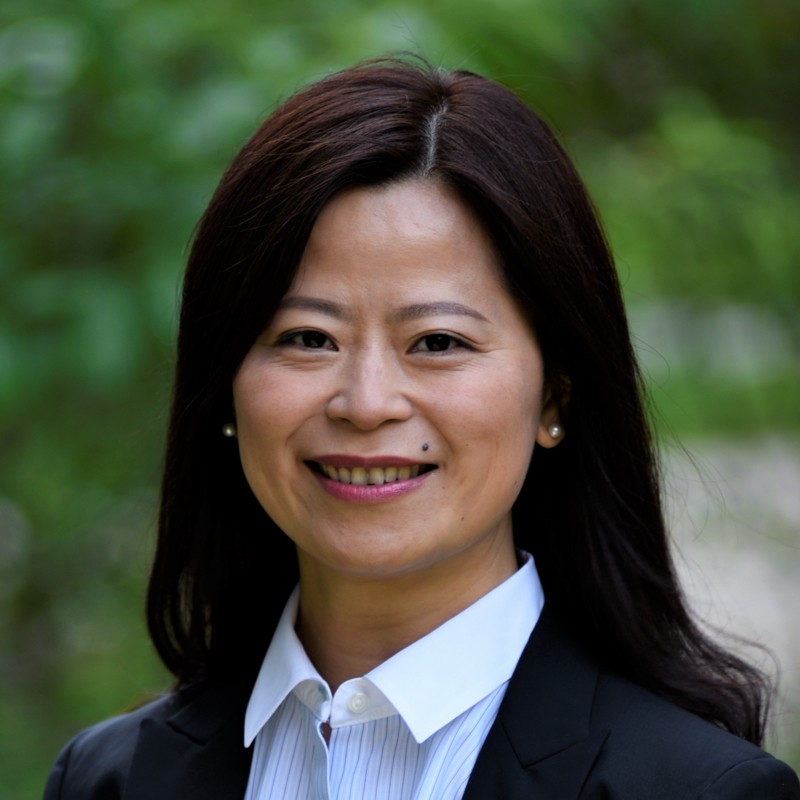 Jo Feng is president of Hengrui Pharma. She is an experienced commercial leader with a demonstrated history of working in the pharmaceuticals industry in China, global headquarters, and Asia more widely. Feng holds an EMBA from Washington University in St Louis - Olin Business School.