OpenAI launches ChatGPT Health portal
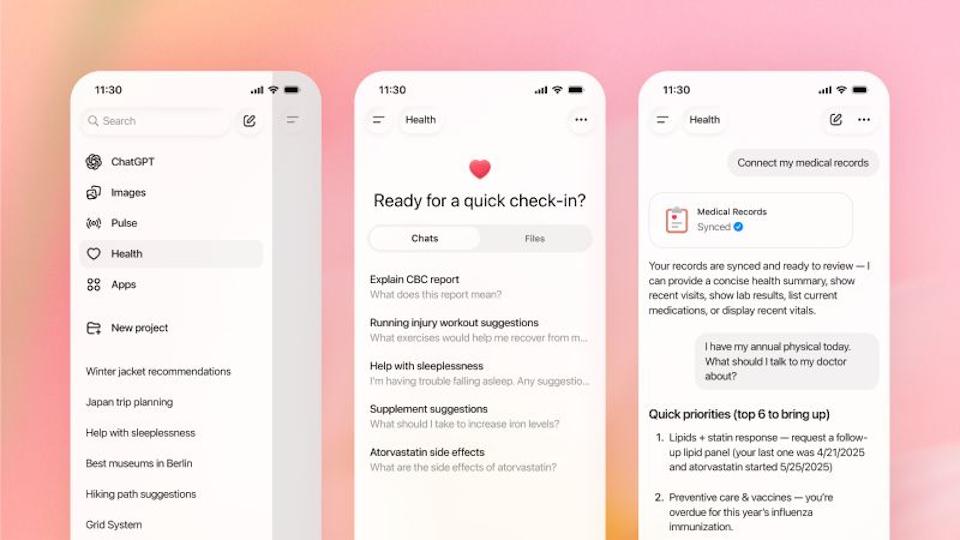
OpenAI has announced ChatGPT Health, which promises to bring users' medical records and health and wellness apps like Apple Fitness and MyFitnessPal into one place, alongside their health-related conversations with the AI assistant.
The company is emphasising that ChatGPT Health is "not intended for diagnosis or treatment," an assertion that may do little to assuage concerns about escalating use of AI among the public, a move towards lighter regulation in the US, and documented cases of poor advice leading to patient harm.
More than 230 million people globally ask health and wellness-related questions on ChatGPT every week, according to OpenAI, which published a report (PDF) earlier this week showing that a quarter of Americans are using ChatGPT for health queries at a time when opinions of the US healthcare system are at a 24-year low.
The AI specialist is teasing the service for now, opening a waiting list for people wishing to try it out ahead of a launch "to all users on web and iOS in the coming weeks." However, that waiting list isn't available to people in Europe, which may reflect the complexities of meeting stricter data protection laws in the region.
According to OpenAI, ChatGPT Health can be used for tasks such as understanding test results, preparing for appointments with a doctor, getting advice on diet and workout routines, and comparing different insurance options based on an individual's healthcare status.
The company also said that health queries and information will be separated from other chats with the AI and will have "additional, layered protections" designed to keep sensitive information secure and private. It worked with digital specialist b.well Connected Health on the implementation, including the integration with electronic health records.
In another nod to concerns people may have about the sanctity of their data, OpenAI has also pledged not to use it to train its large language models.
Still, people may want to reflect carefully before sharing their medical and health information with a chatbot. There are many unanswered questions, such as where the data will be stored and for how long, if it can be reviewed by human operators at any point, and whether the tech company's data controls are strong and transparent enough to prevent misuse or hacking.
"People are already coming to ChatGPT with health questions to empower themselves where the healthcare system falls short," asserted Ashley Alexander, head of OpenAI's Health Products division.
"Health information is fragmented across many disparate health systems, apps, and trackers. The average doctor visit is less than 15 minutes long, and there are often long stretches between doctor visits where you're left wanting to take a more active role in understanding and managing your health and wellness," she added.
OpenAI said the health function will have "foundational protections […] to give you meaningful control over your data, including temporary chats, the ability to delete chats from OpenAI's systems within 30 days, and training our models not to retain personal information from user chats."
"The result is support that people can trust – always designed to support, not replace, your healthcare providers."