HHS staffers wait for news after government shutdown
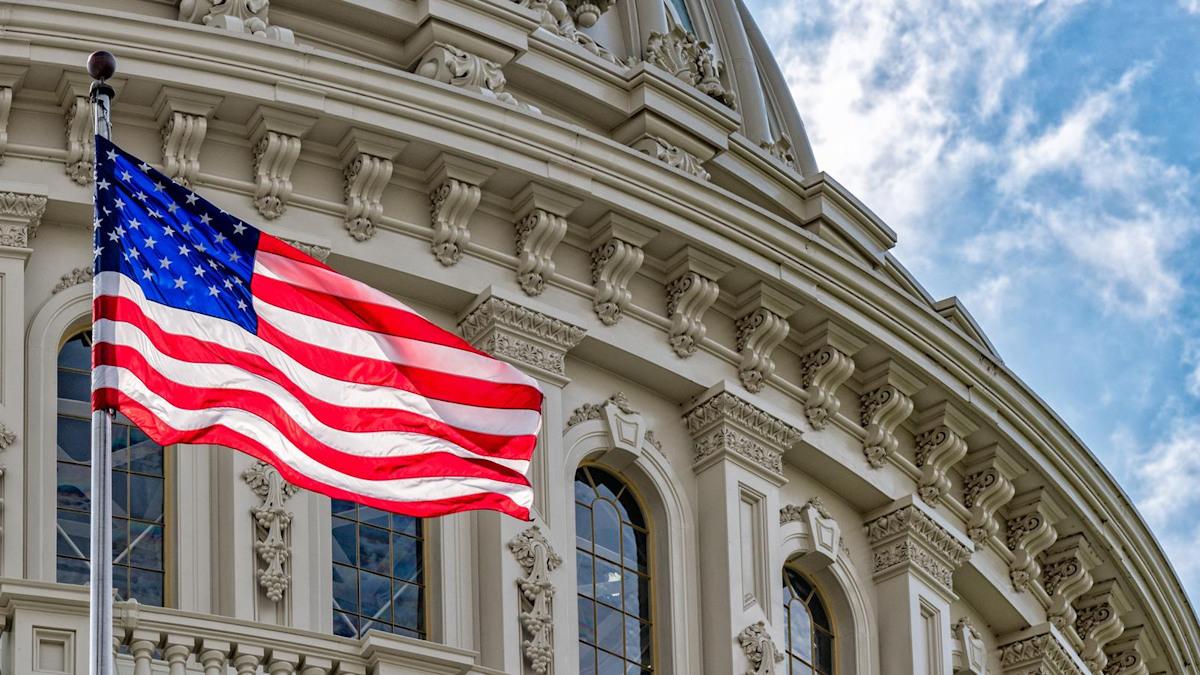
The US government has shut down after Republicans and Democrats failed to resolve a standoff on the budget and the federal government ran out of money.
The shutdown came after lawmakers failed to reach agreement on proposals from both sides, including a bid by Democrats to secure continued tax credits for healthcare programmes under the Affordable Care Act (ACA), which would have funded operations beyond midnight last night.
The failure to reach a funding agreement will hit federal workers hardest of all, as they will not receive any salary while the shutdown is in effect, adding to the pressure they are already facing due to the Trump administration's sweeping job reductions.
In the last few days, President Trump has said that "vast numbers of people" could irreversibly lose their jobs if a lapse occurs, and it is unclear if that was a real threat in the context of ongoing efforts to strip down government or posturing in an attempt to get Democrat lawmakers to give in to Republican demands.
From a healthcare perspective, agencies under the purview of the Department of Health and Human Services (HHS) are now expected to furlough more than 32,000 workers out of a total headcount of almost 80,000 under the terms of a recently published contingency staffing plan.
The FDA will be the least affected, with 86% of its staff remaining at work to keep key functions like regulatory reviews and product recalls operating. Around half of the CMS will keep their jobs – with Medicare continuing to be funded through the first quarter of fiscal 2026 – along with a third of the CDC and a quarter of the NIH workforces.
Shutdowns are not uncommon – the last took place in 2019 during the last Trump administration – and funding gaps have resulted in employees being furloughed on 10 separate occasions. The 2019 hiatus was the longest on record, extending for 35 days before an agreement was eventually thrashed out, with some federal workers forced to use food banks to keep going.
If earlier shutdowns are an indication, a lengthy lapse in funding could lead to disrupted flights, the closure of parks and zoos, and reduced inspections to make sure businesses are operating in accordance with regulations. The Congressional Budget Office (CBO) estimated that the 2019 shutdown reduced economic output by $11 billion, including $3 billion in permanent losses.
Predictably, the Trump administration has blamed the Democrats for the impasse, while the Democrats have pointed fingers at the Republicans.
With Republicans in control of the House, the Senate, and the White House, some Democrats have argued that the ensuing chaos has been orchestrated to serve the administration's ends and give it license for further cuts to federal services.
The Senate is expected to vote again today on the same Democrat proposal and one to provide stopgap funding tabled by Republicans.