Akeso and CStone secure China clearances for next-generation ADCs
Hong Kong biopharma company Akeso has secured clinical trial clearance in China for a next-generation antibody-drug conjugate (ADC) targeting B7-H3, paving the way for a Phase I study in patients with advanced solid tumours.
The move makes AK157D1 the third of Akeso’s next-generation ADC candidates to enter clinical development, following TROP2/Nectin-4-targeting AK146D1 and HER3-directed AK138D1. The company is also planning to test AK157D1 in combination with its bispecific antibodies ivonescimab and cadonilimab, as it looks to build out what it calls its “IO2.0 + ADC2.0” strategy.
B7-H3 is an immune checkpoint protein that is found across a range of solid tumours, including non-small cell lung cancer, small cell lung cancer, prostate, colorectal, and breast cancers. In non-cancerous tissue, B7-H3 expression is relatively limited, however, it is often expressed at much higher levels on the surface of cancer cells, making it a prime target for antibody-based therapies and drugmakers looking to deliver treatments directly to a tumour.
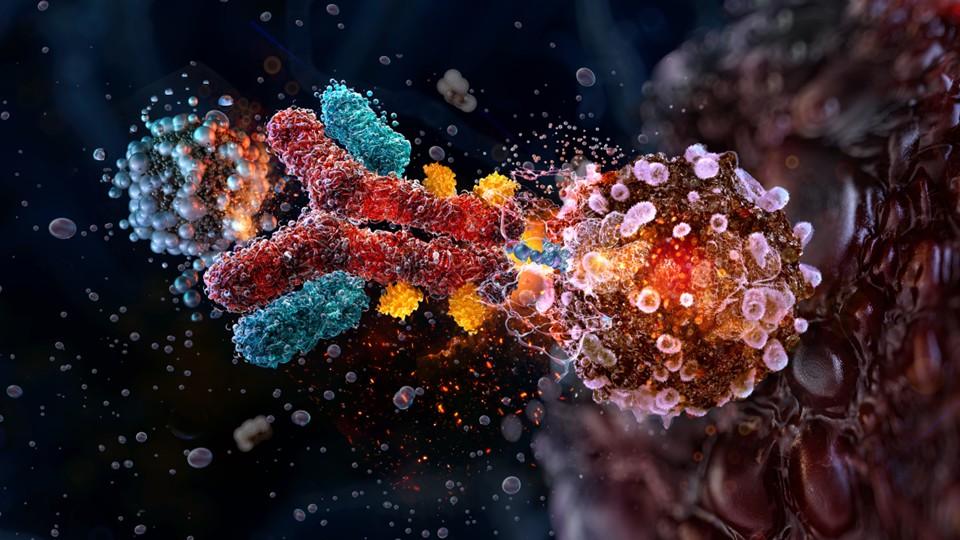
According to Akeso, AK157D1 is made up of a humanised IgG1 antibody linked to Dxd, a topoisomerase I inhibitor derived from camptothecin. Using a site-specific approach and proprietary linker design, the drug uses the B7-H3 protein like a ‘Trojan horse’, bypassing the tumour’s defences to deliver the payload directly inside the cancer cell.
In preclinical testing, the candidate demonstrated antitumour activity alongside what Akeso described as a favourable safety profile. The company also said the findings could potentially address some of the toxicity issues associated with existing ADCs, including haematological toxicities and interstitial lung disease.
Those claims will now face testing in humans as the company prepares to begin the Phase I trial.
Moreover, Akeso is developing a wider portfolio of next-generation ADCs alongside its bispecific antibody programmes. Its pipeline includes AK158D1, a bispecific ADC that the company expects to enter clinical development shortly.
CStone advances bispecific ADC into China trials
Elsewhere in China, CStone Pharmaceuticals has been approved for an investigational new drug application for CS5007, an EGFR/HER3 bispecific ADC, with the review completed in 23 working days through the National Medical Products Administration’s innovative drug clinical trial pathway.
The approval comes after CStone began a global Phase I study of CS5007 in Australia in June, where the first patient has been enrolled. The company plans to run the study in parallel in China as it accelerates development of the candidate across multiple regions.
CS5007 is designed to simultaneously target EGFR and HER3, two receptors that can be co-expressed in epithelial solid tumours. CStone is developing the candidate with the aim of addressing resistance mechanisms that can emerge following EGFR-targeted treatment, including through HER3-mediated signalling.
The Phase I programme will assess the ADC’s safety and tolerability, alongside pharmacokinetic and pharmacodynamic characteristics and early signs of antitumour activity.