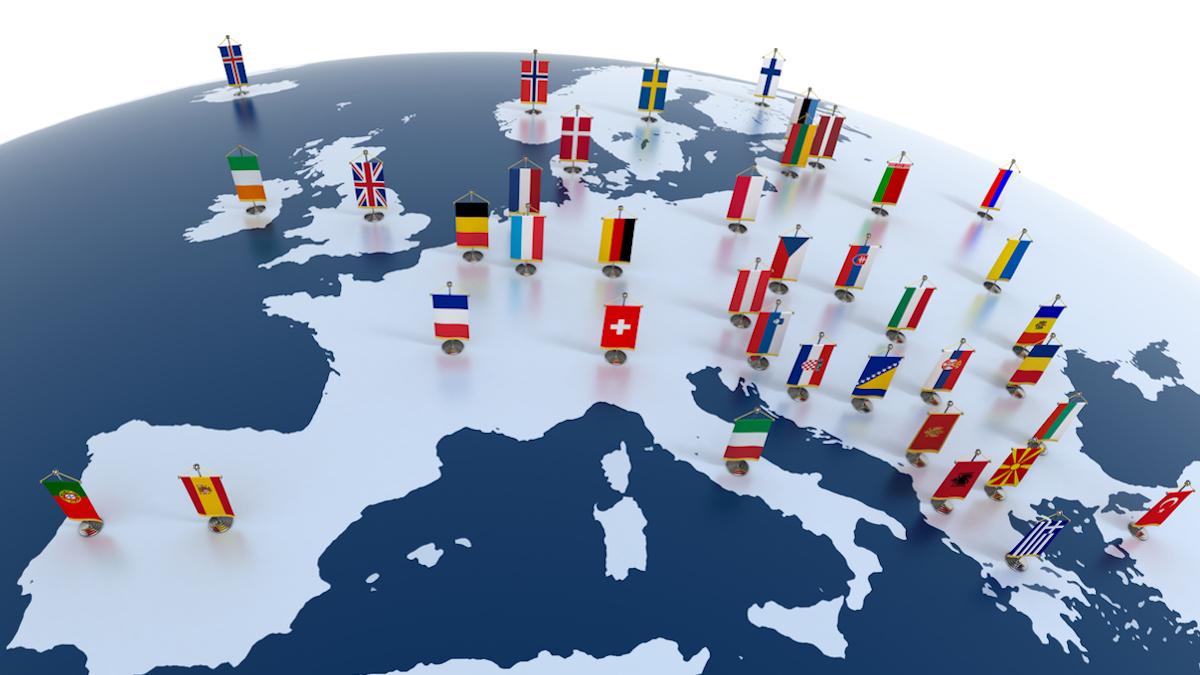
European biopharma at a crossroads

Europe’s position in the global biopharma ecosystem is undergoing a period of fundamental change. Once a steady pillar of pharmaceutical R&D and early innovation, the region now finds itself squeezed between the investment dominance of the United States and the highly efficient and fast-growing China. This is not a short-term dip or market correction. Rather, it reflects a deeper, structural shift shaped by convergence of forces: geopolitical uncertainty, evolving regulation, and a redistribution of R&D activity toward new, efficient innovation hubs.
In this shifting environment, Europe’s metrics tell a sobering story. Its share of global biopharma financing has dropped sharply, and its contribution to the global drug development pipeline is diminishing. Yet, beneath these headline figures lies a more complex picture. Europe retains some pivotal strengths, especially its ability to develop innovative breakthrough therapies. Whether this is sufficient to ward off Chinese innovation taking market share is a question that will shape the European biopharma industry over the next five years.
Europe’s challenges
First, a lay of the land. The macro level financial data does not paint a pretty picture for European biopharma. Data from Evaluate’s Biomedtracker projects global biopharma financing to reach $75 billion this year, a sharp decline from the $152 billion peak recorded in 2020. Within that, Europe’s share has dropped to just $11 billion, representing just 15% of the global total. While this downturn in financing has been a global phenomenon, European biopharmas have borne the brunt and faced the steepest drop.
Europe's diminished role in global capital flows is particularly pronounced when placed in contrast to the United States, which remains, unsurprisingly, the most active market for biopharma investments and dealmaking. While some might point to increasing US protectionism, with the Trump administration’s focus on reshoring investments from pharma majors into the United States, the data points to a longer-term squeeze on European capital.
Losing ground to China
This contraction in funding is mirrored by a notable decline in Europe’s share of the global drug development pipeline. As of 2025, European companies possess 25% of the global pipeline, down from around 40% in 2010. As austerity measures have eroded Europe’s share, surging investment in China has seen the opposite. This year saw China finally overtake Europe in pipeline share, although the reality is China has been outpacing in new drug creation for quite some time.
China’s emergence as a biopharma heavyweight should not be a surprise. It reflects a long-term national strategy focused on cultivating innovation through sustained state investment and regulatory reform. This coordinated effort has positioned China as a formidable force in global drug development.
Today, China is responsible for approximately one-third of all Investigational New Drug (IND) filings to the US FDA: an indicator not only of volume, but also of increasing scientific credibility. While much of the country’s early pipeline was built on incremental innovation, particularly in oncology, the landscape is shifting. Chinese companies are moving into more original science, adopting new modalities, and integrating digital technologies into its development processes.
A key advantage lies in alignment. Policymakers, academic institutions, and industry actors in China often operate in close coordination, enabling faster trial approvals and rapid scaling of new technologies. Challenges remain around intellectual property protection and access to global markets, but the country’s trajectory is unmistakable. China is no longer a secondary player. It is actively reshaping the geography of biopharma innovation.
Europe’s strength in innovation
Yet, it’s not all doom and gloom. Europe retains core strengths in innovation and investment quality that could form the foundation of a comeback or, at the very least, a solidified position as an innovator in the biopharma industry. Notably, Europe continues to attract a robust share of venture capital in biopharma. European biotechs are projected to secure about 27% of global venture financing in 2025, indicating that more than a quarter of the world’s smartest biotech money are bets on European science.
In fact, recent data showed Europe logging its highest-ever life sciences VC fundraising quarter in 2025, driven by a few blockbuster rounds. This shows private investors remain engaged in Europe, especially for later-stage companies with strong clinical data. The average size of European funding rounds has also grown: European biotechs in 2025 are raising around $70 million per round on average, not far behind the $80 million average in the US. Such figures suggest that Europe remains a compelling investment location, due in part to its academic legacy and record in developing successful drugs.
Even more crucially, Europe maintains a strong position in terms of the quality of innovation emerging from its pipeline. European companies account for roughly one third of all first-in-class therapies in development, and a similar proportion of drugs with breakthrough designation status. What this shows is that Europe generates an outsized proportion of the world’s most novel and advanced medicines.
This performance points to the enduring strengths of Europe’s research institutions, academic spinouts, and R&D-led biotechs. Preserving and scaling this innovative core will be essential to rebuilding the region’s competitive position in global biopharma. Encouragingly, political momentum is beginning to match the scale of the challenge, most recently with the announcement of a €10 billion European Investment Bank initiative to help bridge the Continent’s biotech funding gap. Such a move signals both recognition from political leaders that there is a gap to be bridged and, more importantly, a willingness to take concrete steps to address it.
Building stability in Europe
While Europe faces structural challenges around drug pricing and clinical trial efficiency, its consistent output of breakthrough science and its ability to attract substantial private capital suggest that the region still possesses the core ingredients to remain a global hub for biopharma innovation. To secure that role, Europe must accelerate commercialisation, modernise regulatory frameworks, and deepen investment in research and capital markets. Long-term success will depend not just on reacting to global shifts, but on learning from international peers and converting disruption into strategic opportunity.
In a landscape defined by extremes – scale and capital intensity in the US, speed and cost efficiency in China – Europe’s middle ground may prove to be its strength. It offers high-quality science at globally competitive costs and remains better positioned than China, for now, to scale innovation internationally. If Europe can bridge its operational gaps while leveraging its scientific base, it can carve out a distinctive and sustainable leadership position in the evolving global biopharma economy.
About the author
 Daniel Chancellor is a biopharma industry advisor with ~15 years of experience spanning drug discovery, market analysis, competitive intelligence, and strategic consulting. Currently delivering and overseeing thought leadership activities for Norstella and its constituent brands, using proprietary, gold-standard datasets to communicate the opportunities and challenges facing the industry today, Chancellor is a regular contributor to Scrip and In Vivo newsletters, external commentator for leading business publications, plus a frequent speaker and presenter at pharma conferences across the US, Europe, and Japan.