BIO-Europe Spring, Portugal: Propelling new wave innovation
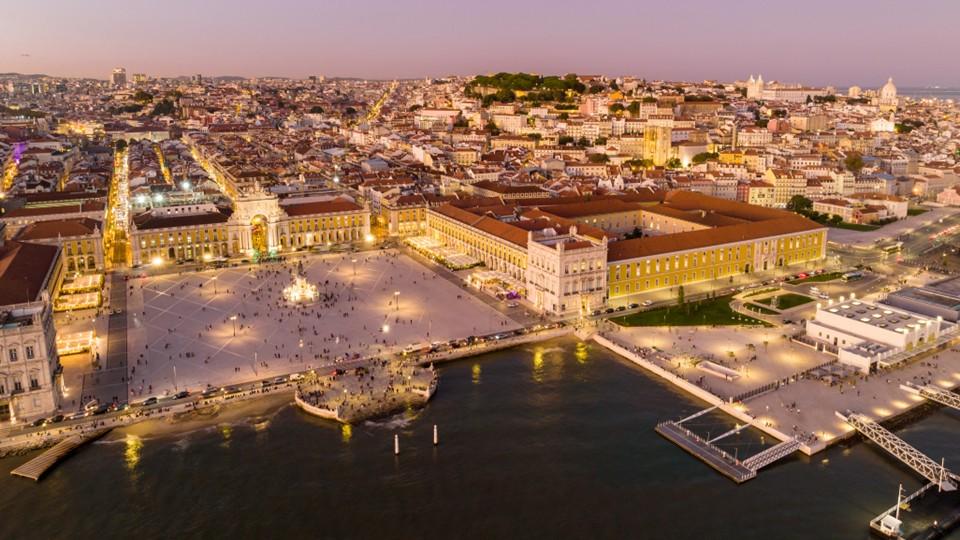
BIO-Europe Spring arrived in Lisbon, Portugal yesterday, running from 23rd to 25th March. Combined with the LSX World Congress in the same city for Spring Innovation Week, the aim is to propel a new wave of innovation.
pharmaphorum headed to the Feira Internacional de Lisboa to report.
An astrolabe for what’s next in biotech
Opening remarks were led by Claire Macht, Informa’s director, European portfolio, life sciences partnering and investment, together with: Elizabeth Civils, VP of membership at the Biotechnology Innovation Organization; Eng. João Rui Ferreira, Secretary of State for Economy, Government of Portugal; and Eng. Carlos Moedas, Mayor, City of Lisbon.
These days, science, capital, and internationally trained talent all converge in Lisbon itself. It is an agile ecosystem, with direct access to EU markets. Its triple power? High science, lower burn, and faster execution. Indeed, with an ecosystem of 200-plus life sciences companies, Portugal is no longer an emerging ecosystem, but a scaling one. From early discovery to advanced manufacturing and beyond – the country was once deemed a place from which to establish new routes; now, it is a next-generation hub for life sciences.
It is the furthest west within Europe that BIO-Europe Spring has ventured, Macht shared. Eight years ago, the idea took seed, but much has changed since then: from COVID to GLP-1s, to pipeline clearing. And the Portuguese biotech ecosystem itself can now claim its space at the table.
Lisbon is certainly a beautiful and dynamic city, one within which the number of meetings per company is one of the highest of all the events that use Partnering One. That number totals over 18,000. Move over, New York, it’s clearly Lisbon that doesn’t sleep, quipped Macht. It is also a city on the edge of a continent, one that is the launching point for thousands of voyages. In the middle of the voyage, though, you need to know where you are and where you’re going. In this regard also, Lisbon is apt, Portugal famous for inventing the maritime astrolabe. So it is, said Macht, that they hope BIO-Europe Spring 2026 can be industry’s astrolabe for what’s next for biotech.
Civils seconded Macht on Lisbon’s aptness for hosting BIO-Europe Spring, noting how the autumn’s BIO-Europe in Vienna in 2025 had been one ruminating on headwinds threatening a slow momentum. Rather, there have been wins and steps forward since then, she said, advising attendees to do what such a conference sets up a space to enable: raise money, advance science, and ultimately deliver to patients.
From Portugal to the world stage
Eng. João Rui Ferreira, the Government of Portugal’s Secretary of State for Economy, noted the sense of belief that such a conference brings both to those attending and to the location that hosts it. For Portugal, there has been a complete transformation over the past decade. Nonetheless, it is a country still at the beginning of the journey in the wider view of Europe, which at large is redefining the health ecosystem future framework. Now, said Ferreira, is the time to create value, to transform, and to industrialise – from Portugal to the world, and from Europe to the world.
Indeed, the Portuguese government is clearly looking at the sector, with 1.75% of its GDP given to research and development. But, as Ferreira commented, innovation and knowledge are created in business: the country needs to build an economy capable of growing above the European average, and 2025 boded well for such an ambition.
With innovation a central priority – generating as it does scale, productivity, and competitiveness – Ferreira glossed over current geopolitical issues that urge on this intention (and highlight the safety of Portugal as an investment interest) to focus instead on AI2 – Portugal’s new innovation hub and key instrument for reindustrialisation of the economy, developing, testing, and exporting its AI.
Eng. Carlos Moedas, Mayor of the City of Lisbon shared his pride in hosting the conference. Europe, he said, is the best place in the world for science. He asserted that there is, in fact “No better place.” One of the core reasons is the ability, in Europe at large, to conduct scientific research without ‘political interference’: “How many places can you find €2 million or €3 million grants for scientists so they can do what they want?” he asked. The future is not the past, nor is it in digital; rather, it is fundamentally in science itself. Europe recognised this first.
Lisbon might be relatively small, yet, it is nonetheless a unicorn factory, home to the offices of 17 unicorn companies, which has created over 20,000 jobs, the Mayor noted. For centuries, Lisbon has had the basic ingredient that makes sense of these figures: diversity. For so long, “Lisbon was a city where Muslims, Jews, and Christians ran the city,” explained Mayor Moedas. “Diversity of religion and of people got them to the level of innovation that now exists.”
In other words, homogeneity never provides change. Breakthroughs follow when differences come together. Quoting the actor Alan Alda, the Mayor closed the opening of the conference with these words: “When you have left the city of your comfort and your intuition, what you’ll discover is wonderful; what you’ll discover is you.”
Here’s to voyaging into the unfamiliar.
Captain the voyage: From Portugal to international horizons
Mike Ward, global head of thought leadership at Decision Resources Group, part of Clarivate, conducted a fireside chat with Pedro de Noronha Pissarra, CEO of Chrysea Limited, providing a personal insight into the development of Portugal’s biotech landscape.
Long before biotech entered the national spotlight, Pedro de Noronha Pissarra transformed scientific ambition into enterprise, playing a pivotal role in shaping Portugal's biotech ecosystem and establishing Portugal’s place on the global biotech map. His journey, spanning from Lisbon’s laboratories to international boardrooms, reflects resilience, creativity, and a born-global mindset that continues to inspire the next generation of innovators.
Thirty years ago, there was really nothing going on in terms of biotech in Portugal. Having studied abroad in the UK, Denmark, and the US, he decided to return and see what could be done in Portugal for impact, pioneering biosimilars. But there was, of course, no regulatory pathway around. It was a journey, raising money, building a company, and “doing drug development without knowing how to do drug development,” Pissarra explained. In other words, he had to set up the entire supply chain from nothing.
It was naively that he became an entrepreneur, though, admitted Pissarra. Nonetheless, he realised that networking is a necessity for success. So too resilience.