Six Questions Shaping the Future of Health Innovation
The next era of health innovation will not be shaped by scientific progress alone. It will depend on how regulation evolves, how effectively data is used, whether innovation reaches patients, and how countries collaborate as development becomes increasingly global.
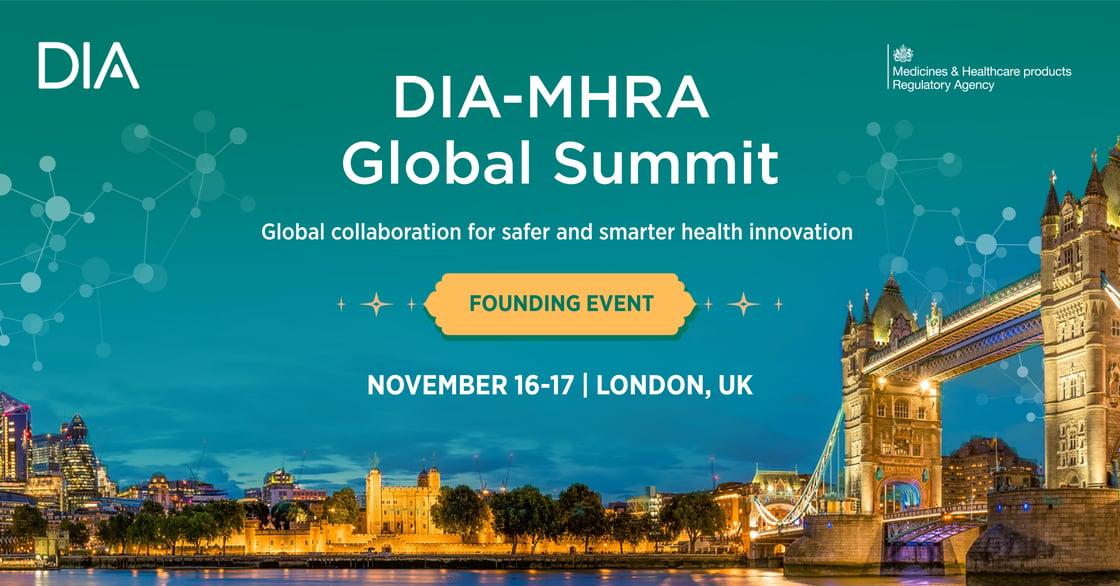
These are not questions with simple or settled answers. On 16-17 November, the DIA-MHRA Global Summit will bring regulators, industry, academia, technology experts, healthcare stakeholders and patient voices together in London to explore six questions shaping what comes next.
1. Can the UK lead the next decade of medical product innovation? Competition for R&D investment and talent is intensifying. What combination of regulatory agility, scientific excellence and investment will strengthen the UK's position, and translate innovation into patient impact? Sessions 1 and 2 open the conversation, exploring the UK's future as a medical product development, first-wave launch and investment market.
2. Innovation is accelerating. Can patient access keep up? Regulatory approval does not guarantee access. HTA, healthcare adoption and delivery all influence whether innovative products ultimately reach the people who need them. Session 3A brings patient, regulatory, industry, and healthcare perspectives together to examine what could help close that gap.
3. We have more health data than ever. Are we using it to its full potential? Health data, real-world evidence and emerging technologies create opportunities to generate better evidence and accelerate development, alongside new questions around standards, trust and regulatory acceptance. Across Sessions 3B and 4, the conversation moves from linked health data and AI-enabled evidence to in silico modelling, synthetic datasets and digital twins.
4. What happens when innovation moves faster than the system? Rare diseases and advanced therapies bring breakthrough science together with complex development, regulatory, affordability and access challenges. Session 5 asks how development can remain feasible, access sustainable, and health systems responsive when innovation moves faster than established pathways.
5. AI is advancing. Can regulation keep pace? AI is already changing medical product development, but rapid technological advancement continues to raise regulatory questions. In Session 6, regulatory, academic, technology and industry voices, including Professor Alastair Denniston, Chair of the MHRA National Commission on AI in Healthcare, will explore where AI could take medicines development and healthcare innovation next.
6. Innovation is global. Can regulation keep up across borders? International collaboration can reduce duplication, improve efficiency and support earlier patient access, but what should effective collaboration look like as innovation accelerates? Session 7 brings senior regulatory leaders from the UK, Canada, Australia and Switzerland together to explore where collaboration is delivering value and where opportunities remain.
The answers will not come from one voice. These questions are interconnected, and they are being worked through now by the people operating within these systems. The DIA-MHRA Global Summit creates an opportunity to hear those perspectives together, challenge assumptions and explore what comes next.
Join the conversation in London, 16-17 November. Explore the programme and register.