When the science is ready...
but the system isn't
The drug had been made. The preclinical evidence was strong. There was precedent for the approach in a similar condition.
And then the therapy sat in a freezer.
For Silvia Cerolini, a patient advocate and mother of a daughter living with a rare disease, that experience captures one of the most frustrating contradictions in rare disease drug development. Scientific progress can bring a potential treatment remarkably far, only for the systems surrounding that science to determine whether it ever reaches a patient.
When Cerolini's daughter was diagnosed in 2016, she was told the first clinical trials could be about a year away. Nearly a decade later, those trials are only now beginning.
In the intervening years, her patient organisation raised millions of dollars, invested in research and helped advance a programme supported by strong preclinical data. Eventually, the drug itself was produced.
"The science is very strong," Cerolini said. "We even got to the point of producing the drug. And the drug has been sitting in a freezer for years because nobody wanted to invest in it."
It is a striking example of a much larger problem. As gene therapies and increasingly precise approaches open possibilities for conditions once considered extraordinarily difficult to treat, scientific feasibility is only one part of the equation. A therapy must also make its way through development, manufacturing, regulation, financing, and ultimately reimbursement – systems largely established in an era of much larger patient populations.
For Chris Hollowood, who approaches rare disease from an investment and drug development perspective, the calculation comes down to four interconnected factors: cost, price, speed, and probability of success.
Shift those variables far enough in the wrong direction and a scientifically promising programme can become economically unviable.
"A lot of these rare diseases, from a biology standpoint and from a technical standpoint, are actually very tractable," Hollowood said. "I don't actually think it's the science that stands in the way. It's the other things."
The question, then, is what can change.
“I don't actually think it's the science that stands in the way. It's the other things.” - Chris Hollowood
Rethinking a system built for scale
There is no single barrier preventing rare disease therapies from reaching patients, nor a single model capable of solving the problem.
Cerolini argues that the traditional pharmaceutical development system has been shaped over decades around larger targets and larger patient populations. Rare disease – and the broader movement toward precision medicine – challenges some of those assumptions.
"We need to become more comfortable with small patient populations," she said, "and how we compress and make more efficient the timeline of the entire end-to-end system."
That doesn't mean eliminating the evidence needed to establish whether medicines are safe, effective, and consistently manufactured. It means asking whether the way that evidence is generated can better reflect the therapy, biology, and population involved.
Manufacturing offers one example.
Hollowood points to requirements for multiple process performance qualification batches. For conventional medicines, demonstrating the ability to repeatedly manufacture a product is logical. But in some of the rare disease programmes he has encountered, three qualifying batches could represent years of supply for the entire eligible patient population.
If a batch used during pivotal development can itself provide sufficient supply to launch, he argues, there may be opportunities to demonstrate manufacturing consistency differently without compromising the underlying objective.
Changes like that could have consequences well beyond the manufacturing process. They can shorten development timelines and reduce costs – two factors that feed directly into whether investors are willing to fund a programme at all.
Clinical trials present another challenge.
Proving statistical significance becomes more difficult when the potential study population may consist of eight or ten people. Cerolini points to growing interest in evaluating the totality of evidence, developing more appropriate endpoints and using emerging technologies to identify meaningful signals in very small populations.
Julian Beach of the UK's Medicines and Healthcare products Regulatory Agency (MHRA) sees the same tension between scientific progress and conventional development pathways. Small patient populations, limited natural history data, and evolving clinical endpoints can make traditional approaches difficult to apply. The challenge, he argues, is finding credible ways to generate evidence and manage uncertainty without lowering standards.
Hollowood similarly sees room for more context around biological plausibility. A highly targeted genetic therapy for a well-understood monogenic disorder, for example, presents a different scientific context from a treatment whose mechanism or expected effect is less direct.
Greater flexibility does not mean lowering the bar. It means considering whether the bar can be designed around the question being asked.
“We need to become more comfortable with small patient populations.” - Silvia Cerolini
From exceptions to repeatable pathways
Some of this experimentation is already happening.
Cerolini says she has seen greater openness from regulators on both sides of the Atlantic than she encountered earlier in her journey. The opportunity now is to turn promising principles into approaches that developers and patient organisations can reliably apply to individual programmes.
“The system needs to work together from the start, not sequentially at the end.” - Julian Beach
But regulatory flexibility alone cannot guarantee patient access. Beach emphasises that health technology assessment, reimbursement, NHS readiness, and supply considerations must be connected much earlier in development, rather than addressed sequentially after approval.
"The system needs to work together from the start, not sequentially at the end," Beach said.
That coordination must also extend internationally, with greater alignment on evidence expectations and opportunities to reuse data across jurisdictions while preserving independent regulatory decision-making.
Hollowood sees a similar challenge. Innovative solutions may be accepted for one disease or one company, but the lesson often stays there.
That becomes increasingly difficult to justify as advanced therapies become platform technologies.
Once researchers have accumulated evidence around a particular vector, delivery route, toxicology profile, or manufacturing approach, should every subsequent programme have to recreate all of that knowledge from the beginning?
Hollowood argues that greater ability to leverage evidence across programmes – and potentially across companies – could eliminate duplication while maintaining appropriate safeguards.
The cumulative effect could be substantial.
Reducing unnecessary development costs, shortening timelines, improving the probability of technical and regulatory success, and providing greater visibility into reimbursement all change the investment equation.
"There are tens of programmes that have been across my desk that would flip to fundable straight away," Hollowood said.
Not every rare disease programme will suddenly become viable. Hollowood is clear about that. But the inability to solve every constraint should not prevent the ecosystem from addressing the ones it can.
Each improvement can move the line.
The patient as more than the endpoint
Cerolini's own experience also challenges another convention: where patients belong in drug development.
“We really need to think about the patient as the centre,” - Silvia Cerolini
Too often, she argues, patients enter the conversation as recipients of a finished therapy – or as people developers need to find when it is time to enrol a clinical trial.
Her experience has been almost the reverse.
Faced with a promising therapy that had no conventional route forward, patients and families became fundraisers, research supporters, regulatory advocates, and development partners. Cerolini's organisation has implemented new financing approaches combining venture philanthropy with traditional investment and worked across sectors to find a viable route into the clinic.
At one point during the conversation, she described the circumstances plainly: patient organisations helping fund gene therapy clinical development through grassroots fundraising, including bake sales and marathon runners.
It is an extraordinary response to a structural problem, but Cerolini does not see patient involvement simply as a mechanism for filling funding gaps.
Patients can convene stakeholders who otherwise operate in separate parts of the system. They bring lived experience and a sense of urgency that is difficult to reproduce institutionally. Moreover, because they encounter the entire pathway, rather than one individual piece of it, they can sometimes see connections that individual organisations cannot.
"I think that's a secret weapon right now," Cerolini said.
That requires moving beyond the language of patient centricity toward something more consequential: patients as partners in designing the pathway itself.
"We really need to rethink about the patient as the centre, rather than thinking about, 'OK, when the therapy comes, here is where we need to find the patients,'" she said.
Rare disease may be showing us what's next
For all the barriers, neither Hollowood nor Cerolini describes a system lacking people who want to solve the problem.
“We are turning scientific progress into benefits for humankind.” - Silvia Cerolini
Hollowood sees tremendous goodwill across patient organisations, industry, investors, regulators, governments, and reimbursement bodies. The difficulty is that each participant operates within different constraints and incentives, while no single participant controls the entire pathway.
That makes alignment as important as innovation.
And the stakes extend beyond the rare disease community.
As medicine becomes increasingly precise, therapies are being developed for populations defined not simply by a disease, but by specific genetic and biological characteristics. Now, the questions rare disease developers are confronting – how to generate evidence in small populations, finance highly targeted therapies, use platform knowledge efficiently, and create appropriate regulatory and reimbursement pathways – may increasingly become questions for medicine as a whole.
"This is well beyond rare diseases," Cerolini said. "It's how we are turning scientific progress into benefits for humankind."
Today, the vast majority of rare diseases still have no available treatment. Cerolini's ambition for the next five years is deliberately bold: begin reversing that equation.
Doing so will require continued breakthroughs in laboratories. But it will also require innovation in places that may receive far less attention – clinical development, manufacturing, financing, regulation, reimbursement, and collaboration.
Because, increasingly, the focus is shifting from whether the science can produce a therapy, to whether the system around that science can find a way to deliver it.
Cerolini, Hollowood, and Beach will continue this conversation at the DIA–MHRA Global Summit in London during the Day 2 opening session, Advanced Therapies for Rare Diseases, examining how new approaches across the ecosystem can help translate scientific progress into meaningful outcomes for patients.
About DIA & MHRA

The Drug Information Association (DIA) is a global association that mobilizes life science professionals from across all areas of expertise to engage with patients, peers and thought leaders in a neutral environment on the issues of today and the possibilities for tomorrow.
An executive agency of the Department of Health and Social Care (DHSC), the Medicines and Healthcare products Regulatory Agency (MHRA) is responsible for regulating all medicines and medical devices in the UK by ensuring they work and are acceptably safe. All the agency’s work is underpinned by robust and fact-based judgements to ensure that the benefits justify any risks.
About the interviewees
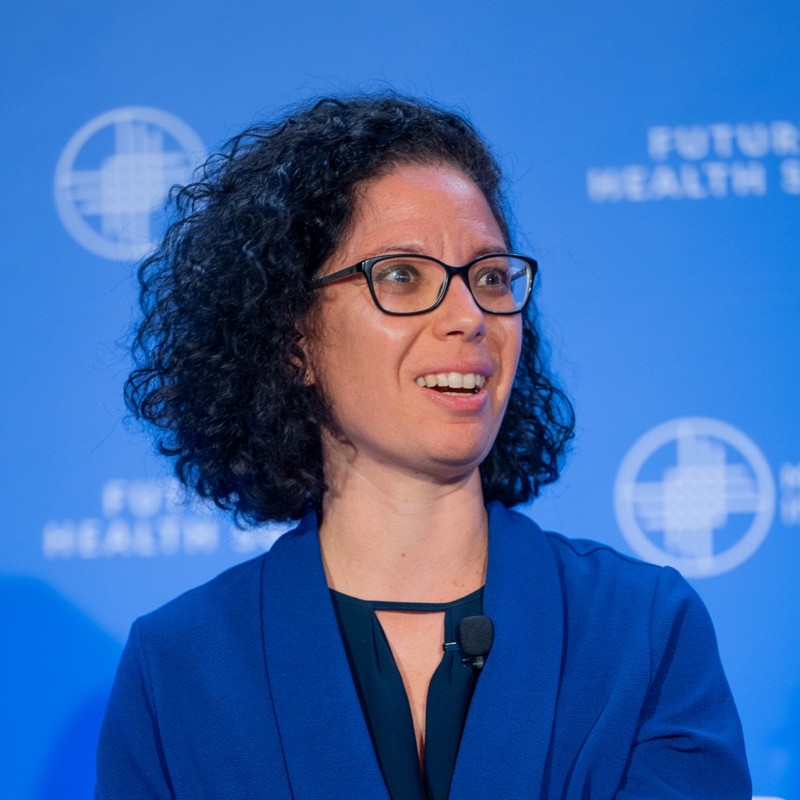
Silvia Cerolini – CEO and trustee, Eyes on the Future
Silvia Cerolini is the mother of eight-year-old Vicky, affected by RDH12 Inherited Retinal Dystrophy. Moved by a simple promise to “do everything to save Vicky’s sight”, Cerolini and her husband Enrico started Through Vicky’s Eyes (now Eyes on the Future) to bring a therapy to those affected by Vicky’s condition as soon as possible.
Her professional career includes 16 years in the consumer good industry in different leadership roles across data, analytics and innovation. Most recently she joined the life sciences industry, following her purpose for rare diseases. She is now working to accelerate diagnosis and access to life changing therapies for patients with rare diseases by leveraging data and AI.

Chris Hollowood – Chief executive officer and chief investment officer, Syncona Investment Management
Chris Hollowood brings over 20 years of life sciences investment experience and has been with Syncona since it was launched in 2012.
In addition to leading the organisation, Hollowood focuses on Syncona's investment strategy and the active management of the portfolio. He has led the development of Syncona's overall investment philosophy, alongside being directly responsible for its gene therapy strategy, founding companies developing therapies for ocular, hepatic, renal, and central nervous system disorders.
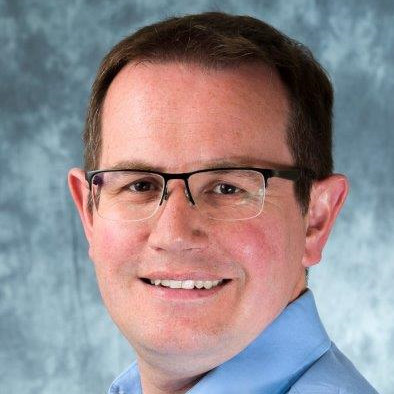
Julian Beach – Interim executive director, operations, MHRA
A committed professional with over 15 years of Director/Board level experience with a broad demonstrated history at the Medicines and Healthcare products Regulatory Agency, Novartis, Pfizer, and GSK in pharmaceuticals.
Flexibly skilled in regulatory, compliance, quality, health and safety, operations with passion for people development with results and improvement focus. Quickly adaptable with strong links to industry and regulatory bodies with country, scientific, commercial, and business focuses.
Working with industry and regulators to influence legislation to benefit both patients and business. He is a Fellow of the RSC, with an MBA from Henley Business School, adding to BSc (Hons), Chartered Chemist and Chartered Scientist.

About the author
Kara Brown - DIA
Kara Brown is senior marketing manager at DIA, where she leads strategic marketing initiatives that connect life sciences professionals with educational opportunities, industry insights, and global collaboration. With expertise in digital strategy, audience engagement, and data-driven marketing, she supports DIA’s mission to advance healthcare innovation by fostering meaningful connections across the global life sciences community.
Supercharge your pharma insights: Sign up to pharmaphorum's newsletter for daily updates, weekly roundups, and in-depth analysis across all industry sectors.
Want to go deeper?
Continue your journey with these related reads from across pharmaphorum
Patients want to be heard. Is pharma listening?

Who's Speaking at the DIA-MHRA Global Summit 2026?
An overview of MHRA regulatory reforms

MHRA launches first regional tech 'sandbox' in Manchester


Click on either of the images below for more articles from this edition of Deep Dive: Rare Disease 2026