
Obesity-focused biotech Kailera joins IPO queue in US
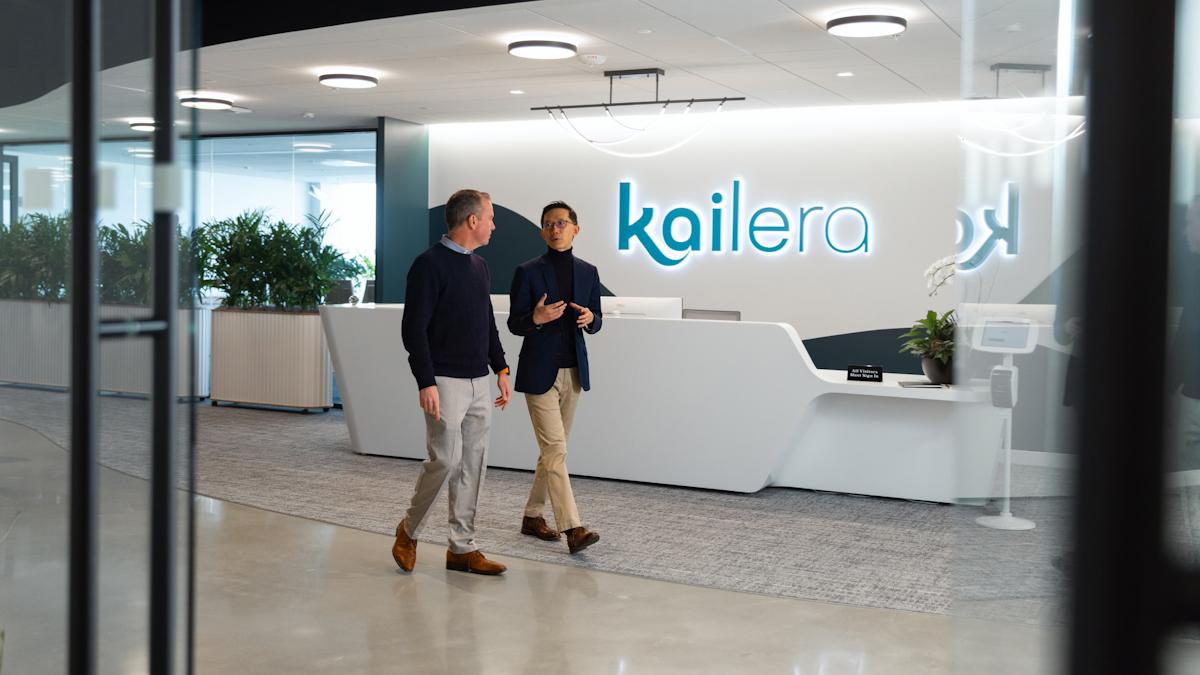
Kailera Therapeutics has filed for an initial public offering (IPO), hoping to whet investor appetites with its pipeline of drug candidates for weight loss.
Waltham, Massachusetts-based Kailera has started the listing process a few weeks after reporting encouraging phase 2 results with an oral version of dual GIP and GLP-1 agonist ribupatide (KAI9531), licensed from China's Hengrui Pharma, with a 12% reduction in weight at 26 weeks.
A once-weekly, injectable version of the drug – which works in the same way as Eli Lilly's fast-growing Zepbound (tirzepatide) – is already in phase 3, after achieving a respectable weight loss of 23.6% after just 12 weeks in its phase 2 trial. It is one of a clutch of obesity candidates licensed from Hengrui.
The decision to go public comes just a few months after Kailera raised $600 million in Series B financing, a highly impressive achievement that no doubt had a bearing on its plans for an IPO only around 18 months after being formed. Its Series A was equally impressive, bringing in $400 million.
A placeholder amount of $100 million has been proposed for the IPO, but the actual value is likely to be higher, given the current demand for obesity-related investment opportunities.
Kailera is hoping to list on the Nasdaq under the KLRA symbol, according to its prospectus, which was filed confidentially on 19th December.
The document notes that the first phase 3 trial of injectable ribupatide (KaiNETIC-1) was started in December in seriously overweight subjects with risk factors for heart disease, with topline results due in 2028. It will be followed by KaiNETIC-2 in overweight people with type 2 diabetes (T2D) and KaiNETIC-3in overweight people without diabetes, which will also include a comparison with Novo Nordisk's GLP-1 agonist Wegovy (semaglutide).
The oral formulation – which would compete with Novo Nordisk's recently launched Wegovy pill and potentially also Lilly's oral GLP-1 orforglipron – is in a phase 3 Chinese study being run by Hengrui, with results due later this year. Kailera has filed for approval to start a phase 2 programme in the US.
Following after is an oral GLP-1 candidate, KAI-7535, which is in phase 3 in China, and a 'triple G' (GIP, GLP-1 and glucagon) agonist – KAI-4729 - that could be a competitor to Lilly's retatrutide and Novo Nordisk's UBT251, for which Hengrui is running a phase 1 study.
Kailera plans to start a phase 2 trial of KAI-7535 and a phase 1 study of KAI-4729 this year, with results in 2027.













