Inside Sandoz: How women leaders are driving sustainability in healthcare
Sustainability has quietly shifted from the background to the forefront of life sciences. What was once a matter of good intentions is now a measure of impact. In carbon saved, in materials reused and in the distance a medicine travels to reach the people who need it most.
“We understand the critical importance of making sustainability a daily part of our work, from the decisions made in laboratories and production sites to those shaping global supply chains.”
Kate Ahern
At Sandoz, this change runs deeper than a new framework or a checklist of targets. Our purpose, which underlies everything we do, is to pioneer access for patients globally. At the same time, we understand the critical importance of making sustainability a daily part of our work, from the decisions made in laboratories and production sites to those shaping global supply chains. Some efforts are small and local while others are bigger and reach across countries and continents, but all are connected in a shared approach to responsible, resilient operations.
Our ambitions are clear: reaching net zero emissions by 2050 through renewable energy agreements, site-by-site efficiencies, and decarbonisation through partnerships with our suppliers. Yet, the real momentum lies beyond the numbers. It comes from the thousands of colleagues across the company who challenge and rethink familiar processes, find new uses for existing resources, and see constraint as an opportunity to innovate.
Next year, we hope to have our decarbonisation targets validated by the Science Based Targets initiative (SBTi). Our job moving forward is to double down on our sustainability efforts, including those described in this article, and to implement new programmes to ensure we meet these targets.
Find out more from four of our leaders on how they are embedding sustainability into their work from the lab to the supply chain, revealing how sustainability grows through people, decision by decision.

Kate Ahern: Head of ESG at Sandoz
Case study: Sustainable innovation in penicillin production
The Sandoz Kundl site in Tyrol, Austria, is the hub and centre of Europe’s last major end-to-end penicillin production network, including the critical and energy-intensive fermentation stage. Site head Dr Stephanie Jedner describes her role as “a significant responsibility not just to Sandoz, but to healthcare systems globally.” That responsibility, she adds, extends beyond ensuring supply: “It’s about producing these essential medicines sustainably and resiliently.”
“When people realise that a well-established and optimised production process can be reimagined successfully, it also opens their minds to other possibilities.”
Dr Stephanie Jedner

Recent global crises, from the COVID-19 pandemic to geopolitical tensions and climate disruptions, exposed vulnerabilities in raw material supply chains. “We saw unprecedented volatility in raw material availability and sharp price increases for conventional sugar, which has been our primary nutrient source for penicillin production for over seven decades,” Jedner explains. “We realised we needed to be more proactive.”
The solution emerged close to home. “The answer was literally in our backyard – Tyrol’s thriving dairy industry produces lactose as a byproduct of cheese production.” After extensive research and pilot trials, Sandoz developed a process to significantly increase the share of lactose used in fermentation. “It was both a practical solution to a pressing problem and an opportunity to demonstrate that sustainable innovation and business resilience can go hand in hand.”
What began as a search for alternative sugar sources evolved into a collaborative cross-industry partnership between Sandoz and the local dairy industry. “We’ve learned to bridge differences between pharma and dairy production,” she says, “working closely with our partner to ensure continuous lactose supply and fulfilment of the specific requirements for the pharmaceutical industry.” The result, she believes, proves that “regional sourcing can deliver on multiple fronts – sustainability and competitiveness alike.”
Beyond the technical achievement, Jedner highlights the cultural impact: “There's something meaningful about using resources from local farms and dairies. It reinforces that we're not just a global pharmaceutical site that happens to be located here; we're genuinely integrated into the Tyrolean economy and community.”
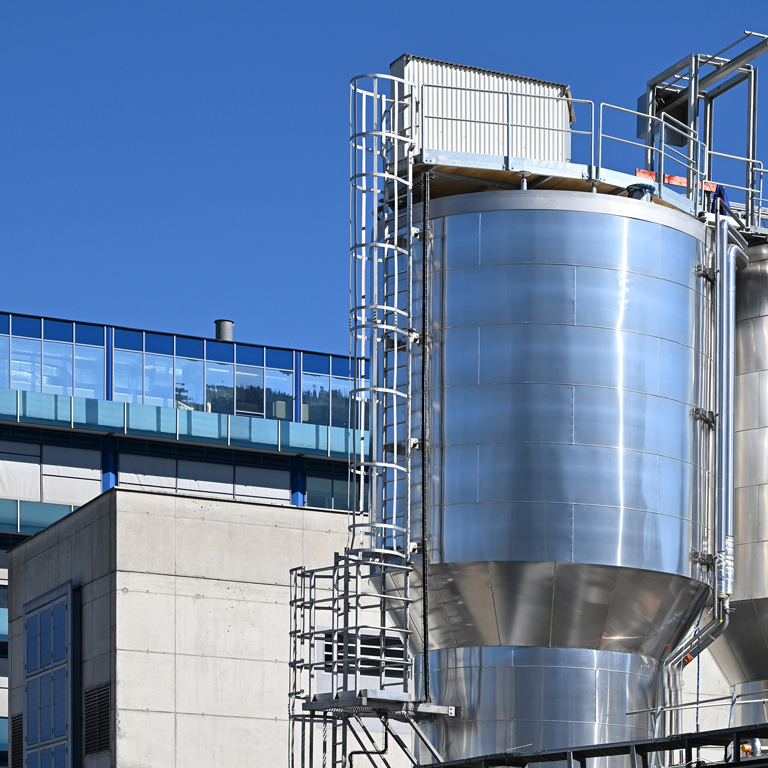
“When people realise that a well-established and optimised production process can be reimagined successfully, it also opens their minds to other possibilities,” she adds. “It’s made sustainability something people can see and touch – in this case, literally a big storage tank on our facility grounds is filled with lactose from local Tyrolean cows.”
Case study: From green labs to a culture of belonging
For Dr Tamara Scheidl, sustainability in science is as much about people as it is about protecting the planet. As head of global quality solutions at Sandoz, she oversees a network of 350 professionals across several locations, with her team supporting all Sandoz laboratories and manufacturing sites across the world, ensuring that quality, compliance, and innovation move in harmony. Her latest initiative – introducing the My Green Lab Certification across three Sandoz sites in Europe – reflects that philosophy in action.
“My team members tell me they now look more at energy saving and waste reduction at home.”
Dr Tamara Scheidl

“The first step to apply for the certification is pretty simple and straightforward,” Scheidl explains. “Lab leads receive a questionnaire with around 35 questions for analysts and managers to answer. They submit the response through the My Green Lab platform and, after a few weeks, receive detailed feedback, assessing their status and proposing opportunities for improvement.” Labs then spend several months implementing changes – from switching off instruments over weekends to adjusting ventilation in safety cabinets – before being re-assessed and certified.
What matters most, Scheidl says, is how it changes mindsets. “The analysts love it. They’ve been begging me to get this programme up and running. They feel they can contribute to sustainability through their daily actions – taking small steps like switching off an instrument makes a real impact when scaled globally.”
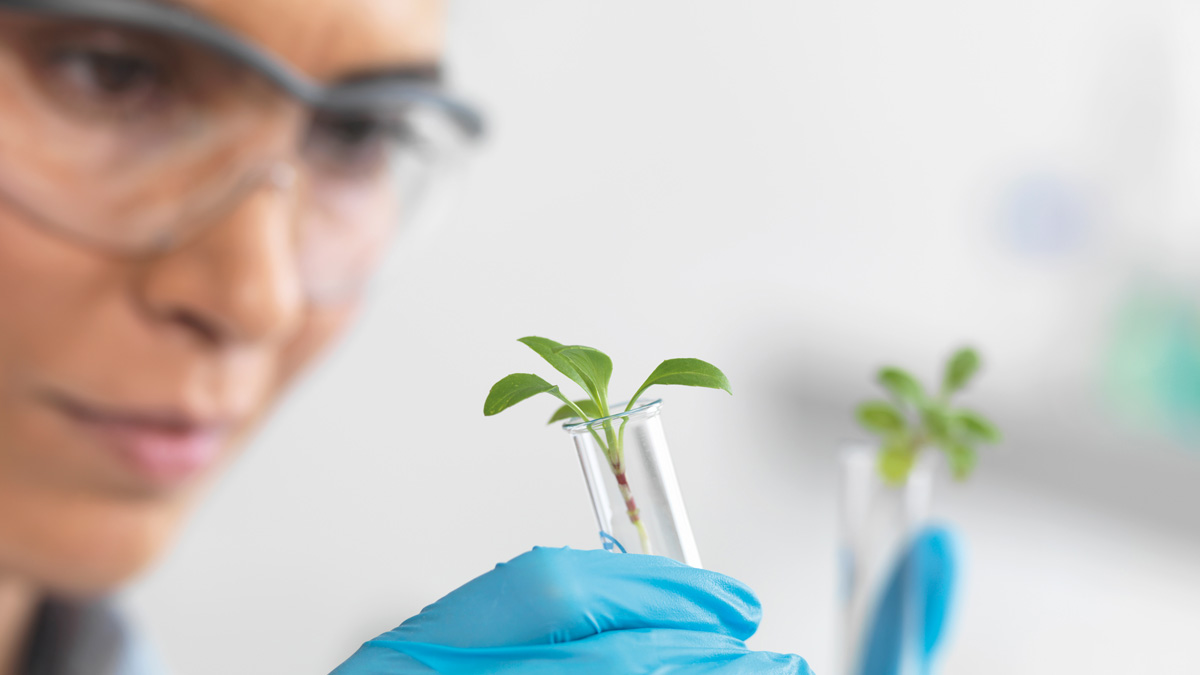
That sense of purpose reaches beyond the workplace. “My team members tell me they now look more at energy saving and waste reduction at home,” she says. “It’s encouraging them to think differently.”
For Scheidl, the certification is part of something bigger. “Sustainability is a commitment to systems, structures, and cultures, as well as the environment,” she says. “Start with the people, not just the planet. When we lead with authenticity and create safe environments, people are free to speak up and challenge the status quo – that’s where true innovation takes root.”
Case study: Building a sustainable future through automation
At the Sandoz manufacturing sites in Barleben and Osterweddingen, where 1,400 people produce 11 billion tablets and capsules and 22 million tubes of creams and ointments each year, Grit Müller, site head and managing director for these two major Sandoz sites in Germany, leads operations with a clear purpose: to balance sustainability, automation, and people.
“Automation helps us stay competitive, but it also helps us build a future where efficiency and humanity go hand in hand.”
Grit Müller
"Automation is something that we’ve proactively embedded into our operations to enhance efficiencies and reduce waste in our manufacturing processes,” she explains. “In Germany, you now have the retirement wave of the baby-boomer generation, which basically means that one-third of the population will be missing in operations,” Müller says. “Thinking sustainably has been beneficial, not only from a cost aspect, but also from a workforce availability perspective as we move more into automation.”
That thinking connects directly to the company’s environmental goals. “Our ESG ambition is to become carbon neutral by 2050,” says Müller. “It can’t only be that we reduce our footprint by having renewable energy in place. We also need to become leaner and more agile – using equipment that consumes less energy and delivers more efficiency.”
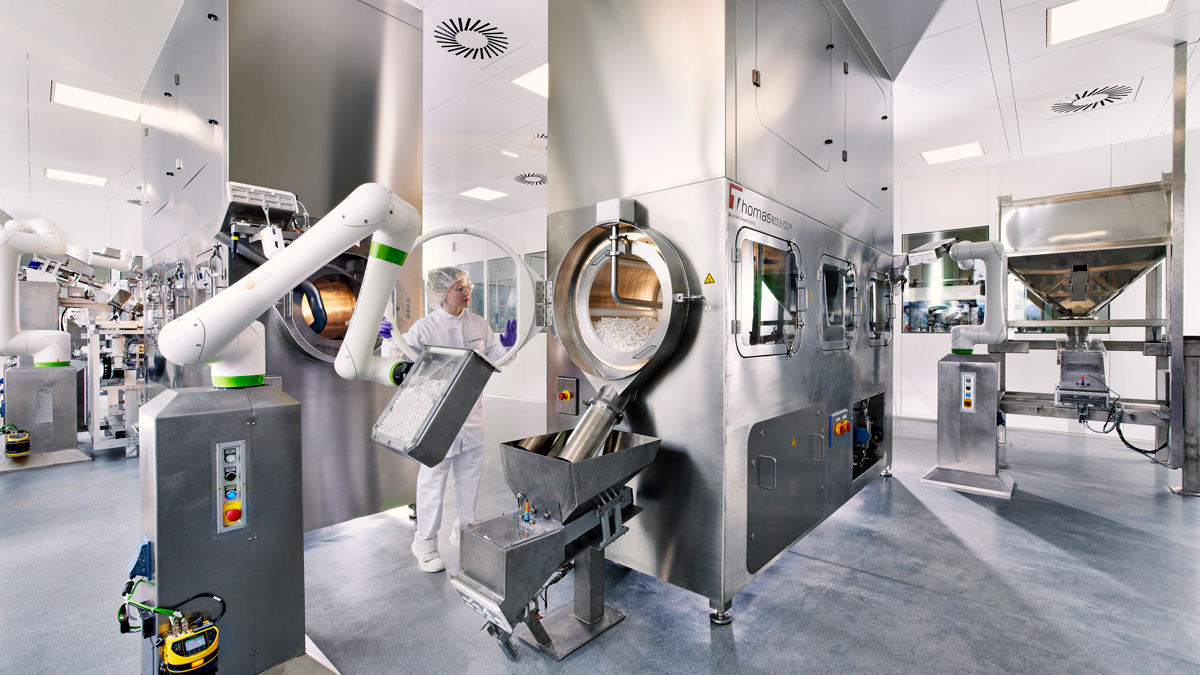
One such example is a five-year project to develop a compact end-of-line packaging system. “Five years ago, we weren’t able to install an end-of-line packaging system because we simply didn’t have the space,” she says. “It took us five years to develop a small-scale piece with two robotic arms that now fit into our operations – reducing headcount needs and improving energy efficiency.”
But for Müller, the shift is as much cultural as it is technical. “You need to create a culture where an innovative mindset is intrinsic,” she explains. “If you announce that you’re reducing headcount by implementing automation, this creates fear. The culture has to support the strategy.”
For her, sustainability, technology, and people are inseparable. “We need to make shift work more attractive for our people by reducing manual workload, and that is a key driver for us,” she says. “Automation helps us stay competitive, but it also helps us build a future where efficiency and humanity go hand in hand.”
Case study: Procurement as a catalyst for decarbonisation
As chief procurement officer at Sandoz, Lynn De Proft describes her role as “deeply embedded both in strategy and in operations.” Her team connects the company to thousands of suppliers worldwide, securing the materials, services, and innovations that make access to medicine possible. “Procurement has a vital role to play in achieving our purpose,” she says. “We’re pioneering access for patients – but doing it in a sustainable way through the supply chain.”
“We’re pioneering access for patients – but doing it in a sustainable way through the supply chain.”
Lynn De Proft

That influence is far-reaching. “Across Scope 1, 2, and 3 emissions, procurement activity influences 86% of our carbon footprint,” De Proft explains. “More than 70% of that comes from Scope 3 – the goods and services we procure from our suppliers. So, achieving decarbonisation requires supplier engagement, procurement change management, and business transformation.”
Sandoz has developed a tailored roadmap through 2030 and beyond, segmenting suppliers by strategic importance and maturity in setting science-based targets. “We have deep partnerships and joint development agreements with our suppliers,” she says. “We support them on their decarbonisation journey or to explore alternative sources – it’s about meeting our suppliers where they are and going on this journey together with them.”
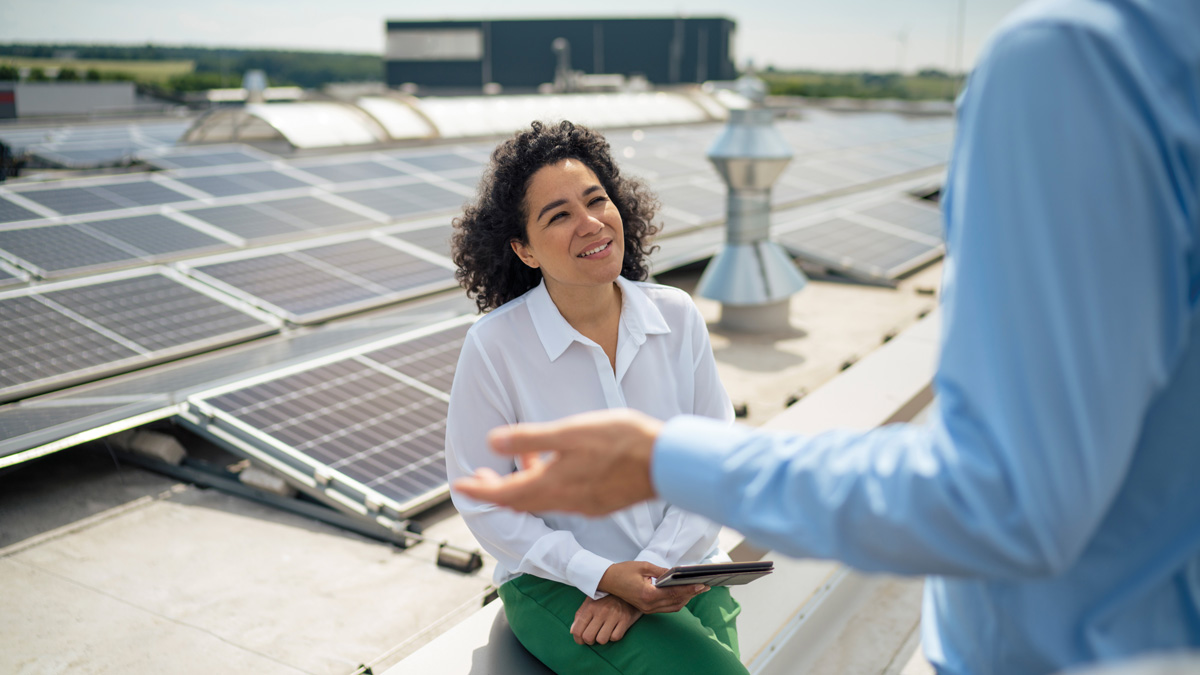
Progress is already visible. “We secured a power purchase agreement that will cover 90% of our European electricity demand – a big milestone in our sustainability efforts,” De Proft notes. “We’re very intentional about achieving our goals, while doing it in the most economical way.”
As De Proft notes, sustainability is no longer an “add-on” in the market, but a differentiator. “There are tenders where maybe you don’t come out as the lowest-cost contender,” she says, “but regions like Europe and the Nordics value long-term sustainability. Provided we deliver the highest quality, it becomes a competitive advantage – proof that purpose and performance are not mutually exclusive.”
About Sandoz
Sandoz is the global leader in affordable medicines, with a growth strategy driven by its Purpose: pioneering access for patients. More than 20,000 people of 100 nationalities work together to ensure 900 million patient treatments are provided by Sandoz, generating substantial global healthcare savings and an even larger social impact. Its leading portfolio of approximately 1,300 products addresses diseases from the common cold to cancer. Headquartered in Basel, Switzerland, Sandoz traces its heritage back to 1886. Its history of breakthroughs includes Calcium Sandoz in 1929, the world’s first oral penicillin in 1951, and the world’s first biosimilar in 2006. In 2024, Sandoz recorded net sales of USD 10.4 billion.
To learn more about the Sandoz purpose of pioneering access to patients globally, as well as its efforts to champion environmental sustainability, visit: Sandoz.com.
About the interviewees

Kate Ahern – Head of ESG at Sandoz
Kate Ahern is head of ESG at Sandoz, the global leader in generic and biosimilar medicines. She leads ESG strategy, focused on driving impact and access to healthcare, championing sustainability, empowering people and governing with integrity.
Ahern's career has spanned global markets, where she has launched and managed ESG strategies for listed corporations, asset managers, and philanthropies that benefit companies, communities, and the planet.

Dr Stephanie Jedner – Site head, anti-infectives at Sandoz Kundl
Together with her team, Dr Stephanie Jedner is responsible for producing more than 4,000 tonnes of active pharmaceutical ingredients annually, which are processed into more than 200 million packages. More than 100 countries are currently being supplied with lifesaving medicines made in Kundl.
She is a leader committed to investing in sustainable technologies, conserving resources, and fostering regional partnerships to advance the circular economy.

Dr Tamara Scheidl – Head of global quality solutions at Sandoz
Dr Tamara Scheidl was born in 1983 in Austria and holds both a Master of Science and a Doctorate in Analytical Chemistry from the University of Innsbruck. She brings nearly 25 years of progressive experience in the pharmaceutical sector, having started her career in 2001 as a quality control intern.
In her current role, she leads a globally distributed organisation of over 350 professionals. Her team delivers critical quality services and technical infrastructure across all manufacturing sites and functional domains, ensuring harmonisation, compliance, and continuous improvement.

Grit Müller – Site head and managing director, Barleben and Osterweddingen at Sandoz
Grit Müller is site head and managing director responsible for the two major Sandoz sites in Germany – Barleben and Osterweddingen. Together with a team of ~1,400 people she ensures that the production of 11 billion tablets & capsules, and 22 million tubes of creams and ointments serve more than 50 million patients per year.

Lynn De Proft – Chief procurement officer at Sandoz
Lynn De Proft is the chief procurement officer at Sandoz, where she leads the global procurement organisation to drive strategic value creation, operational excellence, and sustainability across the company’s external supply chain.
With more than 20 years of international leadership experience at the intersection of procurement, supply chain, finance, and sustainability, she is recognised for delivering business transformation and aligning strategic vision with execution.
Supercharge your pharma insights: Sign up to pharmaphorum's newsletter for daily updates, weekly roundups, and in-depth analysis across all industry sectors.
Want to go deeper?
Continue your journey with these related reads from across pharmaphorum


Reuters Pharma Europe 2024 – Peter Stenico

Sandoz launches first biosimilar Tysabri in US

Preparing for the impact of ESG policies on market access in Europe

EU pharma calls for speedy shift to digital package inserts


Click on either of the images below for more articles from this edition of Deep Dive: Equity and Sustainability 2025