How lab automation reinforces regulatory compliance for bioanalytical method validation
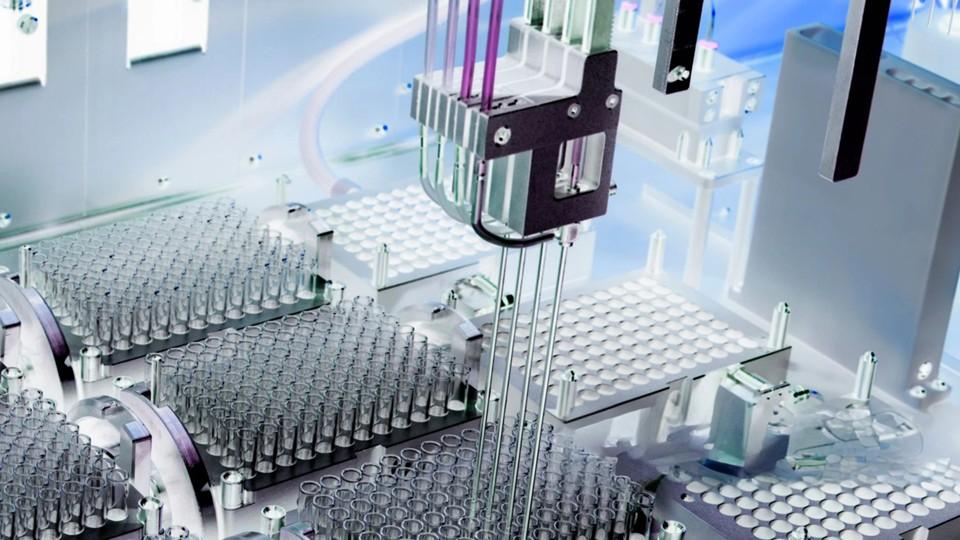
As drug development becomes more complex, so do the demands for accurate, reproducible bioanalytical data to prove their safety and efficacy. Method validation ensures the reliability of pharmacokinetic (PK), toxicokinetic (TK), and biomarker data – information that becomes the scientific foundation for regulatory submissions, as well as safety and efficacy decisions. Recent regulatory guidelines reflect this increased complexity, unifying and modernising standards under ICH (the International Council for Harmonisation) M10 guidelines.
Yet, implementing these new standards consistently remains a challenge for drug developers. Human error, workflow considerations, and increasing data requirements can present an administrative burden that may hinder compliance. The solution many drug developers are turning to is automation, and it may become a differentiator for those who make the most of it. Automation holds the potential to enhance scientific rigour and operational efficiency while solving long-standing regulatory conundrums.
Understanding the regulatory framework
Regulators have responded to the growing complexity of advanced treatment development by sharpening their focus on data integrity, standardisation, and traceability in bioanalytical laboratories. The ICH M10[i] guideline, finalised in 2022, replaced a fragmented regional approach with a single set of globally harmonised standards for method validation. At the same time, other regulatory agency inspections and warning letters have placed increasing emphasis on reproducibility, audit readiness, and comprehensive documentation – making clear that data quality must be consistent, transparent, and verifiable across every study.
The intent behind these shifts is twofold:
- Ensuring data reliability for regulatory decisions: To validate methods used in PK, TK, and biomarker studies, and ensure data accurately reflect drug exposure, efficacy, and safety in humans and animals.
- Harmonising global standards: To replace regional guidelines with a unified approach (ICH M10, adopted May 2022), eliminating conflicting requirements for multinational trials.
The transformative potential of lab automation
Laboratory automation is reshaping all aspects of preclinical bioanalysis by addressing the dual pressures of scientific rigour and operational efficiency. It can streamline sample preparation, analysis, and data handling, delivering clearer, more reproducible results. It also improves safety within labs and ensures resources are used when and where they matter most. As a result, this higher degree of efficiency helps labs accelerate drug discovery timelines while navigating workforce shortages and reducing labour costs.
The trend toward lab automation is primarily driven by scientific need, managing increasing sample throughput, standardising accuracy of complex protocols, and integrating advanced technologies into routine workflows. However, by its nature, it also enhances data integrity and traceability, improving compliance with an equally complex and ever-changing regulatory environment.
How automation directly addresses regulatory requirements
International regulatory agency standards require reproducibility, traceability, and consistency under real-world conditions. Automation helps achieve and demonstrate compliance with these requirements by embedding precision and accountability into every stage of the bioanalytical process.
Enhancing accuracy and precision
Automation strengthens analytical performance in the most demanding scenarios, from low-volume pipetting to complex biological matrices. Robotic liquid handlers, automated extraction platforms, and advanced dispensing technologies minimise variability, control carryover, and deliver reproducible results at the lower limit of quantification (LLOQ).
Ensuring reproducibility and consistency
Automation reduces operator-dependent variability and ensures that validated methods perform reliably across runs, analysts, and even global trial sites. Workflow schedulers and robotic systems standardise procedures, while automated incurred sample reanalysis (ISR) achieves pass rates well above required thresholds, building confidence in data integrity and comparability.
Enforcing broader compliance
Automation also strengthens data integrity and audit readiness. Barcode-driven sample tracking reduces identification errors, stability chambers enable real-time degradation monitoring, and embedded audit trails capture every step in compliance with 21 CFR Part 11. These capabilities transform compliance into embedded features of the scientific workflow, rather than additional tasks on a checklist.
Scaling compliance in high-volume and complex assays
Modern drug development requires bioanalytical labs to deliver reliable results under both high-throughput and highly complex conditions. Automation enables labs to meet these challenges while staying aligned with regulatory expectations.
High-volume testing
Automated LC-MS/MS and ligand-binding assay (LBA) platforms can process thousands of samples or hundreds of assay plates each week without compromising accuracy. These systems maintain precision across large datasets and preserve audit trails, ensuring that even high-throughput workflows remain compliant with 21 CFR Part 11 requirements.
Challenging analytes and matrices
Specialised analytes like endogenous biomarkers, oligonucleotides, and antibody-drug conjugates (ADCs) pose unique validation hurdles. Automation supports compliance by standardising parallelism testing for endogenous compounds, preserving stability during oligonucleotide preparation, and controlling multi-step workflows for protein digests or ADCs with temperature precision and carryover monitoring. These capabilities address validation criteria outlined in regulatory guidance while improving safety in handling complex reagents.
Ensuring compliance in complex workflows
Automated systems integrate compliance into the most demanding bioanalytical methods by automating multi-step processes, ensuring traceability, and facilitating the safe use of hazardous materials. Automation helps address these challenging assays. It is a sustainable way to achieve safety and consistent regulatory compliance.
Data integrity and audit readiness: Adhering to ALCOA+ principles
In today’s regulatory environment, data integrity is the foundation of trust between laboratories, regulators, and patients. The ALCOA+ principles[ii] – Attributable, Legible, Contemporaneous, Original, Accurate, Complete, Consistent, Enduring, and Available – define the standard by which every data point must be generated and maintained. Automation provides a streamlined structure to meet these expectations reliably, turning what has traditionally been an administrative burden into a built-in quality feature.
Automation removes the risk of transcription errors and undocumented activities by concurrently capturing task information. Every action, from pipetting volumes to reagent lot usage, is logged in real time, creating an auditable and immutable record. Cloud-based data systems safeguard raw files while ensuring they remain retrievable years after a study concludes. Automated quality checks flag anomalies immediately, enabling rapid resolution and preventing data exclusion that could compromise regulatory confidence. Just as importantly, automated reporting tools ensure that final datasets are assembled consistently, signed electronically, and archived securely for inspection readiness.
The result is a bioanalytical process in which compliance does not need to be retrofitted after the fact. Instead, data integrity can be woven into the scientific workflow, giving regulators confidence and laboratories the assurance of sustainable, inspection-ready operations.
Quality control and risk mitigation through automation
A critical component of any compliance programme is quality control and risk mitigation. Most regulatory frameworks address the need for risk management directly in their standards to ensure that processes exist to quickly and effectively address issues when they inevitably arise. Automation strengthens compliance by improving overall accuracy in a way that reduces deviations. But if and when deviations do occur, automated systems can streamline how laboratories respond.
By preventing errors and enforcing transparent investigations, automation transforms deviation management into a proactive element of compliance.
Considerations for successful automation in bioanalytical labs
Implementing automation in bioanalytical testing is a strategic investment that can unlock major gains in efficiency, reproducibility, and compliance, but it requires careful planning. For some organisations, collaborating with an experienced laboratory testing partner can help mitigate early-stage challenges. Whether outsourced or internal, the following considerations must be taken into account when introducing automation:
- Cost: Integrated platforms can be costly, so laboratories must evaluate return on investment against study volume and long-term needs.
- System integrations: Integration with existing instruments and data systems can cause workflow disruptions, and some may struggle with non-routine samples or mid-study protocol changes.
- Talent: Automation deployment requires specialists with cross-disciplinary skills spanning assay science, engineering, and informatics.
- System requirements: Regulatory bodies may require validation at both the hardware and software levels, transparent audit trails, and robust exception-handling protocols.
To ensure success, laboratories should take a phased approach and begin with simpler assays before applying automation to formal preclinical or clinical studies. Establishing detailed SOPs that govern compliance, data integrity, and record accuracy is essential, as is investing in specialised training and talent. By combining these elements, organisations can deploy automation not only as a technical upgrade, but also as a sustainable enabler of scientific excellence and regulatory confidence.
A final word
As the pharmaceutical industry advances toward more precise and data-intensive therapies, the expectations for bioanalytical compliance will only grow. Automation offers a proven path forward – reducing variability, supporting complex assay validation, and reinforcing ALCOA+ data integrity principles. Just as importantly, it transforms compliance from a reactive burden into a proactive strength, ensuring laboratories are inspection-ready at all times. For organisations seeking to meet regulatory requirements while accelerating development, automation is more than an efficiency tool. It is a strategic investment in scientific rigour, operational resilience, and the future of global drug development.
References
i International Council for Harmonisation of Technical Requirements for Pharmaceuticals for Human Use (ICH).ICH Harmonised Guideline: Bioanalytical Method Validation M10. Published May 24, 2022. Accessed September 8, 2025. https://database.ich.org/sites/default/files/M10_Guideline_Step4_2022_0524.pdf
ii U.S. Food and Drug Administration. Data Integrity and Compliance With Current Good Manufacturing Practice: Guidance for Industry. Silver Spring, MD: U.S. Department of Health and Human Services, FDA; December 2018. https://www.fda.gov/files/drugs/published/Data-Integrity-and-Compliance-With-Current-Good-Manufacturing-Practice-Guidance-for-Industry.pdf. Accessed September 8, 2025.
About the author
 Dr Jianbo Diao, PhD, is director of the bioanalytical services (BAS) immunochemistry team at WuXi AppTec. . Dr Diao focuses on PK, PD, and immunogenicity analysis of biological therapeutic products such as antibodies, recombinant proteins, and other protein/peptide-based drugs. Beyond that, he also has extensive experience with gene and cell therapy bioanalysis. With the continuous emergence and complexity of new drug modalities, Dr Diao also leads the team to provide solutions to bioanalysis requirements of new drug modalities by utilising immunochemistry, molecular biology, and cell biology techniques. Dr Diao has published 15+ peer-reviewed papers and obtained his Bachelor’s degree in the Department of Biotechnology at Zhejiang University and a PhD at the Life Sciences College of Peking University. In 2004, he completed a postdoctoral fellowship in the Department of Biology at Purdue University. After that, he worked at Fudan University as an Associate Professor. In 2019, Dr Diao joined the Department of Bioanalysis (BAS) at WuXi AppTec, Shanghai.