Abbott's wireless heart failure sensor cleared for NHS use
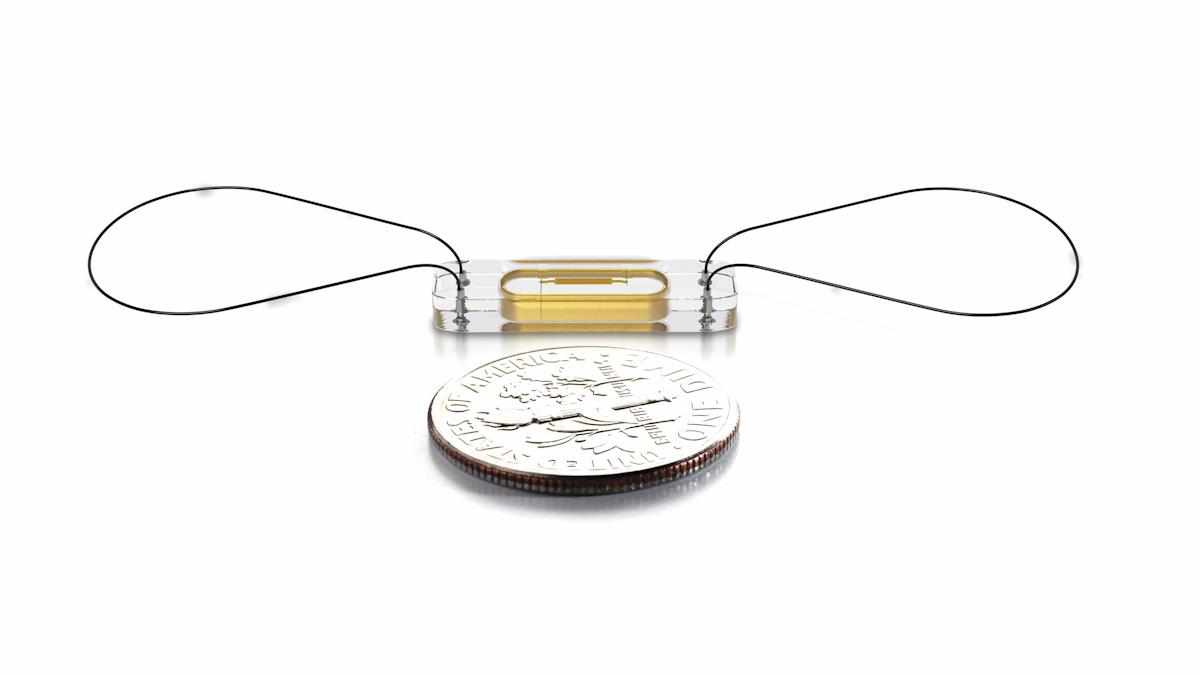
A wireless sensor the size of a paperclip, Abbott's CardioMEMS HF, can be used routinely by the NHS to monitor patients with chronic heart failure (CHF) in their own homes, according to NICE.
The medical device is implanted in an artery between the heart and lung using a minimally invasive procedure and measures pulmonary artery pressure. In clinical trials, it has been shown to reduce hospitalisations for heart failure in patients with NYHA class 3 CHF by around a third, achieved by advising adjustments to the doses of medications such as diuretics.
NICE's appraisal of CardioMEMS-HF has concluded that the sensor can be used in cases where patients are able to take the daily readings, either alone or with the help of a carer, and are willing to adjust their medication as directed.
Once in place, patients take daily pressure readings by lying on a pillow with an embedded antenna and pressing a button, according to NICE.
The readings are sent wirelessly to their healthcare team, who can spot early warning signs and adjust medication before symptoms become serious, potentially avoiding emergency hospital visits.
Another platform intended for measuring pulmonary artery pressure – Endotronix's Cordella Pulmonary Artery Sensor and Heart Failure System – does not have enough evidence to support its use by the NHS at the moment, said the reimbursement authority in its new guidance.
CardioMEMS HF can be used by people who are deemed to be at risk of being hospitalised for CHF, a group that would otherwise be monitored only using periodic clinical assessments of parameters like functional capacity, fluid status, cardiac rhythm, and renal function.
"We routinely ask heart failure patients in the UK to monitor their weight, symptoms and blood pressure at home," commented Dr Andrew Flett, Consultant Cardiologist at University Hospital Southampton, who was one of the first doctors in the UK to implant a CardioMEMS HF device into a patient.
"This approach is often too late to detect signs of worsening heart failure, which can prevent timely medical intervention and increase the chances of a patient being admitted," he added. "Patients who receive the sensor can send readings to the hospital every day from their home, so we can monitor them and adjust medications immediately from a distance – it is a revolution and a very exciting piece of technology."
Heart failure affects around 920,000 people in the UK and accounts for around a million hospital bed days each year, which is equivalent to 2% of all NHS inpatient stays in England and 5% of all emergency admissions. The condition costs the NHS around £2 billion annually, hospital-based costs accounting for the majority, said NICE.
One person with experience of using the sensor – former paramedic Leslie Birkenhead from Hampshire – said that the device had given him peace of mind and helped to keep him out of hospital.
"Living with heart failure can be incredibly frightening, particularly when you don't know what's happening inside your body from day to day," added Birkenhead. "Since having the CardioMEMS device fitted, I feel much safer and far more in control."