The UK’s medicine supply is about to be tested and pharmacies are on the front line
The UK’s medicine supply chain is entering a period of real strain. What has changed in recent weeks is not just another disruption, but the loss of one of the system’s main arteries.
Since 28th February 2026, commercial shipping through the Strait of Hormuz has effectively stopped. For most people, that might sound like a distant geopolitical issue. In pharmacy, it has a much more immediate meaning: medicines that should already be on their way to the UK are now delayed, rerouted, or not moving at all.
The effects are not theoretical. They are already working their way through the supply chain, and within weeks they will be visible at the pharmacy counter.
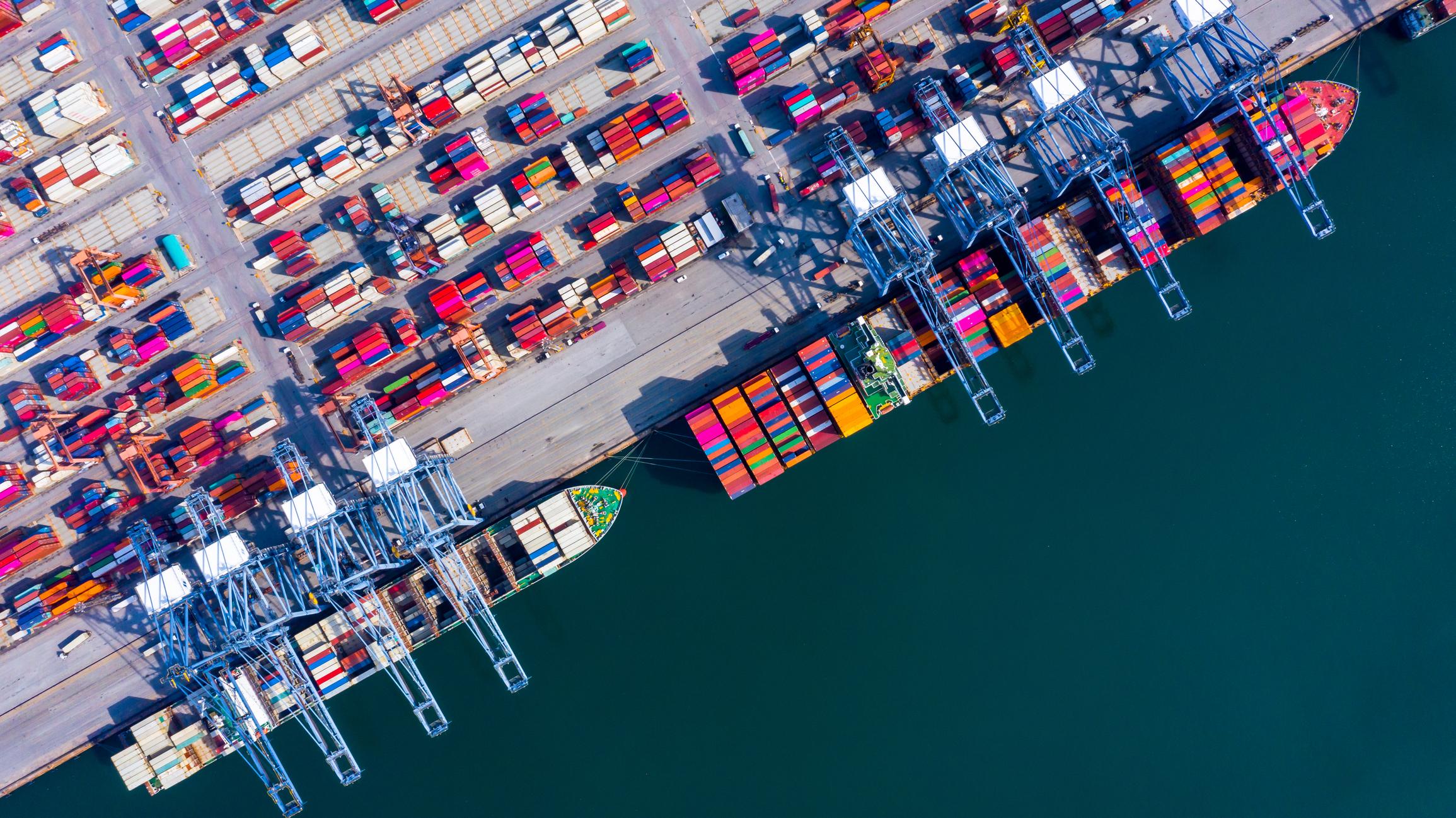
The disruption operates on three levels at once. By sea, container routes that normally pass through Hormuz have been suspended. Ships are diverting around the Cape of Good Hope, adding up to two weeks to transit times. The Red Sea route had already been unreliable, so there is no easy alternative corridor.
Air freight has also taken a hit. Dubai and Doha function as key hubs for pharmaceutical cargo moving from India to Europe. With those routes disrupted, capacity has tightened overnight and costs have surged. For time-sensitive medicines, that matters.
Then, there is the less visible problem: raw materials. Many of the components used to manufacture medicines and their packaging originate in the Gulf. That includes petrochemicals used in everything from coatings and solvents to blister packs and plastic bottles. These are not optional extras; they are embedded in the production of almost every medicine dispensed in the UK.
Not a single bottleneck; a system-wide constraint
To understand why this matters so much for the UK, you have to look at how dependent the system has become on generic medicines. Around 85% of all prescriptions in the UK are generics. A significant share of those are manufactured in India.
India, in turn, is closely tied to the same region now experiencing disruption. It relies on the Strait of Hormuz for a large proportion of its crude oil, which feeds into both the energy and chemical inputs needed for pharmaceutical manufacturing. When that flow is interrupted, the effects cascade through production capacity and cost.
Many of the companies supplying UK pharmacies, including major generic manufacturers, are either based in India or depend heavily on Indian production. That means delays and cost increases overseas translate quickly into reduced availability here.
Under normal conditions, the system absorbs shocks through stockholding. Wholesalers and pre-wholesalers typically carry six to eight weeks of supply. That buffer exists to smooth out short-term disruptions.
But the clock on that buffer started ticking at the end of February. Every week that passes without normal supply routes being restored brings us closer to a point where stock simply runs out.
In practice, that does not mean every medicine disappears overnight. What happens first is uneven availability. Pharmacies begin to struggle to source certain lines. Orders are part-filled or delayed. Alternatives are used where possible. Patients may be asked to return later or be switched to a different formulation.
The UK generics market
We have been here before, in smaller ways. Shortages are not new. What is different now is the scale and the number of pressure points happening at once.
There is another layer to this that makes the situation more fragile than it might appear. The UK generic medicines market has been under strain for some time.
Reimbursement prices for generics in the UK are among the lowest in the developed world. On paper, that keeps costs down for the NHS. In reality, it leaves very little margin in the system. Many pharmacies already dispense a large number of medicines at a loss once operating costs are taken into account.
When supply tightens and costs rise, that model comes under pressure very quickly. Manufacturers and wholesalers are faced with a straightforward commercial choice: absorb higher costs, or prioritise markets where prices better reflect those costs.
The UK is not always the most attractive option in that equation.
We saw a version of this dynamic play out with aspirin last year. As supply tightened, availability dropped while prices increased sharply. Stock was directed towards markets willing to pay more. The UK responded by restricting exports, but that is a reactive measure, not a solution.
What is happening now has the potential to repeat that pattern across a much wider range of medicines.
Building resilience
For community pharmacies, this creates a difficult position. We are the final link in the chain, and the place where the consequences become visible. When a medicine cannot be sourced, it is the pharmacist who has to manage that conversation, find an alternative, and ensure the patient still receives safe and effective treatment.
That work is manageable when shortages are isolated. It becomes far more challenging when multiple products are affected at the same time.
There is also a broader question about resilience. The UK has built a system that relies heavily on globalised production, lean inventory, and low pricing. That approach works efficiently under stable conditions. It is less robust when those conditions change.
At present, there is no substantial strategic stockpile of generic medicines in the UK. There is no clearly defined list of critical medicines that must be protected at all costs. Other countries are starting to move in that direction, recognising that medicines are not just another commodity.
Earlier this year, medicine shortages were described in Parliament as a matter of national security. That may have sounded overstated at the time. It does not feel that way now.
The current disruption is a reminder that supply chains are not abstract systems. They are physical networks, dependent on specific routes, materials, and decisions. When those networks are disrupted, the effects are felt quickly and locally.
In the coming weeks, patients are unlikely to see empty shelves in the way they might with other goods. What they will experience is something more subtle: delays, substitutions, and occasional gaps in availability.
Behind the scenes, pharmacies and wholesalers will be working hard to keep supply moving. That effort will make a difference, but it cannot fully compensate for a prolonged disruption at this scale.
The immediate priority is to manage the situation as it unfolds and maintain continuity of care. The longer-term challenge is harder. It involves rethinking how much risk the system can carry, and what level of resilience is acceptable when it comes to essential medicines.
For now, the focus is on the weeks ahead. The buffer stock is running down. Supply routes remain constrained. And the pressure is building in a system that was already stretched.
Patients may not see the full picture, but they will feel the effects soon enough.
About the author

Mark Burdon is a British community pharmacist and entrepreneur, and owner of Burdon Pharmacies, a group of independent pharmacies based in the North East of England. He graduated in pharmacy from the University of Sunderland in 1999 and has over 25 years of experience in healthcare and pharmacy leadership. Burdon has held senior roles in pharmacy governance, including serving as Secretary General of the World Pharmacy Council, and contributes to national pharmacy committees. In 2025, he was appointed Chair of the Board of Governors at the University of Sunderland.